






























Can PRP Improve Acne Scars? What Women With Uneven Skin Should Know in 2026
Can PRP improve acne scars and uneven skin? See what 2026 research says about results, scar types, microneedling, recovery and realistic expectations.
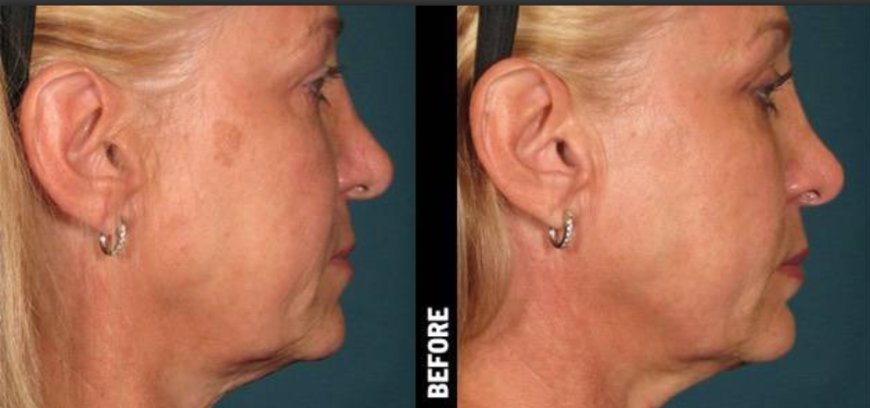
A 22-year-old woman with severe atrophic acne scars took part in a published split-face case study. Instead of treating her entire face in the same way, researchers treated each side differently.
One side received microneedling combined with platelet-rich plasma, or PRP. The other side received microneedling alone. She underwent four sessions at four-week intervals.
Before treatment, her scars were classified as grade 4 on the Goodman acne scar scale. After the treatment course, the side treated with microneedling and PRP improved to grade 1. The side treated with microneedling alone improved to grade 2. Researchers first noticed improvement after her third session.
It is an encouraging result, but it needs context. This was one woman in a small published case study. Her result does not mean every woman will see the same improvement.
That distinction is important when talking about PRP in 2026. Research suggests that it may help improve some acne scars, especially when combined with treatments such as microneedling. At the same time, science does not support promises of completely smooth or scar-free skin.
For women dealing with uneven skin long after their acne has settled, understanding that difference can make choosing a treatment much easier.
Acne Can Disappear While the Scars Stay for Years
Anyone who has dealt with acne knows how frustrating this can be. The active breakouts finally settle, but the skin does not return to the way it looked before.
Some women are left with small depressions across the cheeks. Others notice uneven texture when sunlight hits the face from the side. Makeup may cover redness or brown marks, but it cannot fully hide a change in the structure of the skin.
Acne scarring is common among people who develop acne.
A 2023 systematic review published in Skin Research and Technology analysed 37 studies involving 24,649 people with acne. Researchers estimated that 47% of these patients had acne scars.
The same research found that scar risk increased with acne severity. Compared with lower acne severity, moderate acne was associated with 2.34 times the odds of scarring, while severe acne was associated with 5.51 times the odds.
These numbers do not mean every severe breakout will leave a scar. They do show why treating inflammatory acne early matters.
There is also an emotional side to the problem. Acne can disappear while the reminder remains visible every morning. For some women, that changes how comfortable they feel without makeup or under bright lighting.
The goal of scar treatment should not be to chase flawless skin. It should be to understand what has changed in the skin and decide whether those changes can realistically be improved.
What PRP Actually Does to the Skin
PRP stands for platelet-rich plasma.
A small amount of your blood is drawn and processed in a centrifuge. The centrifuge separates components of the blood so that a plasma portion containing a higher concentration of platelets can be prepared.
Platelets are well known for their role in blood clotting. They also release growth factors and other proteins involved in tissue repair and healing.
During a PRP procedure, the prepared platelet-rich plasma can be injected or used alongside another skin treatment.
For acne scars, PRP is often studied in combination with microneedling or fractional laser.
This is an important detail because PRP is not a filler.
It does not simply enter a depressed acne scar and physically push it back to the level of the surrounding skin. Instead, researchers are interested in how platelet-rich plasma may support the healing and tissue-remodelling process triggered by procedures such as microneedling.
That also explains why any improvement is expected to develop gradually rather than immediately.
Uneven Skin Does Not Always Mean the Same Thing
Before deciding whether PRP is suitable, it helps to understand what is actually making the skin look uneven.
A woman may say she has acne scars when she actually has dark marks left after inflammation. Another may have true depressions in the skin. Many women have both.
A flat brown mark may be post-inflammatory hyperpigmentation. A red or pink mark may be post-inflammatory erythema. These are different from atrophic acne scars because the surface of the skin is not necessarily depressed.
True atrophic scars are usually grouped into three main types.
Ice-pick scars are narrow and deep. They often look like small holes extending into the skin.
Boxcar scars are wider depressions with clearer edges. They may be shallow or deep.
Rolling scars are wider and have softer edges. Fibrous tissue beneath the surface can pull parts of the skin downward and create a wavy appearance.
A woman can have all three types on the same cheek.
This is why choosing a treatment based only on the words "acne scars" can be a mistake. A deep ice-pick scar is structurally different from a shallow rolling scar. They should not automatically be expected to respond in the same way.
What Does the Latest Research Say About PRP for Acne Scars?
This is where the evidence becomes interesting.
A 2022 meta-analysis published in Frontiers in Medicine examined 14 controlled studies involving 472 patients. Researchers compared microneedling combined with PRP against microneedling without PRP.
The combined treatment was associated with 2.97 times the odds of achieving more than 50% clinical improvement on the Goodman qualitative acne scar scale.
Patient satisfaction also favoured the combined treatment.
However, that figure needs to be understood correctly. It does not mean PRP makes the skin 2.97 times smoother. It describes the odds of reaching a defined level of clinical improvement in the studies.
More recent evidence has been added to the picture.
A 2026 systematic review and meta-analysis published in Archives of Dermatological Research included 17 studies and 1,111 participants. Most studies compared microneedling plus PRP with microneedling alone.
Researchers reported better acne scar improvement with the combined approach. In 14 of the 17 included studies, microneedling with PRP was reported as more effective than monotherapy.
Patient satisfaction also tended to favour the combination. 12 of the 17 studies reported higher satisfaction in the combination group.
These findings make PRP a reasonable treatment to discuss for atrophic acne scars. They still do not make it a guaranteed solution.
Why Microneedling and PRP Are Often Used Together
Microneedling deliberately creates very small controlled injuries in the skin.
That may sound strange at first. The purpose is to start a wound-healing response. During healing, collagen and other parts of the skin's supporting structure undergo remodelling.
PRP is then added with the aim of supporting that repair process.
A simple way to understand the combination is to think about what happened when the acne scar originally formed.
Inflammation damaged the tissue. During healing, the skin did not rebuild itself in exactly the same way. In an atrophic scar, too little tissue was produced in part of the damaged area, leaving a depression.
Microneedling creates a new controlled repair signal. PRP provides concentrated platelets and their associated growth factors during that healing period.
This does not mean the skin will rebuild perfectly. It helps explain why researchers are studying the combination and why changes take time.
The Research Is Promising, but There Is an Important Limitation
This is where realistic expectations become essential.
The 2024 Blood Transfusion overview of systematic reviews examined 15 systematic reviews covering 34 individual primary studies.
Overall, clinical improvement and patient satisfaction tended to favour treatments that included PRP. Researchers also found evidence of shorter crusting time and shorter periods of redness in some comparisons.
That sounds positive.
However, when the researchers assessed the quality of the evidence using the GRADE approach, most of it was rated low or very low certainty.
There were several reasons.
Studies did not always prepare PRP in the same way. Treatment schedules varied. Researchers used different methods to measure scar improvement. Some studies were small, while others had problems with blinding or possible bias.
Another important limitation was follow-up time. The review noted that studies commonly followed patients for only around 3 to 6 months, with some following them for even less time.
This makes long-term conclusions difficult.
After hours of research, the most accurate way to describe PRP for acne scars is simple: the results are promising, especially when PRP is combined with microneedling, but current evidence is not strong enough to guarantee a specific result for an individual patient.
Can PRP Completely Remove Acne Scars?
Complete removal is not a realistic promise.
Even when research shows improvement, improvement and disappearance are two very different things.
A shallow boxcar scar might become softer around the edges. Rolling scars may cast less noticeable shadows. Overall texture may become smoother.
Deep scars can be much harder to change.
A deep ice-pick scar, for example, extends further into the skin. A procedure that works well for shallow textural irregularities may have a limited effect on that type of scar.
Rolling scars can create another problem. Some are tethered to deeper tissue by fibrous bands. In those cases, a clinician may consider a procedure such as subcision to address the tissue pulling the scar downward.
This is why PRP should not be viewed as a universal acne scar treatment.
The structure of the scar needs to guide the treatment.
What Results Should Women Realistically Expect?
The safest expectation is improvement rather than perfection.
Research suggests that combining PRP with microneedling can improve atrophic acne scars more than microneedling alone in some patients. What the research cannot tell you is exactly how much your own scars will improve.
Several things can affect the result:
-
Scar type and depth: Shallow scars may respond differently from deep ice-pick or tethered rolling scars.
-
Active acne: New inflammatory acne can continue creating new scars while old ones are being treated.
-
Skin characteristics: Healing response and the tendency to develop pigmentation differ between people.
-
Treatment used with PRP: Most of the stronger evidence relates to PRP combined with microneedling or laser rather than PRP used completely alone.
-
Number of sessions: Acne scar studies usually involve a series of treatments rather than one procedure.
These factors are why two women with acne scars can receive similar treatments and see different results.
How Many Sessions Might Be Needed?
There is no scientifically established number that works for everyone.
The real 22-year-old patient described earlier received four sessions spaced four weeks apart, with improvement becoming noticeable after the third session.
Other studies have used different schedules.
This does not mean three or four treatments should become a fixed rule. Treatment frequency depends on the technique being used, scar severity, healing and how the skin responds between sessions.
It also makes sense to allow enough time to judge progress.
Collagen remodelling is not instant. Redness may disappear relatively quickly while deeper changes in texture continue developing afterward.
Taking photographs under the same lighting and from the same angle can help track these changes more accurately. Acne scars can look dramatically different when lighting changes.
What About Redness, Swelling and Other Side Effects?
Using your own blood does not mean the complete treatment is free from side effects.
Microneedling and laser procedures intentionally create controlled skin injury. Temporary redness, tenderness and swelling can therefore occur. Bruising is also possible when injections are involved.
The 2026 Archives of Dermatological Research meta-analysis found that among the included studies reporting adverse effects, redness was the most frequently reported problem. Pain, swelling and hyperpigmentation were also reported.
The earlier 472-patient Frontiers in Medicine meta-analysis found no statistically significant difference in severe redness or severe swelling when PRP was added to microneedling.
This is reassuring, but it should not be interpreted as meaning there is no risk.
Skin pigmentation also deserves attention. If your skin tends to develop dark marks after spots, cuts or irritation, discuss this before undergoing a procedure that deliberately creates inflammation.
Active Acne Still Needs Attention
There is little benefit in treating old scars while uncontrolled acne continues producing new ones.
This is particularly important when acne is inflammatory, painful or cystic.
The 24,649-patient systematic review showed a clear relationship between acne severity and scar risk. Severe acne was associated with 5.51 times the odds of scarring compared with lower acne severity.
For women in the Netherlands who still have active acne, discussing the problem with a huisarts may therefore make more sense before concentrating only on cosmetic scar procedures. Depending on severity and previous treatment, further medical treatment or referral to a dermatologist may be appropriate.
Preventing another scar can be just as important as improving an existing one.
PRP May Be Only One Part of the Treatment Plan
Acne scars are often mixed.
One cheek might have shallow boxcar scars, several rolling scars and two deep ice-pick scars. There may also be brown or red marks between them.
Trying to treat all of those problems with one procedure is unlikely to make sense.
A clinician might consider different approaches depending on the scar structure. Microneedling may be useful for certain textural scars. Subcision may be considered for tethered rolling scars. Other procedures may be more appropriate for deep ice-pick scars. Laser treatments can also be considered for selected patients.
PRP may then be used as part of a combination approach rather than being expected to do everything itself.
This matches the direction of much of the research. Many clinical studies are not testing PRP in isolation. They are investigating what happens when PRP is added to another acne scar treatment.
What Should You Ask Before Choosing PRP?
A useful consultation should begin with your scars rather than the treatment.
Ask what type of acne scars you have and how deep they are. Find out whether some of what you see is actually pigmentation or redness rather than structural scarring.
Then ask why PRP is being considered.
If PRP will be combined with microneedling or laser, ask what each part of the treatment is expected to achieve. Discuss possible downtime, pigmentation risk, treatment intervals and how progress will be measured.
Most importantly, ask what a realistic result would look like on your skin.
Be cautious if the answer promises completely smooth skin, permanent scar removal or a guaranteed percentage of improvement.
Current research does not support those promises.
Where PRP Really Fits for Uneven Acne-Scarred Skin in 2026
PRP has enough research behind it to be taken seriously as an option for some atrophic acne scars. The strongest evidence is not that PRP magically removes scars. It is that adding PRP to treatments such as microneedling may improve outcomes for some patients.
The 2026 meta-analysis involving 1,111 participants adds useful evidence in favour of that combination. At the same time, the Blood Transfusion review of 15 systematic reviews reminds us that much of the overall evidence is still considered low or very low certainty.
Both facts matter.
For women with uneven skin, the sensible starting point is therefore not asking whether PRP is the newest or most popular treatment. It is finding out exactly what is causing the uneven surface.
A brown mark, a shallow boxcar scar, a deep ice-pick scar and a tethered rolling scar may all look like reminders of acne, but they are not the same problem.
Once you know what type of scarring you actually have, PRP becomes easier to judge. It may be a useful part of the treatment plan, particularly alongside microneedling. It may also be only one part of a broader approach.
In 2026, that is the most evidence-based expectation to have: PRP may help improve certain acne scars, but the right treatment depends on the scar in front of you, not the name of the procedure.
What's Your Reaction?