






























Ayurvedic Churna for Constipation: What Its Formulation Includes
Learn what an Ayurvedic Churna for Constipation formulation may include, how ingredients are prepared, and what to check before choosing a formulation.

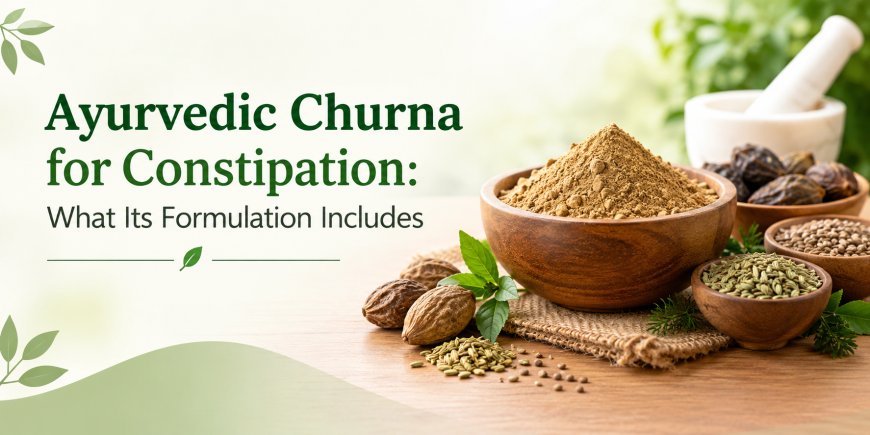
Constipation is a change in normal bowel habits that may involve hard stools, difficulty passing stools, or fewer bowel movements than usual. Understanding the ingredients and structure of a traditional herbal powder can help readers learn how different formulations are prepared and what they contain.
An Ayurvedic Churna for Constipation is a powdered formulation prepared using selected ingredients according to a particular traditional formulation. The ingredients, their proportions, and the preparation method can vary between formulations, so checking the product's ingredient information is important.
What Is Churna?
In Ayurveda, churna refers to ingredients that have been processed into a powdered form. Depending on the formulation, one or more herbs, seeds, fruits, or other traditionally used ingredients may be combined.
The ingredients are generally cleaned, dried, powdered, and sieved before being combined in the required proportions. The final texture and composition depend on the ingredients used and the preparation method.
What Can a Churna Formulation Include?
Different formulations can contain different combinations of ingredients. Some may use a single ingredient, while others combine several ingredients according to a specific traditional formula.
Ingredients that may be found in traditional formulations include:
- Haritaki: The dried fruit of Terminalia chebula, commonly used in various Ayurvedic formulations.
- Triphala: A traditional combination consisting of Haritaki, Bibhitaki, and Amalaki.
- Isabgol: Also known as psyllium husk, it is a fibre-containing plant ingredient used in various preparations.
- Senna: The leaves or pods of senna may be included in certain traditional formulations.
- Ajwain: Also known as carom seeds, it is used in several traditional food and herbal preparations.
- Jeera: Cumin seeds are used in traditional culinary and herbal preparations.
- Saunf: Fennel seeds are commonly used in traditional food and herbal preparations.
The presence and quantity of these ingredients depend on the particular formulation. They should not be assumed to be present in every churna.
Why Do Formulations Contain Different Ingredients?
There is no single ingredient combination used for every churna formulation. Different traditional formulas may be developed using different groups of ingredients and preparation methods.
One formulation may contain powdered fruits, while another may include seeds, plant fibres, or combinations of several herbs. The selection of ingredients depends on the formulation being followed.
This is why reading the complete ingredient list is useful when comparing different products.
How Are Ingredients Prepared?
Before being made into powder, the ingredients generally go through preparation stages based on their individual characteristics. These stages can include cleaning, drying, grinding, and sieving.
After individual ingredients are processed, they may be combined according to the required proportions. The finished powder is then packed and stored according to the manufacturer's instructions.
The exact preparation process can vary depending on the ingredients and the formulation method.
Understanding the Ingredient List
Reading the ingredient list provides a clearer understanding of what a particular churna contains. Important information may include:
- Names of the ingredients
- Quantity or proportion, where provided
- Serving or usage instructions
- Storage instructions
- Batch information
- Manufacturing and expiry details
This information can also help users distinguish between formulations that may have similar product descriptions but different ingredient combinations.
How Formulations Can Differ
Two products intended for similar uses may have different ingredient lists. One may contain a small number of ingredients, while another may contain a larger combination.
Differences can also occur in the quantity of each ingredient, the form in which ingredients are processed, and the traditional formulation being followed. Therefore, the product name alone does not provide complete information about its composition.
What Should Users Check Before Using a Churna?
Users should review the product label and understand the listed ingredients, directions, serving information, and storage requirements. If a person is taking medication, is pregnant or breastfeeding, has an existing health condition, or is considering a formulation for a child, consulting a qualified healthcare professional can help determine whether the formulation is appropriate for their situation.
If constipation continues for an extended period or occurs with symptoms such as severe abdominal pain, vomiting, blood in the stool, or unexplained weight changes, professional medical advice should be sought.
Conclusion
Understanding the formulation of an Ayurvedic churna involves looking beyond the product name and reviewing its actual ingredients and preparation details. Different formulations may contain combinations of herbs, fruits, seeds, or plant fibres, and their composition can vary considerably. Reading the ingredient list and usage information gives users a clearer understanding of the particular formulation they are considering.
What's Your Reaction?