


























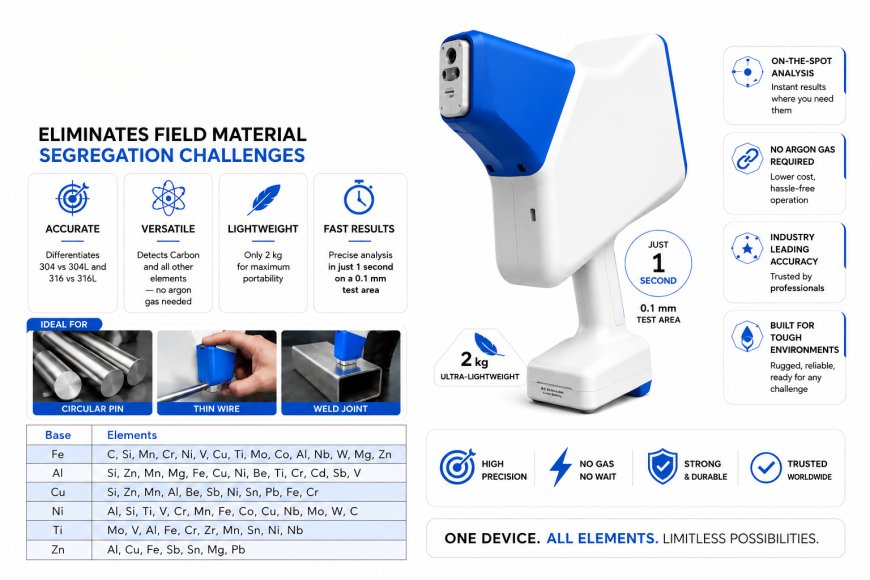
Portable LIBS Spectrometer LIS-02, Carbon detection spectrometer
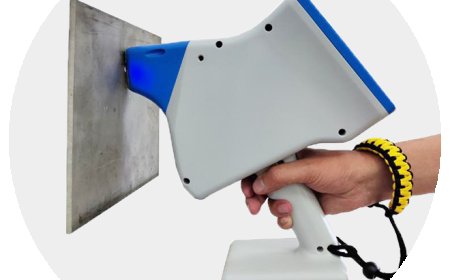
Portable LIBS Spectrometer LIS-02 deducts the carbon without use of argon gas in one second. It is Fast, precise metal analyzer.

Portable LIBS Spectrometer: What Quality Teams Actually
Need to Know
A Portable LIBS Spectrometer solves a specific problem. It confirms metal composition on the spot, without cutting a sample or waiting for a lab. Quality teams in steel, aerospace, and automotive plants rely on this technology daily. This article explains how it works, where it fits, and where its limits are.
What a Portable LIBS Spectrometer Actually Does
Laser-induced breakdown spectroscopy, or LIBS, uses a short laser pulse to vaporize a tiny spot on a metal surface. That pulse creates a small plasma. As the plasma cools, it emits light. Each element gives off light at specific wavelengths. The instrument reads those wavelengths and reports the elemental makeup of the sample.
The Portable LIBS Spectrometer LIS-02, made by NPP Strukturnaya Diagnostika Pvt. Ltd., applies this process in a handheld device. Consequently, an operator gets a reading in about a second. No sample cutting is needed. No lab visit is required.
Why Carbon Detection Sets LIBS Apart
Carbon content often decides whether a steel grade passes or fails. However, many portable technologies struggle here. XRF analyzers, for example, are widely known to underperform on light elements like carbon. As a result, teams using XRF alone sometimes miss a critical grading factor.
LIBS technology handles this differently. Because the plasma process excites carbon atoms directly, the LIS-02 measures carbon accurately, in open air, without argon gas. Therefore, a single reading gives a more complete elemental picture than some alternative methods.
A Real-World Case: Catching a Grade Mismatch Before It Reaches Production
Consider a mid-sized steel processing plant. For years, the plant depended on mill certificates for incoming material verification. Lab testing covered only a small sample of each shipment. Consequently, most batches moved into production based on paperwork alone.
After adopting a portable LIBS analyzer, the receiving team began testing every batch. Within the first month, an inspector flagged a shipment where the certificate listed one grade, but the reading showed different carbon content. Further checking confirmed the mismatch. The batch was rejected before it entered production.
This single catch likely saved the cost of reworking finished parts, or worse, shipping a nonconforming product to a customer. Additionally, it demonstrated something important: paperwork alone cannot substitute for direct verification.
"We used to trust the certificate and hope for the best. Now every batch gets checked, and we catch problems before they become expensive." — Quality Manager, steel processing facility
Portable LIBS vs. Other Common Methods
The table below compares three common approaches to metal composition testing.
| Factor | Portable LIBS (LIS-02) | Handheld XRF | Lab-Based OES |
|---|---|---|---|
| Carbon detection | Accurate, direct | Generally unreliable | Highly accurate |
| Testing speed | About 1 second | 2–5 seconds | Hours to days |
| Sample damage | Small laser spot | None | Requires cutting |
| Gas required | No | Sometimes (argon) | Sometimes (argon) |
| Best use case | Routine, high-volume verification | General alloy sorting | Formal certification, trace analysis |
As shown above, each method has a role. Consequently, many facilities use a combination rather than relying on just one.
Where This Technology Actually Helps
Steel plants use it to confirm incoming material grade before committing to a production run. Aerospace suppliers apply it at multiple checkpoints, since a misidentified alloy carries safety implications. Automotive manufacturers rely on its speed to keep pace with fast-moving production lines.
In each case, the benefit comes down to the same principle: verification happens immediately, rather than after a delay that risks production decisions made on assumption.
Honest Limitations Worth Knowing
No instrument is perfect for every job. For trace-element analysis at extremely low concentrations, or for formal certification under specific regulatory standards, lab-based testing generally remains more precise. Additionally, accuracy in the field depends heavily on operator technique. Surface preparation, consistent distance, and multiple readings per sample all affect reliability.
This is why NPPSD pairs the LIS-02 with certification-based training. An accurate instrument still needs a trained operator to deliver consistent results. Otherwise, even the best hardware produces inconsistent data.
Frequently Asked Questions
1. How accurate is a Portable LIBS Spectrometer compared to lab testing? For routine grade verification, accuracy is generally sufficient for confident decisions. For trace-level certification work, lab-based testing typically remains more precise.
2. Does the LIS-02 need argon gas to function? No. It measures carbon and other elements directly in open air, without requiring an argon environment.
3. How long does a typical reading take? About one second, once the device makes contact with the sample surface.
4. Can this replace lab testing entirely? Not entirely. Many facilities use portable LIBS analysis for daily volume, while reserving lab testing for formal certification or disputed results.
5. Does operator training affect reading accuracy? Yes. Surface preparation, consistent positioning, and multiple readings per sample all influence result reliability.
Final Thought
A Portable LIBS Spectrometer changes how quality teams verify material, moving from delayed, partial checks toward fast, direct confirmation. However, the instrument alone is not the full answer. Consistent technique, proper training, and an honest understanding of its limits determine whether that accuracy actually shows up in daily use.
For teams evaluating the LIS-02 for their own process, NPPSD can be reached at sales@nppsd.co.in or (+91) 9289924641 for a technical discussion and demo.
What's Your Reaction?