


























Portable LIBS Spectrometer LIS-02, Carbon detection spectrometer
Portable LIBS Spectrometer LIS-02 deducts the carbon without use of argon gas in one second. It is Fast, precise metal analyzer.

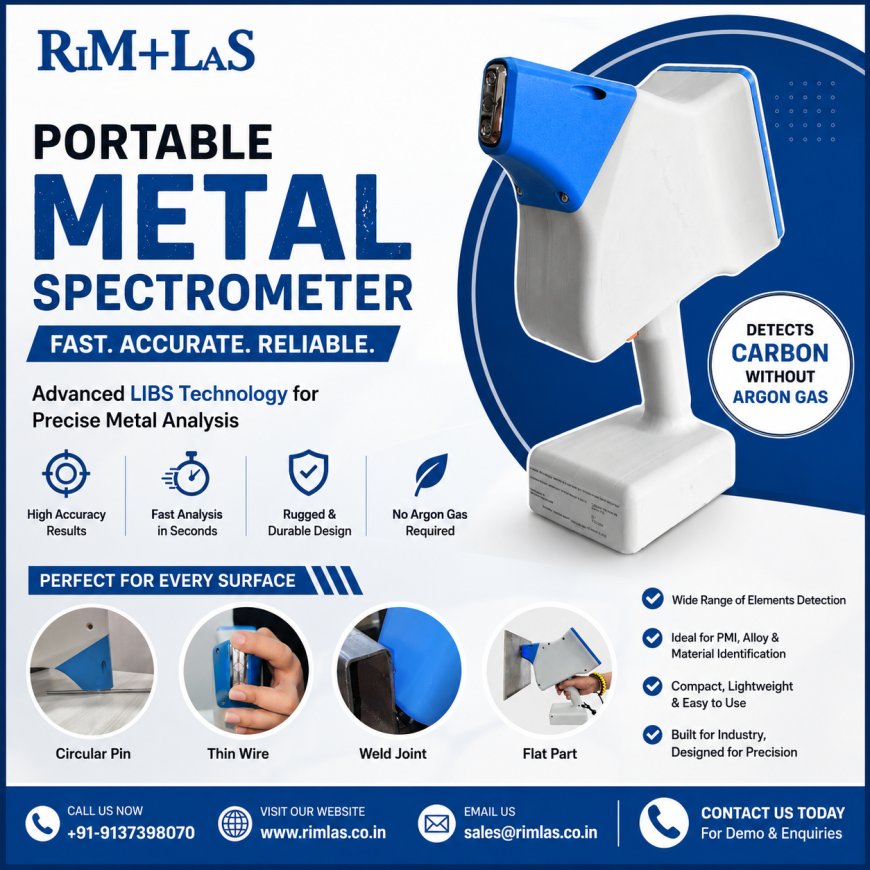
Portable LIBS Spectrometer Safety: What Every Operator
Should Know Before First Use
Introducing a Portable LIBS Spectrometer onto a shop floor usually raises one question before anything else: is it safe to use every day, by regular staff, without special protective infrastructure? It's a fair question, since the technology relies on a laser to work, and "laser" tends to trigger caution in any industrial setting.
At NPP Strukturnaya Diagnostika Pvt. Ltd. (NPPSD), we manufacture the Portable LIBS Spectrometer LIS-02, and safety is one of the first topics we walk customers through — not as a disclaimer, but because understanding it properly is part of using the device correctly and confidently.
Understanding the Laser Classification
The LIS-02 uses a pulsed DPSS laser classified as Class 3B under standard laser safety classifications. That classification matters, because it tells you exactly what precautions are actually necessary — and which fears are overstated.
Class 3B lasers can pose a hazard to unprotected eyes if someone looks directly into the beam or its specular reflection. They are not, however, in the same risk category as high-power industrial cutting or welding lasers, which fall into a different class entirely. In practical terms, this means the LIS-02 is safe for regular operator use as long as basic, well-understood precautions are followed — the same kind of straightforward safety discipline already familiar in most quality control environments.
What Safe Operation Actually Looks Like
Good laser safety with the LIS-02 comes down to a short list of habits rather than heavy protective equipment:
- Never pointing the device at a person, and never looking directly into the beam path
- Keeping the measurement head against or close to the sample surface as intended, rather than firing at a distance
- Using the device in the enclosed or intended measurement position, which limits stray reflection
- Following the standard operating sequence taught during training, rather than improvising handling
None of this requires a dedicated laser safety officer or a controlled laser lab environment. It requires an operator who has been properly trained and follows the process consistently — which is exactly why NPPSD pairs the LIS-02 with certification-based training rather than shipping the device with a manual alone.
Why Training Is the Real Safety Control
Equipment specifications only tell part of the story. The actual safety outcome on a shop floor depends far more on operator behavior than on the device itself.
A trained operator understands why certain habits matter, not just that they're required. They know why the measurement head should stay against the sample, why eye protection guidance exists even for a lower laser class, and why shortcuts during a busy shift aren't worth the risk. That understanding is what NPPSD builds into certification training — not a checklist to memorize, but a working knowledge of why the process is designed the way it is.
This matters especially in industries where the LIS-02 sees frequent daily use.
Where Safety Discipline Matters Most
Steel and metal processing environments often involve multiple operators across shifts, which means safety habits need to be consistent regardless of who's holding the device. Standardized training across a team closes that gap.
Aerospace component facilities already operate under strict safety and quality cultures, so integrating a properly trained LIBS process tends to fit naturally into existing procedures rather than requiring a separate safety framework.
Automotive production lines move fast, and safety habits that require conscious effort under time pressure tend to break down. This is why training emphasizes making correct handling the default, automatic behavior rather than something operators have to consciously remember mid-shift.
Built-In Design Choices That Support Safe Use
Beyond operator habits, the LIS-02's physical design plays a role too. Its compact, handheld form factor is built for controlled, close-contact measurement rather than long-range use, which naturally limits stray beam exposure. The password-protected security setting also allows facilities to restrict device use to trained, authorized operators only, rather than leaving it accessible to anyone on the floor.
Combined with a rugged build suited to industrial environments, these design choices support the same goal that training does: making safe use the natural, default way the device gets operated.
Making Safety Part of Standard Practice
The facilities that get the most value — and the fewest incidents — from portable LIBS analysis treat safety as a built-in part of the daily process, not a separate compliance exercise. That starts with proper certification-based training, continues with consistent habits across every shift, and is reinforced by a device designed with sensible safety boundaries from the start.
If your team is evaluating a Portable LIBS Spectrometer for the first time, understanding the safety picture upfront makes onboarding smoother and gives management a clear answer when safety officers or auditors ask how laser use is managed on the floor.
Ready to see the LIS-02 and its training program firsthand? Contact NPPSD at sales@nppsd.co.in or call (+91) 9289924641 to schedule a demo and learn how certification-based training keeps your team safe and confident from day one.
Frequently Asked Questions
1. Is the Portable LIBS Spectrometer LIS-02 safe for regular operators to use? Yes. The LIS-02 uses a Class 3B laser, which is safe for trained operators following standard precautions, and does not require the heavy protective infrastructure associated with higher-power industrial lasers.
2. What does Class 3B laser classification mean in practice? It means the beam can pose a hazard to unprotected eyes if someone looks directly into it, so operators are trained to avoid pointing the device at people and to keep the measurement head against the sample as intended.
3. Do operators need special safety equipment to use the LIS-02? Generally no dedicated laser safety infrastructure is required, though following trained handling procedures and basic precautions is essential for safe daily use.
4. How does training reduce safety risk with a portable analyzer? Training builds an understanding of why specific handling habits matter, making safe use automatic rather than something operators have to consciously remember under time pressure.
5. Can device access be restricted to trained operators only? Yes. The LIS-02 includes password protection, allowing facilities to limit use to certified, trained personnel rather than leaving the device accessible to anyone on the floor.
What's Your Reaction?