



























Portable LIBS Spectrometer LIS-02
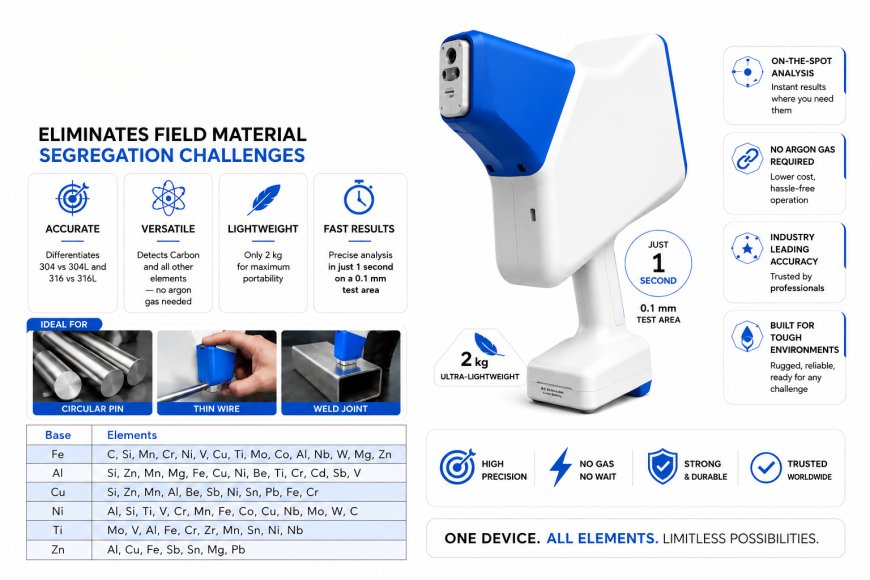
The Portable Laser Spectrometer LIS-02 is a compact and high-precision solution designed for fast and accurate elemental analysis of metals. Engineered for on-site testing, it enables instant material identification without damaging the sample, making it ideal for quality control, inspection, and metal verification applications.

Portable LIBS Spectrometer and Industry Standards: What
Quality Teams Should Know
Quality managers evaluating a new testing method usually ask one question before anything else: does this hold up against the standards my industry actually requires? For a Portable LIBS Spectrometer, the answer is more nuanced than a simple yes or no — the technology fits well into certain standards-based workflows and plays a supporting role in others where formal certification still requires lab-based methods.
NPPSD works with steel, aerospace, and automotive quality teams navigating exactly this question, and understanding where a Portable LIBS Spectrometer LIS-02 fits into a standards-driven quality process is worth laying out clearly.
Why Standards Matter in Metal Testing
Industries like steel, aerospace, and automotive manufacturing operate under material standards for good reason — consistent, verifiable composition is what makes a bolt, a beam, or a bracket perform predictably under stress. Standards bodies define acceptable testing methods partly to ensure results are consistent and comparable across labs, suppliers, and facilities, not just accurate in isolation.
This is where the conversation around portable testing gets specific rather than general. The question isn't "is LIBS accurate" — it's "does this particular standard, for this particular material application, accept LIBS-based verification, or does it require a specific lab method."
Where Portable LIBS Testing Fits Well
Incoming Material Screening
Most standards don't require every incoming shipment to undergo full formal lab certification — that requirement typically applies to the material's original certification from the mill or supplier. A Portable LIBS Spectrometer is well suited to the verification step that happens after that: confirming the received material actually matches its accompanying certification, rather than generating the certification itself.
In-Process Quality Control
Standards-based quality systems, including those built around ISO 9001 principles, generally require documented, repeatable verification processes rather than mandating a specific handheld technology. A Portable LIBS Spectrometer LIS-02 fits naturally into this kind of process as a documented in-process check, with results logged as part of the facility's quality records.
Supplier Audits and Spot Verification
When a quality team wants to confirm a supplier's claims during an audit or unannounced check, formal lab certification usually isn't the goal — practical, on-the-spot verification is. Portable testing is well accepted for this purpose across most industries, since it's being used to build confidence rather than to generate the material's official certification record.
Where Formal Lab Certification Still Applies
Final Material Certification
Many standards, particularly in aerospace, require the material's final certification to come from an accredited laboratory using a specified reference method. A Portable LIBS Spectrometer isn't typically positioned to replace this step — it's a tool for verification and screening before and around it, not a substitute for the accredited certification itself.
Trace-Level Composition Requirements
Some standards specify trace-element tolerances tight enough that they call for laboratory-grade equipment and methods specifically. In these cases, portable devices — LIBS or otherwise — generally serve as a screening step to catch obvious mismatches early, with formal lab testing still required for final sign-off.
Specific Regulatory Frameworks
Certain regulated industries specify approved test methods by name within their compliance frameworks. Where a standard explicitly names a required method, that requirement takes precedence regardless of what a portable device can technically measure. It's worth checking the specific standard your facility operates under rather than assuming general applicability.
Practical Steps for Standards-Conscious Facilities
Facilities that want to use a Portable LIBS Spectrometer within a standards-based quality system tend to follow a similar approach:
Position it clearly within the quality process. Define exactly where portable testing fits — incoming screening, in-process spot checks, supplier verification — and where formal lab certification remains required, so the distinction is documented and clear to auditors.
Keep calibration and reference records. Standards-based quality systems generally expect documented evidence that equipment is calibrated and performing consistently, so maintaining a calibration log for the device supports audit readiness.
Confirm requirements for your specific standard. Rather than assuming general acceptance, check the specific standard governing your material and application, since acceptance of portable testing methods varies by industry, region, and specific certification requirement.
Why This Distinction Matters for Buyers
Understanding this line — where portable testing fits and where formal lab certification remains required — actually makes a Portable LIBS Spectrometer more useful, not less. Facilities that try to use portable testing as a full replacement for required lab certification risk compliance issues. Facilities that understand its proper role get the full benefit: faster, cheaper verification for the large majority of routine testing, with lab certification reserved for where it's genuinely required.
The Bottom Line
A Portable LIBS Spectrometer isn't meant to replace every standards-required lab test, and understanding that distinction is what makes it a genuinely useful addition to a quality process rather than a compliance risk. For incoming screening, in-process checks, and supplier verification, the LIS-02 fits naturally into standards-based quality systems used across steel, aerospace, and automotive manufacturing.
Want to discuss how the LIS-02 fits into your facility's specific quality standards? Contact NPPSD's team to talk through your compliance requirements and see how portable testing can support your existing quality process.
FAQs
1. Can a Portable LIBS Spectrometer replace formal lab certification? Not typically. It's well suited for incoming screening, in-process checks, and supplier verification, while final certification for many standards still requires accredited lab testing.
2. Does a Portable LIBS Spectrometer work within ISO 9001 quality systems? Yes, it fits naturally as a documented in-process verification step, since ISO 9001 generally requires repeatable, documented processes rather than mandating specific technology.
3. Are there standards that require a specific test method instead of LIBS? Yes, some regulated industries and standards name a required test method explicitly, which takes precedence regardless of what a portable device can measure.
4. What records should facilities keep when using a Portable LIBS Spectrometer for quality control? Calibration and reference check logs support audit readiness, along with clear documentation of where portable testing fits versus where lab certification is required.
5. Is portable LIBS testing accepted for supplier audits? Yes, it's widely accepted for on-the-spot supplier verification, since the goal is confidence-building rather than generating an official certification record.
What's Your Reaction?