






























PVC Hair Extension Packaging: A Complete Guide to Protection, Presentation and Custom Packaging Bags
The hair extension industry relies on packaging that protects product quality while presenting items professionally to customers. Whether a business sells clip-in extensions, tape-in hair, wigs, ponytails, or bundles of human hair, suitable packaging helps keep products organised, clean, and ready for retail display or delivery. Choosing the right PVC hair extension packaging requires careful consideration of product protection, material properties, presentation, storage, and sustainability.

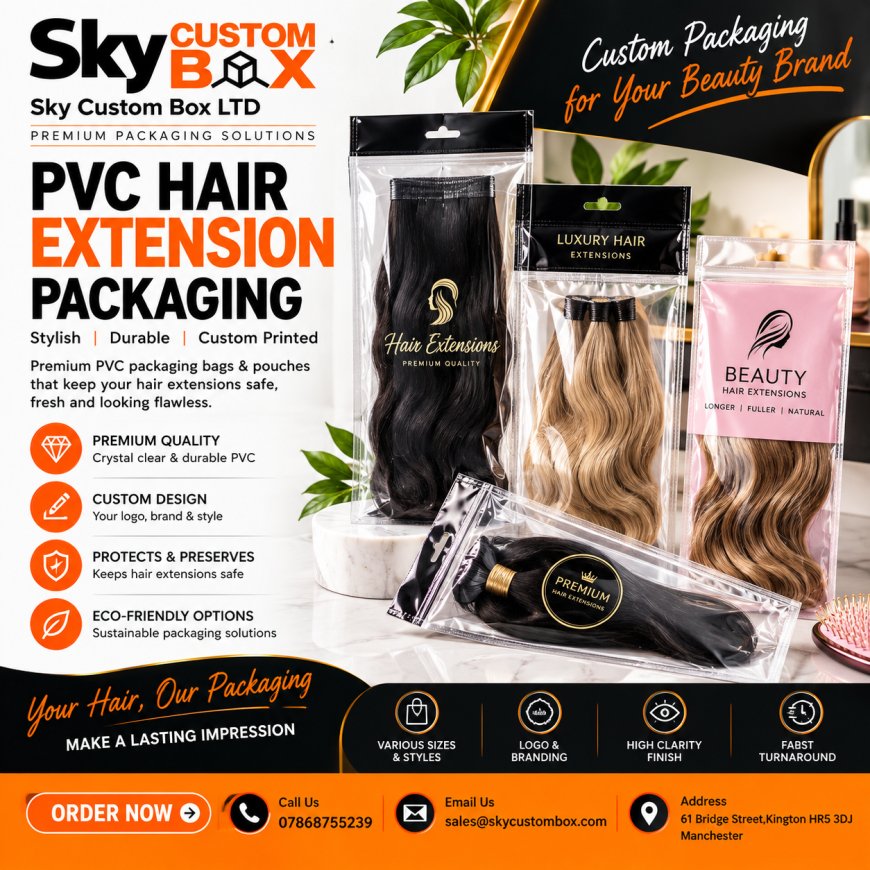
The hair extension industry relies on packaging that protects product quality while presenting items professionally to customers. Whether a business sells clip-in extensions, tape-in hair, wigs, ponytails, or bundles of human hair, suitable packaging helps keep products organised, clean, and ready for retail display or delivery. Choosing the right PVC hair extension packaging requires careful consideration of product protection, material properties, presentation, storage, and sustainability.
Packaging also influences how customers perceive a hair brand. Clear bags allow shoppers to see the colour, texture, and length of hair extensions before opening the package, while printed labels and customised designs help businesses maintain a consistent brand identity.
For UK hair extension retailers, wholesalers, salons, and online sellers, understanding the available packaging options can make it easier to select a solution that meets operational needs without unnecessary costs.
1. What Is PVC Hair Extension Packaging?
PVC, or polyvinyl chloride, is a plastic material used in various packaging applications. Depending on its formulation and construction, it can be manufactured into flexible films or more rigid packaging components.
In the hair extension sector, clear plastic bags and pouches are used to organise products, display them attractively, and help reduce exposure to dust and handling during storage.
A PVC plastic packaging bag for packing hair extension products may be used for:
-
Straight, wavy, and curly hair extensions.
-
Clip-in and tape-in hair pieces.
-
Ponytail extensions and hair bundles.
-
Synthetic and human hair products.
-
Retail-ready hair accessories.
-
Wholesale hair products prepared for distribution.
One advantage of transparent packaging is visibility. Customers can inspect the appearance of the hair without immediately opening the package. This is particularly useful when a retailer offers multiple colours, lengths, or textures.
However, PVC is not the only suitable plastic packaging material. PET, PE, and other polymers may provide different combinations of clarity, flexibility, durability, and environmental performance. Businesses should compare material specifications rather than assuming that every clear hair extension bag needs to be made from PVC.
2. Key Benefits of Clear Plastic Bags for Hair Extensions
The right packaging should protect the product while making storage, identification, and distribution easier. Transparent plastic bags can offer several practical benefits when selected and used appropriately.
Product Visibility and Retail Presentation
Hair extensions are visual products. Colour consistency, texture, length, and overall appearance often influence purchasing decisions.
Clear packaging allows customers and retail staff to identify these characteristics quickly. It can also help online retailers organise stock before photographing products or preparing customer orders.
For example, a retailer offering black, brown, blonde, and highlighted extensions can use transparent packaging with clear product labels to make stock identification easier.
Organisation and Inventory Management
Packaging becomes especially important when a business manages dozens or hundreds of product variations.
A well-organised bag system can help distinguish products by:
-
Hair colour and shade.
-
Length and weight.
-
Hair texture.
-
Extension attachment type.
-
Product code or SKU.
-
Batch or supplier reference.
Labels should be readable and consistent. Including the product name, dimensions, colour code, and other relevant details can reduce picking errors and make stock checks more efficient.
Protection During Storage and Handling
A suitable bag can help limit dust exposure and reduce unnecessary handling. It may also help keep loose strands organised when products are stored or transported.
However, plastic bags should not be treated as a substitute for every form of protective packaging. They may not prevent crushing, tangling, or damage caused by unsuitable handling.
For longer deliveries or bulk shipments, retailers may need additional cartons, dividers, or protective outer packaging.
Read More:
https://www.skycustombox.com/blog/
3. Choosing the Right Material, Size and Design
Selecting packaging involves more than choosing a transparent bag. Material thickness, dimensions, closure type, printing, and intended use all influence performance.
Material Selection
Different plastics have different properties, so businesses should identify their priorities before selecting a material.
PVC: Can provide clarity and a structured or flexible finish, depending on the product design. Its suitability depends on the formulation and intended application.
PET: Often used where clear product visibility and a relatively rigid structure are desirable. It is common in transparent packaging formats.
PE: Polyethylene is available in flexible forms and is frequently used for bags and protective packaging.
The best choice depends on the required clarity, flexibility, durability, local recycling infrastructure, and supplier specifications. Businesses should also consider whether the bag will be reused, recycled, or disposed of after a single use.
Selecting the Correct Bag Size
A bag should accommodate the hair extension without excessive compression or unnecessary empty space.
Before choosing dimensions, measure the folded or packaged product, including any backing card, protective sleeve, or label.
Consider the following factors:
-
Hair extension length and volume.
-
Whether the product is folded or laid flat.
-
Space required for secure closure.
-
Thickness of the bundle.
-
Additional inserts or product information.
-
Storage and shipping arrangements.
An undersized bag can compress the hair and make presentation less appealing. An oversized bag may allow the product to shift around, creating a disorganised appearance.
Standardising a small range of bag sizes can simplify purchasing and inventory management, particularly for businesses selling several extension types.
Closures and Custom Printing
Closure options may include adhesive flaps, zip closures, or other resealable designs, depending on the bag's construction.
Resealable packaging can be useful when customers need to inspect or store hair extensions after opening. Adhesive closures may suit products designed for straightforward retail packing.
Custom printing can incorporate a logo, brand colours, website, product name, care instructions, and other relevant information. A simple design is often sufficient when the primary goal is to make the product easy to identify.
Businesses should ensure that printed information remains legible and does not obscure the hair unnecessarily.
Read More:
4. Custom Hair Extension Packaging for Retail and E-Commerce
Different sales channels create different packaging requirements. Retail displays prioritise visibility, while online orders need packaging that performs reliably during handling and transport.
Retail Shops and Beauty Supply Stores
For physical retailers, clear bags can help customers compare products without opening packages. Consistent labels and organised colour coding can also make shelves easier to manage.
Retail packaging should communicate essential product information clearly and support the store's overall presentation.
Salons and Professional Hair Suppliers
Salons and professional suppliers may manage hair extensions for appointments, consultations, and repeat orders. Packaging that identifies product type, colour, and length can reduce confusion between similar items.
Bulk suppliers may also require stronger outer cartons or grouped packaging to protect individual bags during distribution.
E-Commerce and Wholesale Businesses
Online sellers should consider the complete journey from storage to delivery. A plastic bag may provide an inner layer of protection, but the finished parcel may require an appropriately sized mailing bag or cardboard box.
Practical steps include:
-
Keep hair extensions neatly arranged before packing.
-
Use a bag suited to the product's dimensions.
-
Add clear identification labels.
-
Avoid excessive compression.
-
Select an appropriate outer package for shipping.
-
Test the packaging under realistic handling conditions.
These measures can improve consistency while helping reduce avoidable packing errors.
Businesses researching customised packaging can review suppliers such as Sky Custom Box as part of their wider comparison of packaging formats, printing options, and production requirements. Comparing samples and specifications is more useful than relying on appearance alone.
5. Sustainability, Common Challenges and Best Practices
Plastic packaging offers useful protective and presentation properties, but its environmental impact deserves careful consideration. The most appropriate solution depends on product requirements, material composition, and available waste-management systems.
Understanding Environmental Considerations
PVC, PET, and PE are different polymers and should not be treated as interchangeable in recycling systems. Acceptance varies by material type, local collection arrangements, and the specific packaging format.
Before making environmental claims, businesses should verify the material composition and consult relevant local recycling guidance.
Possible improvements include:
-
Reducing unnecessary packaging layers.
-
Selecting bag dimensions that fit products efficiently.
-
Avoiding decorative components that serve little practical purpose.
-
Using recyclable alternatives where they meet performance requirements.
-
Providing accurate disposal guidance.
-
Reviewing whether packaging can be reused.
Paper-based sleeves or cardboard presentation boxes may be suitable alternatives for some products, although they may not provide the same moisture barrier or visibility as clear plastic bags.
Read More:
Preventing Tangling and Presentation Problems
Hair extensions can become tangled or look untidy if they move excessively inside the package. Using an appropriate backing card, inner support, or carefully arranged fold can help keep the product in place.
Businesses should also test packaging with different textures and lengths rather than assuming that one design will work equally well for every product.
Controlling Packaging Costs
Packaging costs depend on bag dimensions, material thickness, order volume, closure type, printing requirements, and shipping expenses.
A practical cost-control strategy includes requesting quotations for different quantities, testing samples, and comparing the total cost per packed product.
A lower-cost bag may be suitable for simple storage, while a more durable or branded option may make sense for premium retail products. The correct choice depends on the product's value, distribution conditions, and customer expectations.
Conclusion
Choosing the right PVC hair extension packaging involves balancing product visibility, protection, brand presentation, and practical operating costs. Clear bags can help retailers display hair extensions, organise inventory, and prepare products for sale, but the material and design should match the specific requirements of each product.
A suitable PVC plastic packaging bag for packing hair extension products should provide adequate space, an appropriate closure, clear identification, and compatibility with the intended storage or shipping method. Businesses should also compare alternative materials, understand local recycling options, and avoid unsupported environmental claims.
CONTACT US:
ABOUT US:
Social Media:
What's Your Reaction?