






























Indonesia Agribusiness Market Size, Share, and Growth Analysis 2026-2034
Indonesia agribusiness market size was valued at USD 45.2 Billion in 2025 & is projected to reach USD 57.2 Billion by 2034, CAGR of 2.58% (2026-2034).

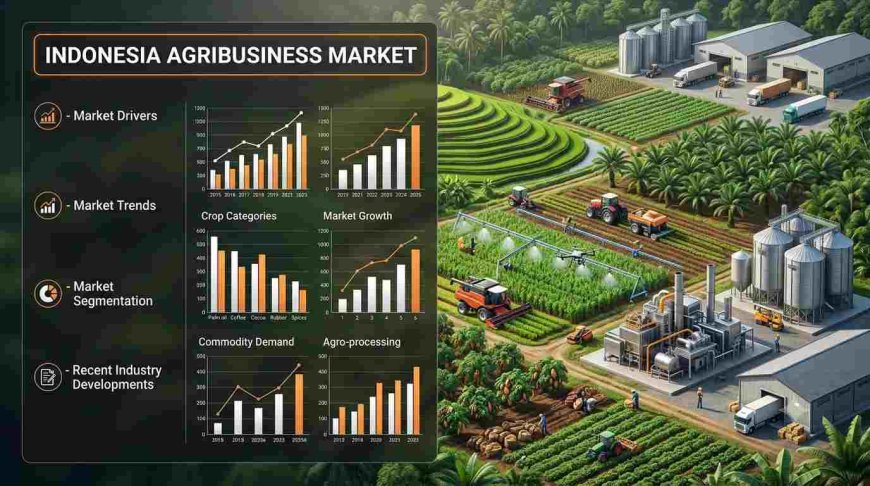
IMARC Group, a leading global market research and management consulting firm, has published its latest market intelligence report on the Indonesia Agribusiness Market. The Indonesia agribusiness market size reached USD 45.2 Billion in 2025 and is projected to reach USD 57.2 Billion by 2034, exhibiting a CAGR of 2.58% during 2026-2034. Growth is being driven by continuous improvements in farming practices, irrigation, post-harvest management, and the development of cold chain infrastructure to meet rising domestic food demand.
Agribusiness remains one of the most strategically important sectors supporting Indonesia's food security, rural livelihoods, agricultural exports, and industrial development. The country's tropical climate, fertile soils, and diverse agricultural resources support the production of rice, corn, palm oil, cocoa, coffee, rubber, spices, and other agricultural commodities, alongside livestock and fisheries. As the government continues to prioritize domestic food production and strengthen agricultural supply chains, demand for efficient farming methods, modern storage facilities, and improved distribution networks is gaining momentum. At the same time, the expansion of cold storage facilities, refrigerated transportation, and temperature-controlled warehouses is helping reduce post-harvest losses and preserve the quality of agricultural products. Combined with growing demand for fresh and processed foods, export opportunities, and technological improvements in farming and agricultural management, these forces are creating opportunities across Indonesia's grains, oilseeds, dairy, livestock, and other agribusiness segments.
Indonesia Agribusiness Market at a Glance:
- Market Size (2025): USD 45.2 Billion
- Market Forecast (2034): USD 57.2 Billion
- Growth Rate (2026-2034): CAGR of 2.58%
- Base Year: 2025 | Historical Period: 2020-2025 | Forecast Period: 2026-2034
- Key Product Categories: Grains, Oilseeds, Dairy, Livestock, and Others
- Key Regional Markets: Java, Sumatra, Kalimantan, Sulawesi, and Others
How AI is Reshaping the Future of the Indonesia Agribusiness Market
- AI-Powered Precision Agriculture: Artificial intelligence is creating opportunities for farmers and agribusinesses to analyze soil conditions, weather patterns, crop health, and irrigation requirements. AI-powered monitoring and predictive analytics can help optimize fertilizer application, improve resource utilization, and support more efficient agricultural production across Indonesia's diverse farming regions.
- Intelligent Supply Chain and Cold Chain Management: AI-based demand forecasting, inventory monitoring, and logistics optimization can help agribusinesses coordinate harvesting, storage, transportation, and distribution more effectively. These technologies can support better temperature management, reduce spoilage, and improve the availability of fresh produce, dairy products, meat, and seafood across domestic and export markets.
- Smart Farming and Agricultural Automation: AI-enabled drones, satellite imagery, automated equipment, and digital farm management platforms are creating opportunities to improve crop monitoring and agricultural productivity. These technologies can help identify pest infestations, monitor crop development, and optimize field operations, while supporting more informed decision-making among farmers, cooperatives, and agricultural enterprises.
Grab a sample PDF of this report: https://www.imarcgroup.com/indonesia-agribusiness-market/requestsample
Indonesia Agribusiness Market Trends and Drivers:
Demand for agribusiness products across Indonesia is being supported by the country's large and diverse agricultural resource base. Fertile soils, tropical climatic conditions, and extensive agricultural land enable the cultivation of rice, corn, palm oil, cocoa, coffee, rubber, and spices. These resources support domestic food consumption, industrial processing, and export-oriented production, while providing employment and income opportunities for farmers and agricultural businesses. Improvements in farming practices, irrigation systems, and post-harvest management are further helping producers enhance operational efficiency and respond to changing market requirements.
The development of cold chain infrastructure is another important factor shaping the market. Investments in cold storage facilities, refrigerated transportation, and temperature-controlled warehouses are helping maintain the quality and nutritional value of fresh fruits, vegetables, dairy products, meat, and seafood. Improved cold chain capabilities can reduce post-harvest losses, extend product shelf life, and facilitate the distribution of perishable agricultural products to domestic retailers and export markets. These developments are also supporting the expansion of modern retail, food processing, and e-commerce, creating opportunities for agribusiness companies to improve supply chain efficiency and strengthen their market presence.
A third driver is the growing emphasis on domestic food security, agricultural modernization, and value addition. Government initiatives aimed at improving food production, streamlining agricultural regulations, and strengthening domestic supply chains are encouraging improvements in the agricultural ecosystem. At the same time, technological advancements in farm management, crop monitoring, and agricultural logistics are creating opportunities to improve productivity and resource efficiency. The growing availability of agricultural raw materials is also supporting downstream industries, including food processing, animal feed, biofuels, and natural rubber manufacturing, strengthening the long-term development potential of Indonesia's agribusiness sector.
Government Schemes and National Agricultural Programs Driving Demand:
- Indonesia's National Food Self-Sufficiency Program: The Indonesian government is prioritizing domestic food production to strengthen national food security and reduce dependence on imported agricultural commodities. Measures aimed at improving agricultural productivity, expanding cultivation, and strengthening distribution networks are supporting the wider agribusiness ecosystem.
- Agricultural Fertilizer Distribution Reforms: Indonesia has introduced regulatory and administrative reforms to streamline fertilizer distribution and improve access for farmers. These measures are intended to improve the availability of agricultural inputs and support domestic production.
- Food Import Regulation and Domestic Producer Protection: Indonesia has introduced regulatory measures governing agricultural and livestock product imports to support food self-sufficiency, improve the balance between domestic supply and demand, and protect domestic producer prices. These measures are relevant to agricultural commodity supply chains and market planning.
- National Food Security and Price Stabilization Initiatives: The National Food Agency continues to support food availability and price stability through measures such as government food reserves, rice and corn distribution programs, food assistance, and market interventions. These initiatives are intended to improve access to essential food commodities and strengthen the resilience of domestic agricultural supply chains.
- Smart Agriculture and Agricultural Technology Development: Government-backed technology initiatives and international collaborations are creating opportunities to modernize agricultural operations. The adoption of drone technology for pesticide and fertilizer application on palm oil plantations illustrates the potential role of agricultural technology in improving operational efficiency and supporting modern farming practices.
Indonesia Agribusiness Market Industry Segmentation:
The report has segmented the market into the following categories:
Breakup By Product:
- Grains
- Wheat
- Rice
- Coarse Grains – Ragi
- Sorghum
- Millets
- Oilseeds
- Rapeseed
- Sunflower
- Soybean
- Sesamum
- Others
- Dairy
- Liquid Milk
- Milk Powder
- Ghee
- Butter
- Ice-cream
- Cheese
- Others
- Livestock
- Pork
- Poultry
- Beef
- Sheep Meat
- Others
Grains represent an important component of Indonesia's agribusiness industry, supporting staple food consumption, animal feed production, and food processing activities. Rice and other grain products play a significant role in domestic food security, while oilseeds provide raw materials for edible oils, food manufacturing, and related industrial applications. Dairy products contribute to the country's expanding food and nutrition sector, while livestock supports demand for meat and other animal-derived products. The Others category encompasses additional agricultural products and related activities that contribute to the country's diverse agribusiness ecosystem.
Breakup By Region:
- Java
- Sumatra
- Kalimantan
- Sulawesi
- Others
Java represents an important agricultural and agribusiness region because of its large population, extensive food distribution networks, and strong demand from food processing and consumer markets. Sumatra contributes significantly to the country's agricultural commodity production, including palm oil, rubber, coffee, and other crops. Kalimantan offers opportunities across plantation agriculture and related supply chains, while Sulawesi supports the production of commodities such as cocoa, corn, and other agricultural products. Other regions contribute through diverse farming activities, livestock production, fisheries, and region-specific agricultural commodities. Regional development is influenced by local climatic conditions, infrastructure availability, agricultural specialization, and access to domestic and international markets.
Competitive Landscape:
The Indonesia agribusiness market comprises agricultural producers, commodity traders, food processors, agricultural input suppliers, and international agribusiness companies operating across different stages of the value chain. Competition is shaped by production efficiency, access to agricultural raw materials, distribution networks, technology adoption, sustainability practices, and the ability to meet domestic and export market requirements. Key companies active in the broader global agribusiness industry include:
- Archer-Daniels-Midland Company
- Bunge Limited
- Cargill Incorporated
- Wilmar International Limited
- Associated British Foods Plc
- BASF SE
- Bayer AG
- Nutrien Ltd.
- Syngenta AG
- CHS Inc.
These companies operate across various agricultural activities, including commodity processing, agricultural inputs, crop protection, food ingredients, and supply chain management. Their presence in the broader agribusiness industry illustrates the range of business models and competitive strategies shaping agricultural value chains. The inclusion of these companies does not imply that each has a directly verified leading market share in Indonesia.
Market Concentration Analysis:
- The Indonesia agribusiness market spans multiple product categories and value chain activities, including crop production, agricultural inputs, commodity trading, processing, storage, and distribution. Competition varies by product category, regional specialization, company scale, and access to domestic and export markets.
- Market fragmentation is influenced by the participation of smallholder farmers, agricultural cooperatives, large plantation operators, commodity processors, and multinational agribusiness companies. Smaller producers contribute to agricultural supply, while larger businesses often have advantages in processing capacity, procurement networks, technology adoption, and distribution infrastructure.
- Consolidation and strategic investment opportunities are emerging around agricultural processing, cold chain logistics, digital farming, and supply chain integration. Businesses that improve post-harvest management, reduce wastage, strengthen traceability, and develop higher-value agricultural products can enhance their competitiveness as Indonesia continues to modernize its agribusiness ecosystem.
What Does The Full Report Cover?
- Historical, current, and forecast market size for the Indonesia agribusiness market from 2020 to 2034
- Market breakup by product, including grains, oilseeds, dairy, livestock, and others
- Detailed product analysis covering wheat, rice, coarse grains, oilseeds, dairy products, and livestock categories
- Regional analysis covering Java, Sumatra, Kalimantan, Sulawesi, and other regions
- Key growth drivers, restraints, and opportunities shaping the market
- Porter's Five Forces analysis and value chain assessment
- Competitive landscape, market structure, and player positioning
- Detailed profiles of major companies operating in the agribusiness industry
Recent News and Developments in the Indonesia Agribusiness Market
- February 2025: Terra Drone Corporation announced its selection for a smart agriculture demonstration project in Indonesia supported by Japan's Ministry of Agriculture, Forestry and Fisheries. The initiative involved establishing local partnerships and demonstrating drone technology for pesticide and fertilizer application on palm oil plantations.
- August 2025: New Zealand and Indonesia strengthened bilateral agricultural cooperation through an agreement signed by their respective agriculture-related ministers. The agreement aimed to reinforce trade relationships, encourage collaboration between agricultural businesses, and create new opportunities for farmers and agribusiness companies in both countries.
- April 2026: Indonesia introduced changes to agricultural and livestock import rules designed to support domestic food self-sufficiency, balance domestic supply and demand, and protect local producer prices.
- April 2026: Indonesia's agricultural authorities highlighted regulatory reforms and fertilizer distribution improvements aimed at accelerating agricultural production and strengthening coordination across the country's food sector.
Note: If you require specific details, data, or insights that are not currently included in the scope of this report, we are happy to accommodate your request. As part of our customization service, we will gather and provide the additional information you need, tailored to your specific requirements. Please let us know your exact needs, and we will ensure the report is updated accordingly to meet your expectations.
Key Questions This Report Answers
- How big is the Indonesia agribusiness market and what is its growth outlook through 2034?
- What are the key growth drivers, restraints, and opportunities in the Indonesia agribusiness market?
- Which product categories are covered in the Indonesia agribusiness market, and how are grains, oilseeds, dairy, and livestock contributing to demand?
- Which regions represent important opportunities for agribusiness companies in Indonesia?
- How are government food self-sufficiency initiatives and agricultural regulations shaping the market?
- Who are the key players in the broader agribusiness industry, and how is the competitive landscape evolving?
- How are cold chain infrastructure, smart farming, and agricultural technology influencing the future of Indonesia's agribusiness sector?
About Us
IMARC Group is a global management consulting firm that helps the world's most ambitious changemakers to create a lasting impact. The company provides a comprehensive suite of market entry and expansion services. IMARC offerings include thorough market assessment, feasibility studies, company incorporation assistance, factory setup support, regulatory approvals and licensing navigation, branding, marketing and sales strategies, competitive landscape and benchmarking analyses, pricing and cost research, and procurement research.
Media and Sales Contact
IMARC Group
Email: sales@imarcgroup.com
United States: +1-201-971-6302
India: +91-120-433-0800
United Kingdom: +44-753-714-6104
What's Your Reaction?