






























Australia Plant-Based Food Market Projected to Reach USD 981.3 Million by 2033
The Australia plant-based food market size reached USD 330.4 Million in 2024. Looking forward, IMARC Group expects the market to reach USD 981.3 Million by 2033, exhibiting a CAGR of 11.50% during 2025-2033.

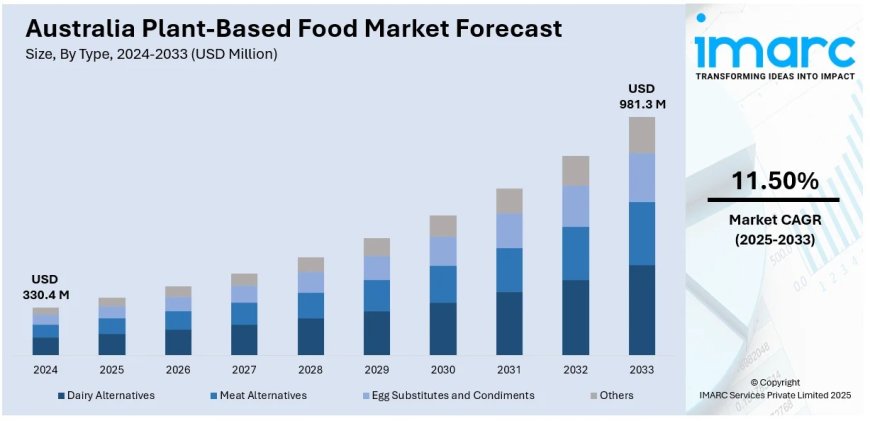
The latest report by IMARC Group, titled "Australia Plant-Based Food Market Report by Type (Dairy Alternatives, Meat Alternatives, Egg Substitutes and Condiments, Others), Source (Soy, Almond, Wheat, Others), Distribution Channel (Supermarkets and Hypermarkets, Convenience Stores, Online Stores, Others), and Region 2025-2033," offers a comprehensive analysis of the Australia plant-based food market growth. The report includes competitor and regional analysis, along with a detailed breakdown of the market segmentation. The Australia plant-based food market size reached USD 330.4 Million in 2024. Looking forward, IMARC Group expects the market to reach USD 981.3 Million by 2033, exhibiting a CAGR of 11.50% during 2025-2033.
Base Year: 2024
Forecast Years: 2025-2033
Historical Years: 2019-2024
Market Size in 2024: USD 330.4 Million
Market Forecast in 2033: USD 981.3 Million
Market Growth Rate (2025-2033): 11.50%
Australia Plant-Based Food Market Overview
The Australia plant-based foods market results from increased flexitarian and vegan diets, new health and sustainability eating habits, plant-based foods appearing in retail and e-commerce, increased climate change awareness and its environmental effects, and ethics regarding animal welfare. Other key factors that people considered to drive the growth of the Australian plant-based foods market include clean-label technologies and developers improving products with nutrients. Also, culinary experts innovate by means of indigenous Australian ingredients. People stay aware of plant-based foods as a common dietary habit. It supports personal health. It also supports protection of the environment and consumption with ethics. The Alternative Meat Co. is a plant-based food company it has many items for customers like snacks, sweets, ready meals, and cooking ingredients. It declares what its products contain, promotes their taste, and seeks to appeal to a wider audience with affordability for the purpose of establishing plant-based food products as an alternative across the food industry.
A large plant-based food infrastructure exists in Australia through meal replacement products, flexitarian protein powder, allergens-specific food replacement products, health-focused diets, and ethical lifestyle. This is driven by an advanced food culture, which is especially relevant in Melbourne, Sydney and Brisbane, Australia's multicultural food culture, lifestyle outdoors/high participation with well-being-oriented businesses, and the country's commitment to sustainability. Plant-based food solutions that satisfy taste, nutrition, preparation convenience and ethical credentials have great potential. Currently, 12.1% of adult Australians (2.5 million) are vegetarian or vegan. Supermarket and menu innovations and social media influencers all support this segment of the food market. Investment in product and ingredients development, including indigenous plant ingredients, product distribution systems, and consumer education is required. Established agricultural practices, infrastructure, crop yield per unit area, an advanced green lifestyle and health consciousness have equipped the Australian plant-based food and innovation sector, and demand for new alternative proteins will continue to diversify the product range for consumption.
Request For Sample Report:
https://www.imarcgroup.com/australia-plant-based-food-market/requestsample
Australia Plant-Based Food Market Trends
• Clean-label nutrient enrichment: Growing consumer demand for transparency with products containing few familiar ingredients, avoiding artificial additives, and incorporating protein-rich legumes, grains, fortified blends enhancing nutritional content appealing to health-conscious flexitarian segments.
• Meal category diversification: Expanding product offerings beyond meat and dairy alternatives into snacks, desserts, ready meals, pasta sauces, condiments, and egg-free products integrating plant-based ingredients across daily eating routines facilitating mainstream adoption.
• Regional and online expansion: Strengthening distribution through regional retail channels and e-commerce platforms providing access to specialty products, allergen-friendly alternatives, and curated meal packages particularly serving lower-density areas with limited local availability.
• Indigenous ingredient integration: Rising utilization of native Australian botanicals including wattle seed, macadamia, lemon myrtle, quandong, and Davidson plum creating distinctive flavor profiles, cultural authenticity, and premium positioning differentiating Australian products globally.
• Multicultural fusion innovation: Expanding culinary creativity incorporating Asian, Pacific, European, and Indigenous influences developing plant-based laksa, banh mi, Greek dips, and native spice variations appealing to Australia's diverse cultural food preferences.
• Retail mainstream positioning: Growing supermarket dedicated plant-based sections, increased shelf space allocation, major chain expansion including Coles and Woolworths, and hospitality menu innovations normalizing plant-based consumption across demographic segments.
Market Drivers
• Environmental sustainability values: Implementation of conscious consumption choices driven by climate change concerns, bushfire awareness, reef conservation priorities, and agricultural environmental impact recognition particularly resonant in urban centers like Sydney, Melbourne, and Brisbane.
• Health and wellness emphasis: Growing adoption of plant-based diets supporting fitness, holistic wellbeing, yoga, meditation lifestyles particularly prevalent in coastal communities and health-focused suburbs with 55% of vegans/vegetarians adopting diets within past five years.
• Ethical animal welfare: Rising awareness about animal treatment, factory farming practices, and ethical food sourcing influencing consumer choices toward cruelty-free alternatives supported by national and local advocacy campaigns and social media activism.
• Culinary innovation advancement: Increasing chef experimentation, food startup creativity, and artisanal producer development creating authentic Australian plant-based products through Melbourne laneways, Sydney inner-city suburbs, and regional food festivals.
• Retail accessibility expansion: Growing mainstream supermarket commitment, health food specialty store growth, and dedicated plant-based ranges improving product visibility and consumer access across metropolitan and rural communities throughout Queensland and Western Australia.
• Policy and agricultural support: Strengthening government sustainability commitments, waste reduction initiatives, alternative protein innovation backing, and pulse/grain agricultural diversification supporting industry infrastructure and regional economic development.
Challenges and Opportunities
Challenges:
- Climate agricultural vulnerabilities involving drought, variable rainfall, bushfire risks affecting legume, pulse, native grain crops in NSW Riverina, Victoria Mallee, WA Wheatbelt regions creating supply instabilities, quality variations, and production cost increases
- Cultural food tradition resistance with strong meat-based meal identification particularly in farming communities and rural Queensland/Western Australia areas viewing plant-based alternatives as less satisfying or incompatible with barbecue traditions and social gatherings
- Regulatory labeling uncertainties regarding product naming conventions, "meat," "cheese," "milk" terminology use, and claims validation creating compliance risks, consumer confusion, and market entry hesitation particularly affecting regional specialty brands
- Flavor and texture perceptions involving consumer skepticism about taste satisfaction, cooking versatility, and meal completeness requiring significant culinary education, recipe demonstrations, and localized promotional investments changing established attitudes
- Premium pricing barriers limiting mass market penetration with plant-based products often commanding higher prices than conventional alternatives creating affordability concerns and restricting adoption among budget-conscious households and price-sensitive demographics
Opportunities:
- Indigenous botanical commercialization developing premium products featuring wattle seed, quandong, Davidson plum, macadamia, lemon myrtle creating unique Australian terroir, authentic cultural narratives, and differentiated global export positioning
- Regional tourism branding integrating plant-based foods into Margaret River, Tasmania, subtropical Queensland food trails creating place-based artisanal products, festival exposure, and tourist engagement translating to wider retail adoption
- Agricultural diversification support leveraging chickpea, lentil, lupin cultivation expansion in regional farming areas creating stable supply chains, local economic benefits, and export pathway opportunities to Asian markets demanding clean-label products
- Restaurant and café innovation partnerships developing plant-based menu innovations, food truck concepts, artisanal café offerings normalizing consumption through experiential dining, cooking demonstrations, and grassroots food culture movements
- Asia-Pacific export expansion utilizing Australia's agricultural reputation, established cold-chain logistics, trade agreements, and growing international demand for clean-label sustainably sourced plant-based innovations accessing premium global markets
Australia Plant-Based Food Market Segmentation
By Type:
- Dairy Alternatives
- Plant-Based Milk
- Almond Milk
- Soy Milk
- Oat Milk
- Coconut Milk
- Macadamia Milk
- Cashew Milk
- Plant-Based Cheese
- Nut-Based Cheese
- Soy Cheese
- Cashew Cheese
- Cultured Cheese
- Plant-Based Yogurt
- Plant-Based Butter
- Plant-Based Ice Cream
- Plant-Based Cream
- Meat Alternatives
- Plant-Based Burgers
- Plant-Based Sausages
- Plant-Based Mince
- Plant-Based Chicken
- Plant-Based Seafood
- Plant-Based Deli Slices
- Egg Substitutes and Condiments
- Egg Replacers
- Vegan Mayo
- Plant-Based Sauces
- Pasta Sauces
- Salad Dressings
- Spreads
- Others
- Plant-Based Snacks
- Plant-Based Desserts
- Plant-Based Ready Meals
- Plant-Based Protein Powder
- Plant-Based Bakery
- Plant-Based Beverages
By Source:
- Soy
- Soy Protein
- Textured Soy
- Soy Milk Base
- Tofu Products
- Tempeh
- Edamame
- Almond
- Almond Milk
- Almond Butter
- Almond Flour
- Almond-Based Cheese
- Almond Protein
- Almond Yogurt
- Wheat
- Wheat Protein (Seitan)
- Wheat-Based Meat
- Wheat Flour Products
- Gluten Products
- Bread Alternatives
- Pasta Alternatives
- Others
- Pea Protein
- Oat-Based Products
- Coconut-Based Items
- Chickpea Products
- Lentil-Based Foods
- Native Australian Botanicals
By Distribution Channel:
- Supermarkets and Hypermarkets
- Coles
- Woolworths
- Aldi
- IGA
- Major Chains
- Regional Supermarkets
- Convenience Stores
- Local Shops
- Petrol Stations
- Express Stores
- Corner Stores
- Quick-Access Outlets
- Neighborhood Markets
- Online Stores
- E-commerce Platforms
- Brand Websites
- Subscription Services
- Specialty Online Retailers
- Meal Kit Delivery
- Direct-to-Consumer
- Others
- Health Food Stores
- Farmers Markets
- Specialty Retailers
- Restaurants and Cafés
- Food Trucks
- Institutional Catering
By Region:
- Australia Capital Territory & New South Wales
- Victoria & Tasmania
- Queensland
- Northern Territory & Southern Australia
- Western Australia
Browse Full Report:
https://www.imarcgroup.com/australia-plant-based-food-market
Australia Plant-Based Food Market News (2024-2025)
• January 2025: Research revealed 2.5 million Australians (12.1% of adults) following vegetarian or vegan diets representing 50% increase over past decade with eastern states showing highest adoption rates demonstrating significant plant-based movement growth.
• September 2023: NEXT Foods launched plant-based pasta sauce range across 550 Coles supermarkets nationwide featuring locally produced pouches with plant-based meat in Carbonara and Bolognese variants demonstrating mainstream retail acceptance.
• April 2024: Else Nutrition entered Australian market with soy-free plant-based infant and toddler formula produced from almond, buckwheat, and tapioca providing clean-label options for health-conscious parents seeking alternatives.
• 2024-2025: Major supermarket chains Coles and Woolworths expanded dedicated plant-based sections increasing shelf space allocation, product variety, and category visibility facilitating mainstream consumer access across metropolitan and regional locations.
• 2024: Culinary innovation accelerated with chefs, food startups, and artisanal producers experimenting with indigenous Australian botanicals including wattle seed, macadamia, lemon myrtle creating distinctive authentic plant-based products appealing to local and international markets.
• 2023: Health emerged as primary motivation with 55% of Australian vegans and vegetarians adopting diets within past five years, while 29% of participants consuming dairy-free milk weekly and 11% of non-vegans considering full plant-based transition.
Key Highlights of the Report
- Market Performance (2019-2024)
- Market Outlook (2025-2033)
- Industry Catalysts and Challenges
- Segment-wise historical and future forecasts
- Competitive Landscape and Key Player Analysis
- Type, Source, and Distribution Channel Analysis
Ask analyst for your customized sample:
https://www.imarcgroup.com/request?type=report&id=24555&flag=C
Q&A Section
Q1: What drives growth in the Australia plant-based food market?
A1: Market growth is driven by environmental sustainability values addressing climate concerns and reef conservation particularly in urban centers, health and wellness emphasis supporting fitness and holistic lifestyles especially in coastal communities, ethical animal welfare awareness influencing cruelty-free consumption choices, culinary innovation advancement through chef experimentation and indigenous ingredient integration, retail accessibility expansion through mainstream supermarket commitment and dedicated sections, and policy and agricultural support promoting alternative protein innovation and pulse/grain diversification supporting industry infrastructure.
Q2: What are the latest trends in this market?
A2: Key trends include clean-label nutrient enrichment with transparent ingredients and protein-rich formulations, meal category diversification expanding beyond meat/dairy into snacks, desserts, and ready meals, regional and online expansion providing specialty product access through e-commerce, indigenous ingredient integration featuring wattle seed, macadamia, and lemon myrtle, multicultural fusion innovation incorporating Asian, Pacific, and Indigenous culinary influences, and retail mainstream positioning through dedicated supermarket sections and hospitality menu innovations normalizing consumption.
Q3: What challenges do companies face?
A3: Major challenges include climate agricultural vulnerabilities affecting crop supply in NSW, Victoria, and WA creating production instabilities, cultural food tradition resistance particularly in rural farming communities viewing alternatives as less satisfying, regulatory labeling uncertainties regarding product naming and claims validation creating compliance risks, flavor and texture perceptions requiring culinary education changing established attitudes, and premium pricing barriers limiting mass market penetration among budget-conscious households.
Q4: What opportunities are emerging?
A4: Emerging opportunities include indigenous botanical commercialization creating premium authentic products with unique Australian terroir, regional tourism branding integrating plant-based foods into Margaret River and Tasmania food trails, agricultural diversification support leveraging chickpea, lentil, and lupin cultivation expansion, restaurant and café innovation partnerships normalizing consumption through experiential dining, and Asia-Pacific export expansion utilizing Australia's agricultural reputation accessing premium global markets demanding clean-label products.
About Us
IMARC Group is a leading market research company that offers management strategy and market research worldwide. We partner with clients in all sectors and regions to identify their highest-value opportunities, address their most critical challenges, and transform their businesses. IMARC's information products include major market, scientific, economic and technological developments for business leaders in pharmaceutical, industrial, and high technology organizations. Market forecasts and industry analysis for biotechnology, advanced materials, pharmaceuticals, food and beverage, travel and tourism, nanotechnology and novel processing methods are at the top of the company's expertise.
Contact Us
IMARC Group
134 N 4th St. Brooklyn, NY 11249, USA
Email: sales@imarcgroup.com
Tel No: (D) +91-120-433-0800
United States: +1-201-971-6302
What's Your Reaction?