

























Philippines Passenger Vehicles Lubricant Market Projected to Reach 69.96 Million Litres by 2033
The Philippines passenger vehicles lubricant market size reached 53.16 million litres in 2024 and is projected to grow to 69.96 million litres by 2033, exhibiting a steady growth rate of 3.10% during the forecast period.

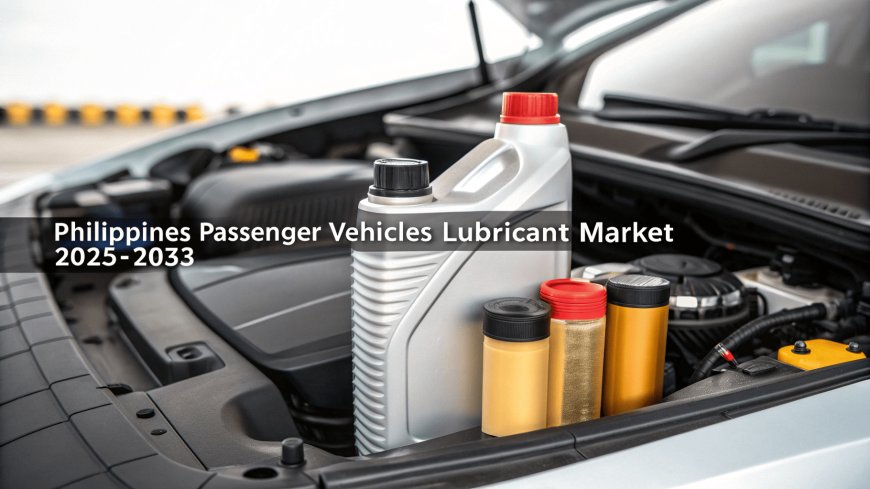
The latest report by IMARC Group, "Philippines Passenger Vehicles Lubricant Market Size, Share, Trends and Forecast by Product Type and Region, 2025-2033," provides an in-depth analysis of the Philippines passenger vehicles lubricant market. The report also includes competitor and regional analysis, along with a breakdown of segments within the industry. The Philippines passenger vehicles lubricant market size reached 53.16 million litres in 2024 and is projected to grow to 69.96 million litres by 2033, exhibiting a steady growth rate of 3.10% during the forecast period.
Report Attributes and Key Statistics:
- Base Year: 2024
- Forecast Years: 2025-2033
- Historical Years: 2019-2024
- Market Size in 2024: 53.16 Million Litres
- Market Forecast in 2033: 69.96 Million Litres
- Growth Rate (2025-2033): 3.10%
Philippines Passenger Vehicles Lubricant Market Overview:
The Philippines passenger vehicles lubricant market share is experiencing steady growth driven by rising vehicle ownership, increasing demand for fuel-efficient lubricants, expansion of e-commerce-driven lubricant distribution, growth in ride-hailing services, and stringent emission regulations. The market demonstrates strong momentum with annual engine oil consumption estimated at 83 million liters, creating competitive market dynamics. Strategic developments include Motul Philippines launching the 8100 Power synthetic ester engine oil in May 2023 and ExxonMobil appointing Juliana Holdings as official distributor for Mobil-branded lubricants in July 2024. The sector benefits from expansion of synthetic and semi-synthetic lubricants offering superior performance and extended drain intervals, while digitalization in distribution and aftermarket services transforms consumer purchasing patterns through online platforms and technology-driven maintenance solutions.
Request For Sample Report: https://www.imarcgroup.com/philippines-passenger-vehicles-lubricant-market/requestsample
Philippines Passenger Vehicles Lubricant Market Trends:
• Synthetic and Semi-Synthetic Lubricant Expansion accelerating through products like Motul's 8100 Power synthetic ester engine oil offering enhanced protection against Low-Speed Pre-Ignition (LSPI) and optimized viscosity
• Digital Distribution Channel Growth transforming market access through e-commerce platforms providing competitive pricing, doorstep delivery, and promotional offers enhancing customer convenience
• Premium Lubricant Adoption increasing among consumers seeking superior performance, extended drain intervals, enhanced engine protection, and improved fuel efficiency for vehicle longevity
• OEM Partnership Expansion strengthening through ExxonMobil's appointment of Juliana Holdings as official distributor supplying Mobil 1, Mobil Super, and Mobil Delvac to nationwide networks
• Technology-Driven Maintenance integrating IoT-enabled diagnostics, predictive maintenance, and personalized maintenance plans ensuring timely lubricant changes and engine health monitoring
• Environmental Compliance Focus emphasizing eco-friendly formulations meeting regulatory standards for lower emissions and environmental sustainability requirements
• Ride-Hailing Service Growth generating increased lubricant demand from expanding transportation services requiring frequent maintenance and high-performance products
Philippines Passenger Vehicles Lubricant Market Drivers:
• Rising Vehicle Ownership creating substantial lubricant demand as passenger car sales and ownership rates increase across urban and rural areas nationwide
• Fuel Efficiency Requirements driving preference for advanced lubricants that optimize engine performance, reduce friction, and improve fuel economy meeting consumer cost concerns
• E-commerce Distribution Expansion facilitating market growth through online platforms offering convenient purchasing, competitive pricing, and enhanced product accessibility
• Stringent Emission Regulations mandating use of high-quality lubricants meeting environmental standards and contributing to reduced vehicle emissions
• Synthetic Lubricant Benefits motivating consumer adoption through superior performance characteristics including extended drain intervals, enhanced engine protection, and temperature stability
• Ride-Hailing Industry Growth generating consistent lubricant consumption from commercial vehicle fleets requiring frequent maintenance and premium products
• Consumer Awareness Increase promoting routine maintenance understanding and recognition of quality lubricants' importance for vehicle performance and longevity
Market Challenges:
• Price Sensitivity affecting consumer purchasing decisions as premium synthetic lubricants cost significantly more than conventional mineral-based alternatives
• Economic Volatility influencing discretionary spending on vehicle maintenance and premium lubricant products during economic uncertainties
• Counterfeit Product Concerns threatening market integrity through fake lubricants potentially damaging engines and undermining consumer trust in quality brands
• Distribution Infrastructure requiring investment in cold chain logistics, storage facilities, and nationwide distribution networks reaching remote areas effectively
• Seasonal Demand Fluctuations creating inventory management challenges and cash flow variations during peak and off-peak maintenance periods
• Technical Education Needs addressing consumer knowledge gaps about synthetic lubricant benefits, proper viscosity selection, and maintenance interval optimization
• Competition from Low-Cost Alternatives facing pressure from cheaper imported products and local brands competing on price rather than quality
Market Opportunities:
• Synthetic Lubricant Market Expansion developing comprehensive product lines addressing diverse vehicle types, driving conditions, and performance requirements
• Rural Market Penetration targeting underserved geographic areas through improved distribution networks, local partnerships, and mobile service initiatives
• Fleet Management Solutions providing comprehensive lubricant programs for ride-hailing companies, logistics firms, and commercial vehicle operators
• Digital Service Integration creating value-added services combining lubricant sales with maintenance scheduling, vehicle diagnostics, and performance monitoring
• Environmental Product Development introducing biodegradable, recycled, and eco-friendly lubricants appealing to environmentally conscious consumers
• Premium Brand Positioning establishing high-performance lubricant categories targeting enthusiast drivers, luxury vehicle owners, and performance-oriented consumers
• Educational Campaign Investment developing consumer awareness programs about lubricant quality importance, maintenance benefits, and long-term cost savings
Philippines Passenger Vehicles Lubricant Market Segmentation:
By Product Type:
- Engine Oils
- Greases
- Hydraulic Fluids
- Transmission and Gear Oils
By Regional Distribution:
- Luzon
- Visayas
- Mindanao
Philippines Passenger Vehicles Lubricant Market News:
September 2025: Chamber of Automotive Manufacturers of the Philippines (CAMPI) and Truck Manufacturers Association (TMA) reported August 2025 vehicle sales declined 7.6% year-on-year to 36,174 units, affecting lubricant demand patterns across passenger vehicle segments.
July 2025: Philippines automotive lubricants market projected to reach 112.49 million liters in 2025 with expected growth to 133.15 million liters by 2030 at 3.43% CAGR, demonstrating sector resilience and expansion potential.
May 2025: Industry analysis revealed passenger vehicles lubricants market valued at approximately $150 million in 2025, driven by rising vehicle population, increasing urbanization, and growing middle class purchasing power.
March 2025: Market research indicated Philippines automotive lubricants growing at CAGR of less than 3% over next 5 years, with major companies including BP Plc (Castrol), TotalEnergies, Shell plc, Chevron Corporation, and Petron Corporation leading market operations.
Key Highlights of the Report:
- Comprehensive market analysis projecting steady growth from 53.16 million litres in 2024 to 69.96 million litres by 2033
- Detailed examination of synthetic lubricant expansion through Motul's 8100 Power synthetic ester engine oil launch enhancing vehicle protection
- Strategic assessment of digital distribution transformation through e-commerce platforms and ExxonMobil's partnership with Juliana Holdings
- In-depth analysis of 83 million liters annual engine oil consumption creating competitive market dynamics and growth opportunities
- Regional market evaluation covering Luzon, Visayas, and Mindanao with diverse distribution networks and consumer preferences
- Technology integration insights highlighting IoT-enabled diagnostics, predictive maintenance, and personalized service solutions
- Environmental compliance focus assessment revealing regulatory drivers for eco-friendly formulations and emission reduction requirements
Frequently Asked Questions (FAQs):
Q1: What are the primary factors driving Philippines' passenger vehicles lubricant market growth to 69.96 million litres by 2033?
A1: The market is driven by rising vehicle ownership, increasing demand for fuel-efficient lubricants, e-commerce distribution expansion, and stringent emission regulations. Synthetic lubricant adoption, ride-hailing service growth, and consumer awareness of engine maintenance contribute to the steady 3.10% growth rate during the forecast period.
Q2: How are synthetic and semi-synthetic lubricants influencing market development?
A2: Synthetic lubricants are transforming the market through superior performance characteristics including extended drain intervals, enhanced engine protection, and improved fuel efficiency. Products like Motul's 8100 Power synthetic ester engine oil offer advanced protection against LSPI while optimized viscosity provides enhanced reliability for high-performance vehicles.
Q3: What role does digital distribution play in market expansion?
A3: Digital distribution is revolutionizing market access through e-commerce platforms providing competitive pricing, doorstep delivery, and promotional offers. ExxonMobil's partnership with Juliana Holdings demonstrates strategic distribution network development, while technology-driven maintenance solutions integrate IoT diagnostics and predictive maintenance for enhanced customer convenience.
Note: If you require specific information not currently within the scope of the report, we can provide it as part of the customization.
Ask an analyst for your customized sample: https://www.imarcgroup.com/request?type=report&id=28740&flag=C
About Us:
IMARC Group is a global management consulting firm that helps the world's most ambitious changemakers to create a lasting impact. The company provides a comprehensive suite of market entry and expansion services. IMARC offerings include market assessment, feasibility studies, company incorporation assistance, factory setup support, regulatory approvals and licensing navigation, branding, marketing and sales strategies, competitive landscape and benchmarking analyses, pricing and cost research, and procurement research.
Contact Us:
IMARC Group
134 N 4th St. Brooklyn, NY 11249, USA
Email: Sales@imarcgroup.com
Tel. No.: (D) +91 120 433 0800
Americas: +1 201-971-6302
What's Your Reaction?