



























India Adventure Tourism Market Size, Share, Future Projection and Analysis Report 2026-2034
The India adventure tourism market size reached USD 19,708.3 Million in 2025. Looking forward, IMARC Group expects the market to reach USD 88,460.8 Million by 2034, exhibiting a growth rate (CAGR) of 17.43% during 2026-2034.

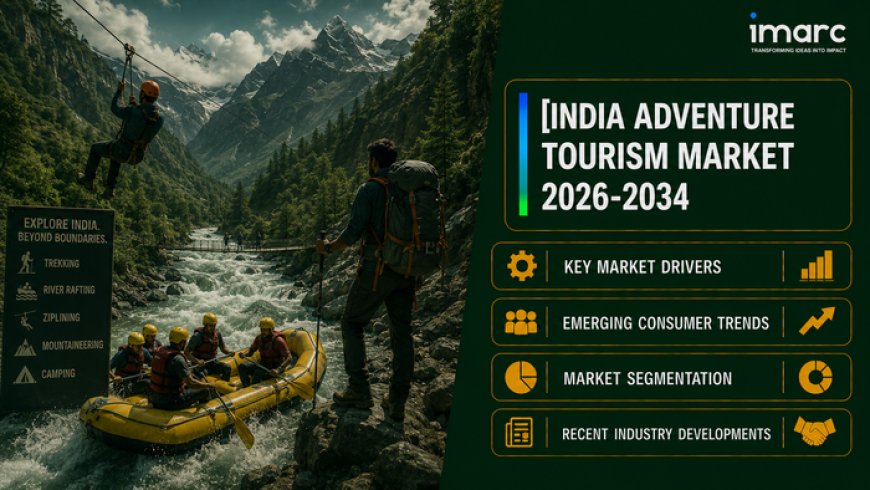
According to IMARC Group’s report titled “India Adventure Tourism Market Size, Share, Trends and Forecast by Type, Activity, Age Group, Sales Channel, and Region, 2026-2034“, the report offers a comprehensive analysis of the industry, including market share, forecast, growth and regional insights.
The India adventure tourism market size reached USD 19,708.3 Million in 2025. Looking forward, IMARC Group expects the market to reach USD 88,460.8 Million by 2034, exhibiting a growth rate (CAGR) of 17.43% during 2026-2034.
The transportation and logistics infrastructure supporting travel across India is undergoing a major structural alignment as a sharp consumer shift toward experiential, offbeat, and outdoor activities redefines passenger transit and regional mobility networks. For fleet operators, aviation stakeholders, destination management companies, and corporate investors, this trend positions specialized transport logistics as a core requirement for unlocking remote geographical corridors.
- Soft Adventure Segment Dominance: Soft adventure experiences—including curated trekking, wildlife safaris, and localized river rafting—commanded roughly 61.4% of the market share in 2025 due to their broad accessibility across diverse age demographics.
- E-Commerce and Direct Booking Scale: Direct booking channels accounted for approximately 58% of reservations in 2025, showing that modern travelers heavily prefer personalized control over their transit itineraries via mobile applications and integrated digital payment networks.
- Rapid Solo and Female Traveler Proliferation: Serving as a significant growth catalyst, solo travel is expanding rapidly across the country, with recent data showing that 40.7% of solo adventure bookings are driven by Gen Z female travelers.
The Strategic Market Challenge: Navigating the Adventure Tourism Market in India
Corporate leaders frequently overlook the acute operational constraints and supply chain liabilities caused by fractured regional transport networks and inconsistent emergency medical evacuation protocols. Accessing remote land-based or air-based activity zones across the Himalayas or coastal belts requires specialized, multi-modal logistics that are highly vulnerable to seasonal weather disruptions and poor road conditions. When transport providers fail to invest in heavy-duty, GPS-tracked fleet tracking systems and certified safety equipment, it creates immediate exposure to severe operational delays, structural vehicle wear, and critical liability risks that damage corporate brand value.
➤ Access Key Market Statistics and Actionable Insights - Request Sample Report
India's Strategic Vision for the Adventure Tourism Market:
-
National Strategy Framework Implementation: The National Strategy for Adventure Tourism, introduced by the Ministry of Tourism, outlines rigid safety parameters, mandatory state-level registrations for niche operators, and formal skill development frameworks for regional guides.
-
Integrated Circuit Development: Central initiatives under the Swadesh Darshan Scheme focus on funding dedicated eco-parks, certified camping grounds, and upgraded road links to seamlessly connect Tier-1 airports with remote geographic destinations.
-
Substantial Infrastructure Expansion: Government planning boards are prioritizing the development of structured maritime terminals, mountain airstrips, and low-flow high-pressure transit corridors to enhance regional connectivity without degrading vulnerable local ecosystems.
Why Invest in the India Adventure Tourism Market: Key Growth Drivers & ROI
-
Surging Discretionary Income and Millennial Demand: Rising disposable income levels combined with a strong millennial preference for shareable, active travel experiences are accelerating the 25-to-40 age cohort as the fastest-growing volume driver, projected to expand at a 20% CAGR.
-
Widespread Institutional and Corporate Adoption: The steady expansion of corporate wellness retreats and structured team-building expeditions provides an insulated, high-ticket B2B buyer base that generates highly consistent revenue streams during traditional off-peak seasons.
-
Blending of Adventure and Wellness Ecosystems: The growing consumer integration of active physical sports with holistic mental wellness packages allows luxury operators to achieve up to a 25% year-on-year increase in premium booking values.
India Adventure Tourism Market Trends & Future Outlook:
-
Dominance of Land-Based Activities: Land-based activities like trekking, mountaineering, and mountain biking continue to capture the largest functional share of consumer spending due to lower entry barriers and a high density of popular regional routes.
-
Leader Status of the 30-to-41 Age Demographic: The 30-to-41 age segment maintains the largest market share, leveraging superior financial stability and high consumer spending power to purchase high-end, all-inclusive luxury adventure packages.
-
Pivoting Toward Sustainable and Community-Based Operations: High-end operators are increasingly designing simple, low-impact travel packages that directly support rural communities, matching a rising global demand for responsible tourism.
-
Hyper-Localized Product Calibration: Tour operators are developing highly specialized, climate-resilient itineraries that adjust to intense seasonal monsoons and high mountain winters, utilizing real-time weather analytics to ensure traveler safety.
Regulatory Landscape & Policy Catalysts in India
-
Enforcement of National Safety Guidelines: According to the Ministry of Tourism, all registered adventure tour operators must strictly conform to the Basic Minimum Standards for Adventure Tourism, which govern risk assessment, equipment testing, and insurance coverage.
-
Civil Aviation Connectivity Support: Under the UDAN (Ude Desh ka Aam Nagrik) regional connectivity scheme led by the Ministry of Civil Aviation, subsidized flight routes to remote heliports and airstrips have dramatically reduced travel times to distant geographic centers.
-
Foreign Direct Investment (FDI) Sourcing Allowances: According to Invest India, 100% FDI is permitted under the automatic route for the tourism, hospitality, and transport infrastructure sectors, streamlining international venture capital inflows and franchise growth.
-
State-Level Professional Training Initiatives: According to state tourism departments—such as Kerala Tourism and its State Responsible Tourism Mission—structured training programs help build local workforces certified in technical rescue, paragliding, and advanced water safety.
➤ Explore the Full Report with Charts, Table of Contents, and List of Figures
India Adventure Tourism Market Segmentation:
The market report offers a comprehensive analysis of the segments, highlighting those with the largest India adventure tourism market share. It includes forecasts for the period 2026-2034 and historical data from 2020-2025 for the following segments.
Type Insights:
- Hard Adventure
- Soft Adventure
Activity Insights:
- Land-Based Activity
- Water-Based Activity
- Air-Based Activity
Age Group Insights:
- Below 30 Years
- 30-41 Years
- 42-49 Years
- 50 Years and Above
Sales Channel Insights:
- Travel Agent
- Direct
Regional Insights:
- North India
- South India
- East India
- West India
By the IMARC Group, the Top Competitive Landscape & their Positioning:
Covering an in-depth analysis of the competitive landscape, market structure, key player positioning, competitive dashboards, top winning strategies, and detailed profiles of all major industry participants you will gain access to all these exclusive insights within the full research report.
Note: If you need specific information that is not currently within the scope of the report, we can provide it to you as a part of the customization.
➤ Shape the Data to Answer Your Specific Questions - Request Customization
Frequently Asked Questions (FAQs)
Q1: What is the current value and projected growth of the India Adventure Tourism Market?
A1: According to IMARC Group, the India adventure tourism market size reached USD 19,708.3 Million in 2025. Looking forward, the market is projected to reach USD 88,460.8 Million by 2034, exhibiting a structured compound annual growth rate (CAGR) of 17.43% during the 2026–2034 forecast period.
Q2: Which primary type classification commands leading utilization within the domestic market?
A2: The operational market framework is distinctly categorized into Hard Adventure and Soft Adventure. Soft adventure lines—encompassing low-risk activities like wildlife viewing, hiking, and eco-camping—command clear dominance across the domestic industry due to their accessibility across broad age demographics, while high-risk hard adventures represent a premium tier.
Q3: How is market layout structured regarding the core physical activity matrices?
A3: The structural activity portfolio maps across Land-Based Activity, Water-Based Activity, and Air-Based Activity. Land-based activities command the largest historical volume footprint due to India’s expansive mountain ranges and diverse national reserves, while water-based sports across coastal and river zones represent the fastest-growing sector.
Q4: What demographic shift is heavily influencing product development across India?
A4: The market is experiencing a significant increase in solo and female travelers, with Gen Z women representing 40.7% of all independent solo travelers. This movement forces corporate travel aggregators to adjust their portfolios to prioritize safety-first travel structures, female guides, and secure curated itineraries.
Verified Data Source: India Adventure Tourism Market Report by IMARC Group
What's Your Reaction?