If your siding suddenly looks darker, stained, uneven, dirty, warped, or damaged after it rains but appears much better once everything dries, you may be wondering whether this is normal or a sign of a serious siding problem. In some situations, siding naturally changes appearance when it becomes wet. However, when certain areas look significantly worse after rain, develop dark patches, show uneven discoloration, or appear damaged only when wet, it can indicate moisture-related issues, surface deterioration, dirt buildup, mold growth, or problems affecting the materials behind the siding. Understanding why your siding looks different after rain can help you identify whether you simply need cleaning and maintenance or whether your home may need siding repair or a professional inspection.
Why Rain Can Make Siding Problems More Visible
Rain changes the way light reflects from your home's exterior. When siding becomes wet, its surface often appears darker and can make imperfections easier to see. Small cracks, stains, scratches, dirt, and areas of discoloration may become much more noticeable after rain because moisture creates contrast between different sections of the siding. This is one reason why a house may look perfectly acceptable on a dry, sunny day but suddenly appear uneven or damaged after a rainstorm. However, if the same areas repeatedly become unusually dark or look significantly worse every time they get wet, the problem may be more than a temporary visual change. Repeated differences in appearance can sometimes reveal areas where the siding is aging, absorbing moisture differently, or experiencing surface deterioration.
Dark Patches After Rain Can Be a Warning Sign
One of the most common concerns homeowners notice is dark patches that appear on siding after rain. These areas may disappear or become less visible once the siding dries. Sometimes this
happens because certain sections retain moisture longer than others. Shaded areas, locations near trees, sections with limited airflow, and areas exposed to repeated water runoff may remain wet longer and therefore appear darker. However, consistent dark patches in the same location should be investigated. If one area of siding always becomes darker than the surrounding sections, it may be collecting more moisture, holding dirt, supporting biological growth, or experiencing different levels of weather exposure. Looking at when and where the discoloration appears can provide useful clues about the condition of your siding.
Some Siding Materials Absorb or Hold Moisture Differently
Different siding materials react differently when exposed to rain. Some materials are designed to resist moisture effectively, while older or deteriorating surfaces may become more porous over time. When the protective surface of siding begins to wear down, water may affect its appearance more noticeably. The siding may temporarily darken, look blotchy, or show uneven coloration after becoming wet. Once the moisture evaporates, the appearance may improve again. This does not always mean the siding is structurally failing, but it can be a sign that the surface is aging and should be inspected. If the siding repeatedly changes appearance after rain, homeowners should pay attention to whether the condition is becoming more noticeable over time.
Dirt and Dust Can Look Much Worse When Wet
Your siding may look clean and normal when dry but reveal hidden dirt when rainwater hits the surface. Dust, pollen, pollution, soil, and other particles can collect on exterior walls. When these materials become wet, they can create darker streaks and uneven patches. Water can also move dirt down the siding, creating visible lines or stains after rainfall. Once the siding dries, the marks may become lighter and less noticeable, making the home appear better again. Regular cleaning can help remove surface buildup and improve the appearance of your siding. However, if stains quickly return after cleaning, it may be worth investigating whether water runoff, drainage, or another exterior condition is causing repeated buildup.
Rain Can Reveal Mold, Mildew, and Algae Growth
Moisture can make mold, mildew, and algae growth more visible on siding. These growths often develop in damp, shaded areas where moisture remains for longer periods. After rain, the affected areas may become darker or more noticeable. Green, black, gray, or dark streaks can sometimes appear stronger when wet. Areas near trees, gutters, downspouts, and sections of the home that receive limited sunlight are especially likely to experience repeated moisture exposure. Cleaning may improve the appearance, but homeowners should also identify why the area remains damp. If water repeatedly collects or flows over the same section of siding, the problem may continue returning unless the moisture source is addressed.
Water Runoff Can Create Uneven Siding Stains
The way water moves around your home can have a major effect on how your siding looks after rain. Gutters, downspouts, rooflines, windows, and exterior features can direct water toward specific sections of the house. When water repeatedly runs across the same area, it can leave dirt, minerals, and debris behind. Over time, this can create visible streaks and uneven staining. A clogged gutter or leaking downspout can make the problem worse by allowing excessive amounts of water to flow directly onto the siding. If one area of your siding consistently looks worse after rain, inspect the roof drainage above it. Correcting a gutter or drainage problem may help prevent continued staining and unnecessary siding damage.
Uneven Drying Can Make Your Siding Look Damaged
Sometimes your siding is not actually becoming damaged after rain. Instead, different areas are drying at different speeds. Sections exposed to direct sunlight may dry quickly, while shaded areas remain wet longer. Areas behind bushes, near trees, under roof overhangs, or close to other structures may receive less airflow and sunlight. This can create a temporary patchy appearance. However, uneven drying should still be monitored. If certain areas remain wet for significantly longer than others, repeated moisture exposure can eventually encourage staining, biological growth, and surface deterioration. Improving airflow, trimming vegetation, and addressing drainage problems can sometimes reduce these issues.
Old or Worn Siding May Look More Blotchy When Wet
As siding ages, its surface can gradually change. Protective coatings may wear down, and the material may become rougher or more vulnerable to weather exposure. Older siding can sometimes absorb or react to moisture differently across different areas. This can create a blotchy appearance after rain. The difference may disappear once the siding dries, but repeated changes in appearance can indicate that the exterior material is no longer performing as consistently as it once did. If your siding looks increasingly uneven every time it rains, it may be time to evaluate its overall condition and consider whether siding repair or siding replacement is needed.
Cracks and Small Openings Can Look Worse After Rain
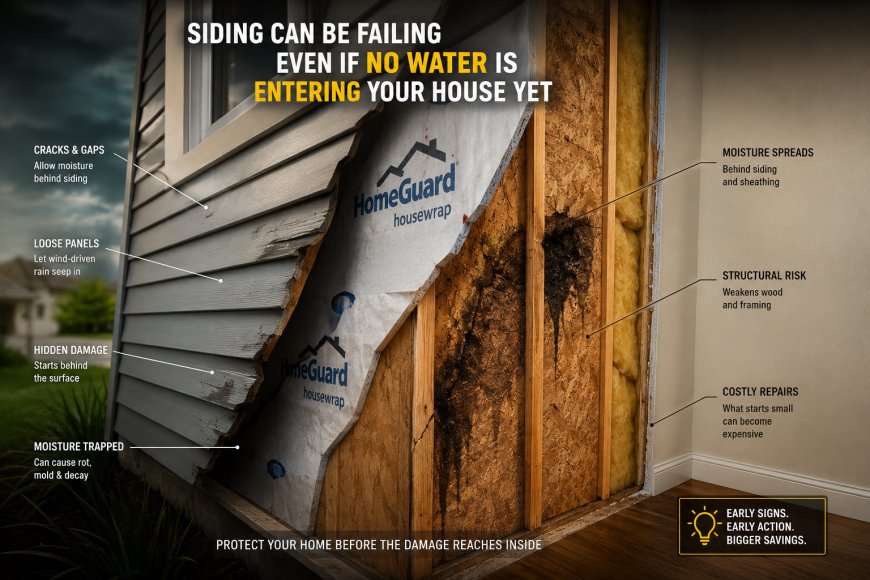
Rain can make small cracks, gaps, and damaged edges more noticeable. Water entering tiny surface openings can temporarily darken the area and create stronger contrast around the damage. Once the siding dries, the crack may become difficult to see again. This is one reason homeowners sometimes discover siding damage only after rainfall. A closer inspection while the siding is wet can help identify areas that behave differently from the surrounding surface. If moisture repeatedly collects around cracks or openings, the damage may worsen over time. Small siding problems should be addressed before they become larger entry points for water and outside moisture.
Warped Siding May Become More Noticeable in Wet Conditions
Some siding problems become easier to see after rain because moisture and changing temperatures affect the appearance of the material. Warped, bent, or uneven panels may cast different shadows when wet, making the problem appear worse. If your siding seems to change shape or become noticeably uneven after repeated rain exposure, the cause should be investigated. Warping can be related to installation issues, heat exposure, aging materials, physical damage, or moisture problems. Simply waiting for the siding to dry does not solve the underlying issue if the same condition keeps returning.
Rain May Reveal Problems Around Windows and Doors
The areas around windows and doors are important places to inspect after rainfall. These sections contain joints, trim, flashing, and transitions where water management is especially important. If siding around a window consistently becomes darker, stained, or visibly different after rain, it may indicate repeated water exposure in that location. The problem may be caused by surface runoff, damaged trim, gaps, or another issue affecting how water moves around the opening. Even if no water is entering your house, repeated moisture exposure around these areas should not be ignored.
Your Gutters May Be Making Your Siding Look Worse
Many homeowners blame the siding itself when the real problem is coming from the gutter system. Overflowing gutters can release large amounts of water directly onto exterior walls. Clogged gutters can cause water to spill over the edge, while damaged or disconnected downspouts may direct water toward the wrong areas. This repeated water exposure can cause stains, streaks, algae growth, and surface deterioration. After rain, these sections may look significantly worse than the rest of the house. Inspecting and maintaining your gutters can help protect both your siding and other parts of your home's exterior.
Landscaping Can Keep Your Siding Wet for Too Long
Trees, bushes, vines, and other vegetation can affect the condition and appearance of siding. Plants growing too close to the house can reduce airflow and prevent exterior walls from drying properly after rain. Branches can also drop leaves and debris that collect moisture against the siding. Dense landscaping may create shaded conditions that encourage algae and mildew growth. If your siding looks worse after rain in areas surrounded by vegetation, trimming plants away from the house may help improve airflow and reduce repeated moisture exposure. Keeping vegetation from constantly touching the siding can also reduce the risk of physical damage.
When Discoloration After Rain Is Just a Cosmetic Problem
Not every change in appearance after rain means you have failing siding. Some siding naturally becomes darker when wet and returns to its normal color after drying. Temporary changes caused by water and lighting can be completely normal. The key is to look for patterns. If the entire house becomes evenly darker when wet and returns to normal as it dries, the change may simply be a natural reaction to moisture. However, if only specific areas become unusually dark, stained, blotchy, or damaged-looking, further inspection may be necessary. Repeated changes in the same location often provide more useful information than a one-time appearance change.
Signs Your Siding Problem May Be More Serious
You should pay closer attention if your siding looks worse after rain and you also notice cracks, loose panels, soft spots, warping, peeling surfaces, damaged trim, repeated stains, or areas that remain wet for an unusually long time. These signs may indicate that the problem is not simply cosmetic. Another warning sign is when the condition becomes progressively worse after each rainy season. If stains become larger, discoloration spreads, or damaged areas increase, the siding should be professionally evaluated. Early siding repair can often prevent a smaller exterior issue from developing into a larger and more expensive problem.
How to Inspect Your Siding After It Rains
Rain can actually provide a useful opportunity to inspect your home's exterior. Once it is safe to do so, walk around your house and observe how different sections of siding look. Look for unusually dark areas, water streaks, overflowing gutters, leaking downspouts, and locations where water repeatedly flows over the wall. Pay attention to how long different sections remain wet. Check whether the same areas become darker after every storm. Also inspect areas around windows, doors, rooflines, and exterior corners. Taking note of repeated patterns can help identify where moisture is affecting the appearance of your siding.
Can Cleaning Solve the Problem?
Cleaning may improve siding that looks worse after rain because of dirt, pollen, algae, mildew, or surface buildup. However, cleaning is not always the complete solution. If stains and discoloration return quickly, the cause may be related to repeated moisture exposure. For example, cleaning algae from siding may temporarily improve appearance, but the growth can return if the wall remains constantly shaded and damp. Similarly, cleaning water streaks may not solve the issue if a damaged gutter continues overflowing onto the same area. The best solution is to identify both the visible problem and the reason it keeps happening.
When Should You Consider Siding Repair?
Siding repair may be necessary when rain is revealing cracks, gaps, damaged panels, loose sections, or deteriorating areas. Repairing small problems early can help maintain the appearance and protective performance of your home's exterior. The goal should not only be to make the siding look better when dry. The cause of the moisture-related appearance change should also be identified. A professional can determine whether the issue is limited to a small section or whether a larger part of the siding system needs attention.
When Is Siding Replacement the Better Solution?
Siding replacement may be worth considering when the entire exterior is showing signs of aging, widespread discoloration, repeated surface deterioration, extensive cracking, or frequent repair needs. If your siding repeatedly looks blotchy and damaged after rain because the material is old and deteriorating, replacing it may provide a more reliable long-term solution. New siding for a house can improve appearance while also providing updated protection against weather exposure. The best option depends on the age, condition, material, and overall performance of your existing siding.
Do Not Ignore What Rain Is Showing You
Rain can reveal things about your siding that dry weather hides. A house that looks perfect on a sunny day may show dark patches, stains, cracks, drainage problems, and uneven surfaces after a storm. While some temporary color changes are completely normal, repeated or unusual changes should be investigated. The most important thing is to pay attention to patterns. If the same section of siding always looks worse after rain, there is usually a reason why. It could be dirt, algae, poor drainage, limited airflow, aging materials, surface deterioration, or a developing siding problem.
Protect Your Siding Before a Small Problem Gets Worse
If your siding looks worse after rain but improves when it dries, do not immediately assume everything is fine. The change in appearance may be harmless, but it can also be an early warning sign that moisture, drainage, or surface deterioration is affecting your home's exterior. Regular inspections, proper gutter maintenance, good drainage, vegetation control, cleaning, and timely siding repair can help prevent small problems from becoming larger ones. Your siding should protect your house in every type of weather, not simply look good when the sun is shining. By understanding what rain reveals about your siding, you can identify potential problems earlier and make better decisions about maintenance, siding repair, or siding replacement before the damage becomes more serious.