
































Unlock Prosperity: Why Your Griha Pravesh Must Align with a Shubh Muhurat
Planning a housewarming? Discover why performing Griha Pravesh at a Shubh Muhurat is vital for bringing peace, wealth, and happiness to your new home.
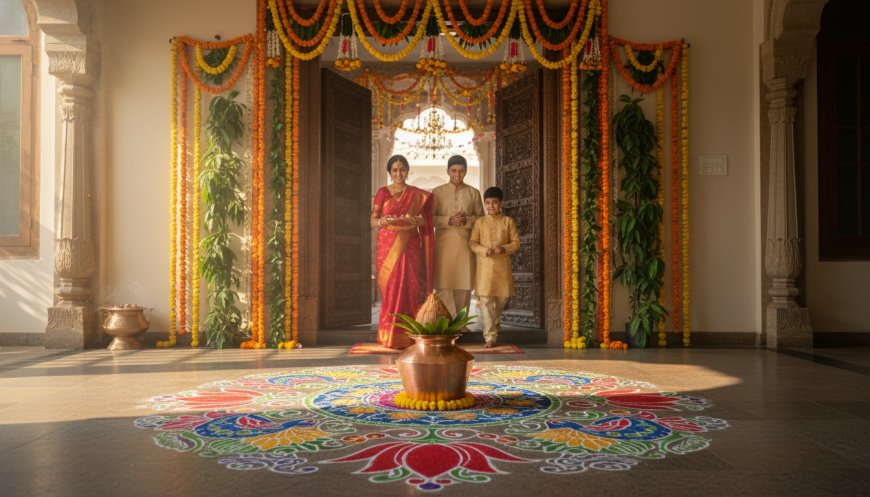
Owning a home is often the culmination of years of relentless hard work, financial planning, and emotional investment. It is not merely a structure of bricks and mortar but a sanctuary where dreams are nurtured and memories are built. However, in Indian culture, the physical completion of a house is only half the journey. The spiritual inauguration, known as *Griha Pravesh*, is the critical final step that transforms a house into a home. According to Vastu Shastra and Vedic traditions, this ceremony must be performed at a specific *Shubh Muhurat* (auspicious time) to ensure the residence becomes a vessel for happiness, peace, and prosperity. ### **The Essence of Shubh Muhurat** Why is the timing so heavily emphasized? The logic lies in the alignment of cosmic forces. A *Shubh Muhurat* is calculated based on a complex interplay of the *Tithis* (dates), days, *Lagna* (ascendant), and *Nakshatras* (constellations). Entering a home during a favorable alignment is believed to invite positive energies and divine blessings, while an ill-timed entry could attract strife or financial instability. A key factor in determining this auspicious window is the position of the Sun relative to the owner's birth *Nakshatra*. For instance, if the Sun resides in the fifth or ninth house from your zodiac sign, the period is considered inauspicious for a housewarming. Conversely, if the Sun is positioned in the sixth or eighth house, the timing is deemed exceptionally favorable for welcoming wealth and health. ### **The Calendar of Luck: When to Enter** Not all months are created equal when it comes to *Griha Pravesh*. Vedic texts specifically highlight the months of **Magha, Phalguna, Vaishakha, and Jyeshtha** as the most propitious times for these ceremonies. These periods are believed to carry energies that support new beginnings and stability. On the flip side, homeowners are strictly advised to avoid the *Chaturmas*—a four-month period comprising **Ashadha, Shravana, Bhadrapada, and Ashwin**. Tradition holds that during this time, the deities, including Lord Vishnu, are in a state of cosmic slumber, making it an unsuitable time for invoking blessings. Additionally, the month of **Paush** is generally considered unlucky for housewarming events. When looking at the lunar calendar, the *Shukla Paksha* (waxing phase of the moon) is preferred. Specifically, the *Dvitiya, Tritiya, Panchami, Saptami, Dashami, Ekadashi, Dwadashi,* and *Trayodashi* tithis are excellent. However, one should steer clear of *Amavasya* (New Moon) and *Purnima* (Full Moon). As for the days of the week, caution is advised. **Tuesday** is widely regarded as unfavorable for *Griha Pravesh*. Furthermore, unless there are exceptional astrological justifications, Saturdays and Sundays are also typically avoided, leaving the weekdays as the prime candidates for the ritual. ### **The Three Paths of Entry** Many are unaware that *Griha Pravesh* is not a one-size-fits-all ritual. Ancient texts classify it into three distinct types depending on the nature of the entry: 1. **Apoorva Griha Pravesh:** This is the most common form, performed when entering a newly constructed home for the very first time. 2. **Sapoorva Griha Pravesh:** If a family has lived in a home, left it vacant for a long period (due to travel or other reasons), and is now returning, this variation of the ceremony is performed. 3. **Dwandwah Griha Pravesh:** This is conducted when re-entering an old home that has undergone significant renovation or reconstruction, particularly after damage from natural calamities like floods or fires. ### **Critical Do's and Don'ts** Before you rush to fix a date, the physical state of the house must be assessed. Vedic guidelines strictly forbid performing *Griha Pravesh* in a home that is still under construction. The structure is only considered ready for the divine invitation once the roof is complete and the doors—especially the main entrance—are fully installed with shutters and fittings. Once the ceremony is concluded, there is a specific rule regarding the security of the home: do not lock the main door immediately. Leaving the home empty and padlocked right after the *Puja* is considered inauspicious, as it symbolically shuts out the prosperity you just invited in. In conclusion, a *Griha Pravesh* is more than a party; it is a sacred alignment of space and time. By respecting the *Shubh Muhurat* and adhering to these ancient protocols, homeowners can ensure their new abode remains a sanctuary of joy and abundance for generations to come.
What's Your Reaction?