






























Home Vastu Guide: Is Your Pooja Room Bringing You Prosperity? Expert Tips on Mandir Direction and Placement
Discover essential Vastu Shastra tips for your home mandir. Learn the ideal directions, idol placement, and common mistakes to avoid for peace and prosperity.
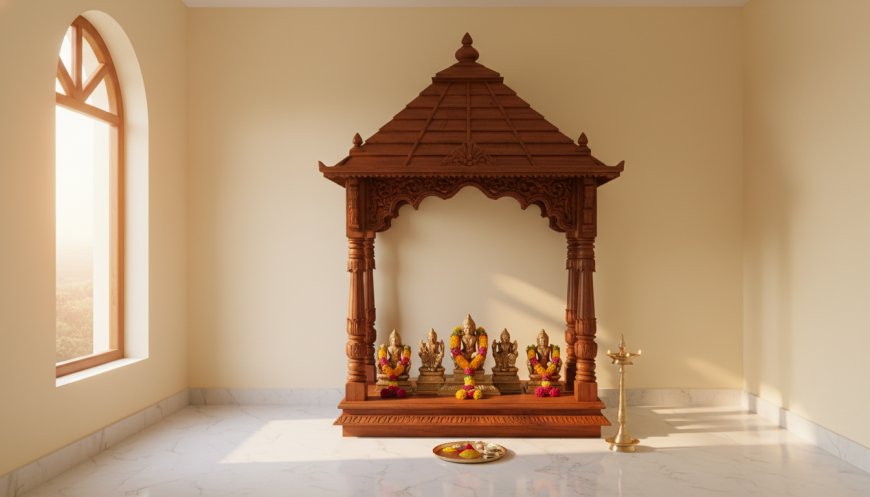
In the hustle and bustle of modern life, the home remains our sanctuary—a place where we seek solace, recharge, and connect with our inner selves. Central to this spiritual ecosystem in millions of Indian households is the 'Pooja Room' or 'Mandir.' It is not merely a corner for rituals but the powerhouse of positive energy that radiates throughout the entire dwelling. However, simply having a prayer space is not enough. According to ancient architectural wisdom, the placement and orientation of your temple play a pivotal role in determining the flow of cosmic energy. A well-placed mandir can invite health, wealth, and harmony, while incorrect placement might unknowingly invite stress or stagnation. **The Golden Rule: The Northeast Corner (Ishan Kona)** According to Vastu Shastra experts, the most auspicious direction for a home temple is the **Northeast**, traditionally known as the *Ishan Kona*. This specific zone is believed to be the abode of Lord Ishana (a form of Shiva) and is governed by Jupiter (Brihaspati), the guru of gods. From a scientific perspective, the Northeast is where the home receives the benevolent morning sunlight. These early rays are rich in Vitamin D and are believed to have a purifying effect on the environment. Placing your spiritual center here ensures that the house absorbs these high-frequency vibrations right at the start of the day. If the Northeast is unavailable—common in many modern apartments—the North or East directions serve as excellent alternatives. The North is associated with Lord Kubera (wealth), while the East is the domain of Lord Indra (power and new beginnings). **Directions to Avoid: The Red Flags** Vastu is as much about what *not* to do as it is about what to do. Homeowners are strongly advised against placing the mandir in the **South**. In Vastu lore, the South is ruled by Yama, the Lord of Death, and is generally reserved for heavy activities or sleeping, not for the lightweight, ethereal energy of worship. Furthermore, strictly avoid positioning your pooja space: * **Under a staircase:** This is considered disrespectful as people walk over the deity's head. * **Adjacent to a bathroom:** The energies of elimination and consumption clash, creating a 'Vastu Dosha' (defect). * **In the bedroom:** Ideally, the prayer space should be separate to maintain its sanctity. If unavoidable, use a curtain or cabinet to close the temple when not in use. **Idol Placement: The Art of Divine Alignment** Once the room is selected, the internal arrangement is equally crucial. A common mistake is cluttering the altar with too many idols or placing them directly against the wall. Vastu recommends leaving a gap of at least **one to six inches** between the idols and the wall to allow energy to circulate freely. * **Face the Light:** Idols should ideally be placed in the West or East of the mandir so that the devotee faces **East or North** while praying. Facing East aligns you with the rising sun, symbolizing enlightenment and wisdom. * **Idol Etiquette:** Ensure that idols are not facing each other, as this is believed to create conflict. Also, avoid keeping broken or chipped idols; they should be respectfully immersed in a water body and replaced. * **Height Matters:** The feet of the deity should be at the chest level of the devotee when seated. This ensures a comfortable line of sight for meditation and prayer. **Lighting and Ambiance: Igniting the Divine Spark** Light is a metaphor for knowledge in Hindu philosophy. The placement of the *Diya* (lamp) or *Agni Kund* is significant. It should ideally be placed in the **Southeast** corner of the pooja room. If that is not feasible, placing it on the devotee's right side is the standard practice. For the general ambiance, avoid harsh, glaring lights. Soft, ambient lighting that mimics the soothing glow of a sunrise is perfect. This can be achieved with warm-toned LED lights or traditional oil lamps. **Color Therapy for the Soul** The color of the pooja room walls can significantly impact the meditative state. Vastu suggests using light, soothing shades like **white, light yellow, or pale blue**. * **White** represents purity and peace. * **Yellow**, the color of Jupiter, signifies wisdom and intellect. * Avoid dark colors like black or dark blue, which can absorb light and lower the energy vibration of the room. **Structuring the Mandir: Roof and Materials** If you are installing a standalone wooden temple, look for a design that features a **pyramid or dome-shaped roof** (Gopura). This shape is not just aesthetic; it acts as an antenna to attract and concentrate cosmic energy. Wood and marble are the most preferred materials for a mandir. Glass and acrylic are generally discouraged as they do not hold vibrational energy as effectively as natural elements. **Conclusion: A Gateway to Harmony** Creating a Vastu-compliant pooja room is not about superstitious adherence to rules, but about creating a space that resonates with tranquility. By aligning your home temple with these elemental forces, you create a localized center of gravity for peace in your home. Whether you live in a sprawling bungalow or a compact flat, a small, clean, and correctly oriented space is enough to anchor your family's spiritual well-being.
What's Your Reaction?