




























What Is Portable Hardness Tester - UCI & LEEB Portable Hardness Tester
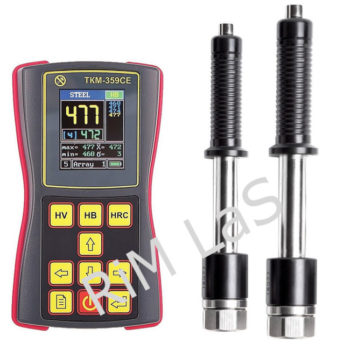
A portable hardness tester is used to measure the hardness of small & heavy jobs in field. Leeb & UCI is also portable hardness testers.

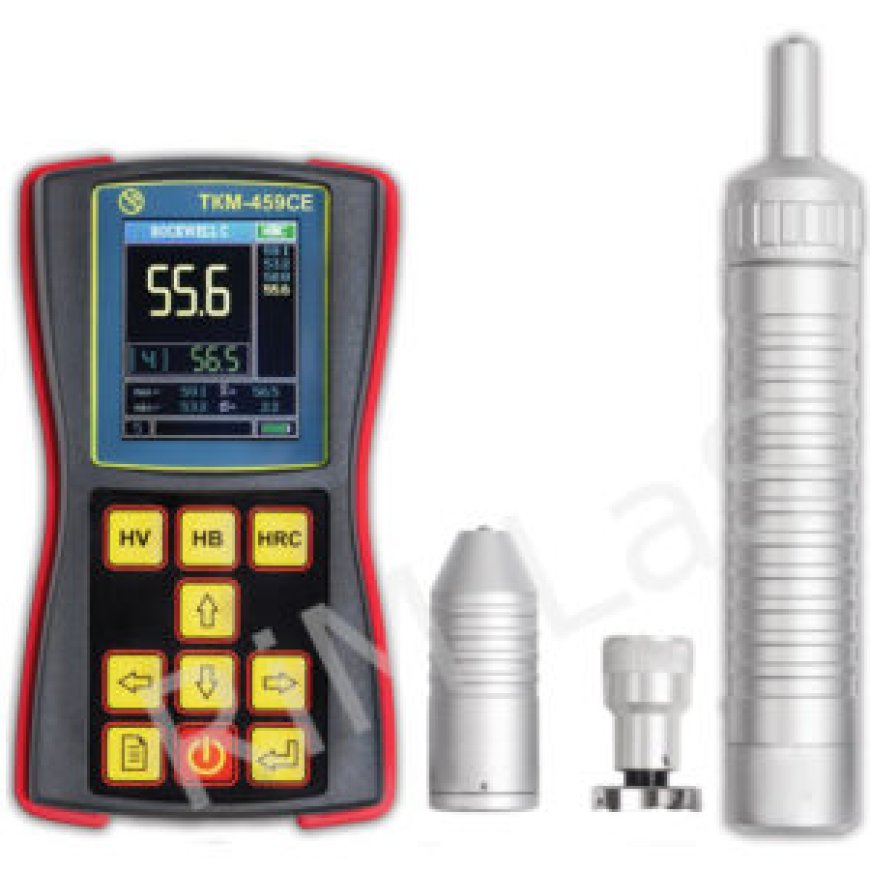
Portable Hardness Tester: How to Choose the Right One for
Your Industry
Buying a portable hardness tester looks simple on paper — until you're staring at a dozen models, two testing methods, and a sales sheet full of specs that don't tell you which one actually fits your production floor. For quality managers in metal manufacturing, aerospace, and automotive industries, that decision matters more than most equipment purchases, because the wrong tester means unreliable readings, rejected certifications, or a device that simply can't handle your components.
This guide isn't another explainer on what hardness testing is. It's a practical, experience-based walkthrough of how to actually choose the right portable hardness tester — the questions to ask, the mistakes to avoid, and where a portable Leeb hardness tester fits into the picture.
Why the "Best" Portable Hardness Tester Depends on Your Parts, Not the Spec Sheet
Every manufacturer wants to know which portable hardness tester is "the best." The honest answer: it depends entirely on what you're testing.
A device that performs beautifully on large steel castings can give inconsistent readings on a thin sheet or a small precision-machined part. Vendors rarely lead with this, but it's the single biggest factor in whether your investment pays off or ends up gathering dust in a drawer.
Before comparing brands or price tags, quality teams should first map out:
- The typical size, weight, and thickness range of components being tested
- Surface finish — rough castings versus polished or coated parts
- Whether testing happens indoors in a controlled environment or outdoors on-site
- How often results need to be logged, exported, or attached to certification documents
Once that picture is clear, choosing between testing methods becomes far more straightforward.
Portable Leeb Hardness Tester: When It's the Right Fit
The portable Leeb hardness tester remains one of the most widely used options in industrial settings, and for good reason. It uses an impact device that strikes the test surface and measures rebound velocity — a method that's fast, rugged, and doesn't require a lab-controlled environment.
Where Leeb Testing Performs Best
- Large, heavy components — castings, forgings, rolled plates, and machine housings that can't be moved to a bench
- Field and site testing — pipelines, structural steel, and heavy equipment where portability and speed matter more than fine precision
- High-volume spot checks — quickly verifying heat-treatment consistency across a production batch
Where It Falls Short
Leeb testing typically needs a minimum part mass and thickness to deliver accurate results, and it leaves a small visible indentation. For thin sheets, small precision parts, or finely finished surfaces, it's usually not the right tool — that's where a UCI-based device tends to perform better.
Understanding this trade-off upfront saves quality teams from buying a device that technically "measures hardness" but doesn't actually fit their real production mix.
Common Mistakes When Buying a Portable Hardness Tester
After years of working with quality teams across metal, aerospace, and automotive sectors, a few buying mistakes come up again and again:
Choosing based on price alone. A cheaper unit with poor calibration support or limited probe options often costs more in re-testing, rejected parts, or audit failures down the line.
Ignoring probe versatility. Many Leeb testers support multiple impact devices (D, DC, G, C probes) for different surfaces and geometries. Buying a single-probe unit locks you into one type of testing.
Overlooking data traceability. For aerospace and regulated automotive work, certification bodies expect exportable, traceable results — not just a number on a small screen. Skipping this feature early often means an expensive add-on or upgrade later.
Skipping operator training. Even an accurate instrument produces unreliable results in untrained hands. Calibration drift, incorrect probe angle, or poor surface prep can all skew readings — and most of these issues are preventable with proper training.
What a Well-Chosen Portable Hardness Tester Actually Delivers
When the right device is matched to the right application, the benefits show up quickly:
- Faster quality decisions — real-time readings mean parts don't sit waiting for lab results
- Fewer rejected batches — catching hardness inconsistencies early avoids costly rework
- Stronger audit readiness — traceable, exportable data supports certification and customer audits
- Lower long-term cost — the right tester reduces re-testing, downtime, and equipment mismatches
This is really the core of a smart purchase decision: it's not about finding the most advanced device on the market, it's about finding the one that matches your actual components or workflow.
How RiM LaS Helps You Choose — Not Just Sell — the Right Tester
At RiM LaS Private Limited, we work with metal, aerospace, and automotive companies across India to match portable hardness testers — Leeb, UCI, or both — to their actual production needs, not just a catalog listing. Our certification-based training programs go beyond handing over equipment; they ensure your technical team understands correct probe selection, calibration practices, and how to maintain audit-ready documentation.
Whether you're buying your first portable hardness tester or replacing an outdated one, our team walks you through the same questions covered in this guide before recommending a device — because a tester that fits your parts is worth more than one with the longest spec sheet.
Conclusion
Choosing the right portable hardness tester comes down to understanding your components, not chasing the most feature-packed model on the market. A portable Leeb hardness tester is an excellent fit for large, heavy, or field-based testing, while other methods may serve smaller or more delicate parts better. The real value comes from matching the right tool, proper training, and reliable calibration support to your actual production environment.
Not sure which portable hardness tester fits your operation? Talk to RiM LaS Private Limited for expert guidance, certified equipment, and hands-on training tailored to your industry's exact needs.
Frequently Asked Questions
1. How do I choose the right portable hardness tester for my industry? Start by identifying the size, thickness, and surface finish of the components you test most often, along with whether testing happens on-site or in a controlled environment. This determines whether a Leeb, UCI, or combined solution fits best.
2. Is a portable Leeb hardness tester suitable for small or thin parts? Not usually. Leeb testers generally require a minimum part mass and thickness for accurate readings, so smaller or thinner components are often better tested with a UCI-based device.
3. What's the biggest mistake companies make when buying a hardness tester? Choosing based on price alone, without considering probe versatility, data traceability, and available operator training — all of which affect long-term reliability and audit readiness.
4. Do portable hardness testers require calibration? Yes. Regular calibration using certified reference blocks is essential to maintain accuracy and meet certification or audit requirements.
5. Does RiM LaS help with selecting the right hardness tester, not just supplying it? Yes. RiM LaS works directly with customers to match the right portable hardness tester to their specific components and production environment, backed by certification-based training.
What's Your Reaction?