

































Linoleum Flooring Installation in Pawtucket, RI: A Guide
A kitchen floor usually gets noticed only when it starts to fail. Maybe the vinyl is curling at the seams, or the old tile has cracked near the dishwasher. Sometimes the whole room just looks tired.

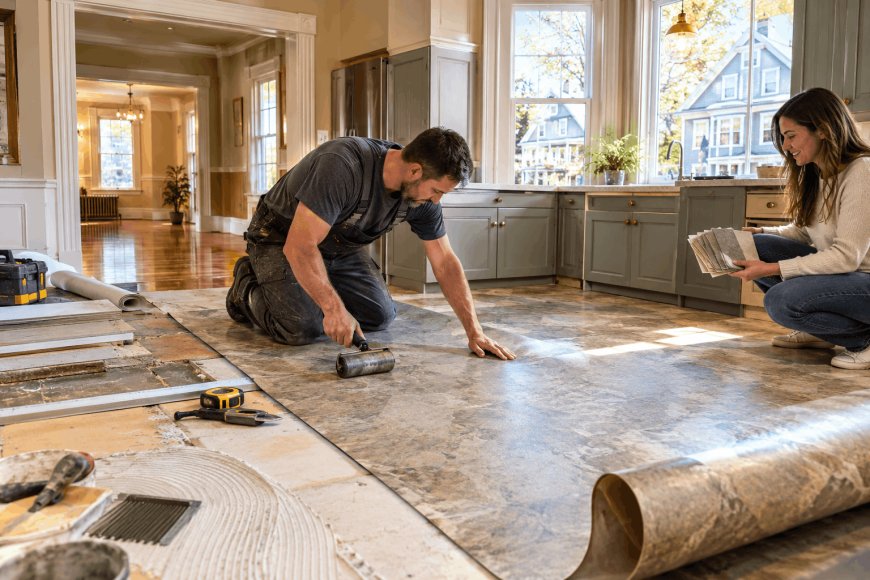
A kitchen floor usually gets noticed only when it starts to fail. Maybe the vinyl is curling at the seams, or the old tile has cracked near the dishwasher. Sometimes the whole room just looks tired.
For many homeowners weighing their options, Linoleum Flooring Installation in Pawtucket, RI has become a practical choice. It is durable, made from natural materials, and well suited to the older homes found throughout the area. This guide covers how linoleum works, what installation involves, and where it makes the most sense.
What Linoleum Actually Is (and Isn't)
Many people still use "linoleum" to describe any sheet flooring, but true linoleum is a different product from vinyl. It is made from linseed oil, cork dust, wood flour, ground limestone, and natural pigments, all pressed onto a jute backing.
Vinyl, by contrast, is a petroleum-based plastic. The two can look alike at first glance, but they age, clean, and install differently.
That natural makeup gives linoleum some unusual traits. It hardens over time as the linseed oil continues to cure, and the color runs all the way through the material. Surface scratches don't reveal a different layer underneath.
How Linoleum Installation Works
Linoleum comes in two main formats. Sheet linoleum arrives in large rolls and is glued directly to a prepared subfloor. Click-lock tiles or planks float over the subfloor and lock together, much like laminate.
Sheet installation is the more traditional method and usually gives the cleanest, most water-resistant finish. Installers often heat-weld the seams with a matching rod, which creates a nearly seamless surface. That's why hospitals and schools have used it for decades.
Why Subfloor Prep Matters Most
Linoleum is fairly thin and flexible, so it reveals whatever sits underneath. A bump in the plywood or a ridge from old adhesive can show through within weeks.
This matters a lot in Rhode Island. Many homes date back to the late 1800s or early 1900s, including mill-era houses and classic triple-deckers. Floors in these homes often have dips, patched boards, or layers of older flooring stacked on top of each other.
Experienced installers usually spend a good share of the job leveling, patching, or adding a new underlayment before any linoleum goes down. Skipping this work is one of the most common reasons a linoleum floor fails early.
Acclimation and Moisture
Linoleum needs time to adjust to the room's temperature and humidity before installation, usually a day or two. Sheet goods also need to be unrolled and allowed to relax.
Moisture from below is another concern. Basements and slab floors can push moisture upward, which may weaken the adhesive over time. A moisture test is standard practice on concrete before any glue-down flooring goes in.
The Real Benefits of Choosing Linoleum
The biggest draw for many homeowners is longevity. A well-installed linoleum floor can last 25 to 40 years with basic care, outlasting many vinyl products by a wide margin.
It's also a naturally sustainable material. The ingredients are renewable, and linoleum is biodegradable at the end of its life. For households trying to limit plastics at home, that counts for a lot.
Linoleum is also comfortable underfoot. It has a slight give that makes standing at a kitchen counter easier on the knees and back. It feels warmer than ceramic tile on a cold New England morning.
Many people also like its natural resistance to bacteria. The linseed oil keeps oxidizing slowly, which helps discourage microbial growth on the surface. That's one reason it shows up so often in healthcare settings.
Finally, there's design flexibility. Modern linoleum comes in a wide range of colors, from soft neutrals to bold primaries. Sheet goods can even be cut into custom inlays, borders, or patterns.
A Few Honest Trade-Offs
No flooring is perfect. Linoleum can be damaged by standing water if seams aren't properly sealed. It also reacts poorly to high-pH or harsh cleaners, so pH-neutral products are the safer choice.
New linoleum sometimes shows a yellowish cast called "ambering" or "drying room film." It comes from the curing process and fades with exposure to light, usually within a few weeks. Homeowners who don't know this sometimes worry their new floor is defective.
Where Linoleum Works Best: Everyday Examples
Consider a family renovating the kitchen in an older two-family home. The original hardwood under the old vinyl is too damaged to save. They want something tough enough for kids and pets that won't need replacing in ten years. Sheet linoleum with welded seams fits that need well.
Or picture a homeowner turning a first-floor room into a laundry and mudroom. Wet boots, spilled detergent, and heavy foot traffic all hit the same small area. Linoleum handles that kind of daily wear while staying easy to mop.
Rental property owners also choose linoleum often. Tenants change, but the floor doesn't need to. Its long lifespan and simple maintenance help reduce turnover costs between leases.
Pairing Linoleum with Hardwood
Many renovations don't stop at one room. A common approach is linoleum in kitchens, baths, and utility spaces, with hardwood in living rooms, dining rooms, and bedrooms.
Homeowners going this route often look for a Sand Finish Hardwood Floor Installer in Pawtucket, RI to handle the wood side of the project. Sand-finished hardwood, also called site-finished, is installed raw and then sanded and stained on-site. This creates a smooth, custom finish that can be matched to existing trim or older floors in the house.
The transition between the two materials needs some planning. Linoleum is much thinner than hardwood, so installers usually build up the subfloor or use a reducer strip to keep the change in height safe and clean.
Choosing the Right Installer
Since prep work makes or breaks a linoleum floor, the installer's experience matters more than the product itself. It helps to ask whether they've worked with true linoleum, not just vinyl, and how they plan to handle subfloor flaws.
Asking about seam welding, adhesive type, and moisture testing gives a good sense of a contractor's knowledge. Local flooring firms like The Flooring Specialist, along with other regional contractors, can usually explain how they'd approach an older home before work begins.
Some homeowners prefer one team for the whole project, especially when linoleum and hardwood meet in the same space. Others hire a dedicated Sand Finish Hardwood Floor Installer in Pawtucket, RI for the wood and a separate crew for the resilient flooring. Either approach can work well with clear communication.
Caring for Linoleum After Installation
Daily care is simple. Regular sweeping or vacuuming keeps grit from dulling the surface, and a damp mop with a pH-neutral cleaner handles most messes.
Some linoleum products come with a factory-applied protective coating. Others benefit from a periodic polish to restore shine and add a layer of protection. Felt pads under chair and table legs go a long way toward preventing dents.
With that light upkeep, linoleum often looks good for decades. That's a big part of why it keeps returning to modern homes.
Final Thoughts
Linoleum offers a rare mix of durability, comfort, and natural materials. For older homes with character and a few quirks, it can be a smart, long-term flooring solution, as long as the subfloor gets the attention it needs.
Anyone considering a new kitchen, bath, or utility floor should start by looking at the condition of what's underneath. A solid foundation is what lets a linoleum floor last for generations.
Frequently Asked Questions
How much does linoleum flooring installation cost?
Costs vary based on room size, subfloor condition, and whether sheet or click-lock linoleum is used. Sheet linoleum with heat-welded seams typically costs more than floating tiles. Subfloor repairs in older homes can also add to the total.
How long does linoleum flooring last?
With proper installation and basic care, linoleum often lasts 25 to 40 years. It tends to harden and become more durable as it ages, which sets it apart from many vinyl products.
Is linoleum waterproof?
Linoleum is water-resistant but not fully waterproof. Sheet linoleum with properly welded seams holds up well in kitchens and baths. Standing water should still be wiped up promptly to protect seams and edges.
What's the difference between linoleum and vinyl flooring?
Linoleum is made from natural materials like linseed oil, cork, and wood flour. Vinyl is a synthetic, petroleum-based product. Linoleum generally lasts longer and is biodegradable, while vinyl is often cheaper and fully waterproof.
Why does new linoleum look yellow?
That yellow tint is called "ambering" and comes from the linseed oil curing process. It's normal and usually fades within a few weeks once the floor is exposed to natural or artificial light.
What's Your Reaction?