






























India Seed Industry 2026: Market Trends and Forecast Outlook 2034
India seed market reached a valuation of USD 8.6 billion in 2025 and is projected to expand to USD 20.2 billion by 2034, registering a compound annual growth rate (CAGR) of 9.68%.
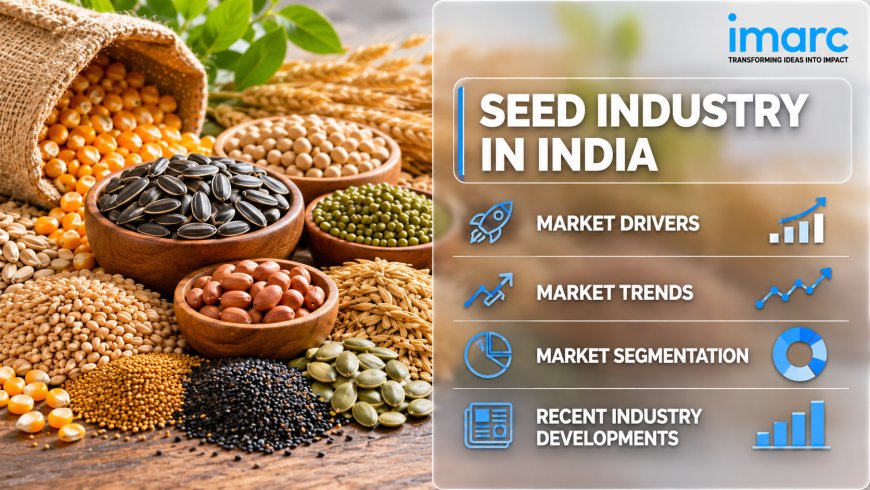
According to IMARC Group's report titled "Seed Industry in India Size, Share, Trends and Forecast by Crop Type and Region, 2026-2034", The report offers a comprehensive analysis of the industry, including market forecast, growth, Share, and regional insights.
India seed market reached a valuation of USD 8.6 billion in 2025 and is projected to expand to USD 20.2 billion by 2034, registering a compound annual growth rate (CAGR) of 9.68%.
The agricultural framework in India is entering a phase of structural realignment as climate volatility, shrinking arable land per capita, and escalating food security mandates accelerate the transition toward high-velocity crop yields. Boardrooms and institutional investors are rapidly pivoting away from farm-saved seeds toward advanced biotechnology-driven alternatives, seeking to secure long-term productivity across the country’s vast agricultural corridors.
-
Massive Valuation Trajectory: Strategic investors can capitalize on a market that reached USD 8.6 Billion in 2025 and is projected to scale to USD 20.2 Billion by 2034, moving at a compound annual growth rate (CAGR) of 9.68%.
-
Paddy and Cereal Domination: Allocating capital toward staple crop segments targets the highest volume pocket of the industry, with paddy seeds commanding a leading 26.5% market share in 2025.
-
Hybrid Sub-Segment Prioritization: Sourcing and R&D pipelines aligned with hybrid varieties tap into the most lucrative commercial driver, as hybrids captured approximately 70.1% of national seed market revenue in 2024 by delivering 25% to 40% higher yields.
-
Geographical Demand Core: Channeling supply chain networks and production infrastructure into North India leverages the primary regional volume pocket, led by Uttar Pradesh with an 18.0% individual market share in 2025.
The Strategic Market Challenge: Navigating the Seed Industry in India
A critical operational challenge within the agriculture sector that leaders frequently overlook is the high rate of commercial seed returns driven by seasonal supply chain bottlenecks and mismatching regional distributor placements. In efficient agribusiness models, independent rural dealers bear no financial risk for unsold stock, which often results in up to 33% of high-value hybrid seeds being returned post-sowing season. This inventory reverse-logistics strain forces manufacturers to absorb steep re-processing, re-testing, and storage degradation overheads, severely deflating initial corporate margin forecasts.
➤ Access Key Market Statistics and Actionable Insights - Request Sample Report: https://www.imarcgroup.com/seed-industry-in-india/requestsample
India's Strategic Vision for the Seed Industry
-
Biotech and Varietal Proliferation: Accelerating the institutional rollout of climate-resilient, heat-tolerant, and bio-fortified seed varieties to cushion national crop production against extreme climatic variations.
-
Public-Private R&D Harmonization: Establishing deep collaborative breeding programs between state research institutes and private players to compress the commercialization timeline of high-yielding crop hybrids.
-
Traceability and Supply Chain Integrity: Expanding the deployment of tamper-proof holograms and digital tracking frameworks across rural distribution networks to eliminate the circulation of counterfeit or low-purity seeds.
Why Invest in the Seed Industry In India: Key Growth Drivers & ROI
-
Sustained Institutional Demand for Rice and Wheat: As the world's second-largest producer of paddy and wheat, India maintains a rigid baseline requirement for quality seed stock. This steady volume demand, anchored by wheat's 20.0% market share in 2025, ensures resilient year-round cash flows for processing firms.
-
Rapid Agronomic Transition to Commercial Hybrids: Smallholder farmers are aggressively shifting from open-pollinated varieties to high-margin hybrid alternatives to optimize farm economics. This ongoing behavioral transformation provides input providers with consistent, compounding replacement sales each sowing season.
-
Integration of Advanced Precision Agri-Tech: The scaling of genomic selection, advanced phenomics, and data science within domestic seed breeding pipelines allows firms to lower product development cycles. This digital integration significantly enhances long-term corporate ROI by reducing generic field-trial failures.
Seed Industry In India Market Trends & Future Outlook
-
Surge in Digital Seed Traceability Systems: Large-scale seed developers are aggressively implementing blockchain-linked QR codes on commercial packaging to build brand equity and protect intellectual property at the retail level.
-
Expanding Footprint of Heat-Tolerant Varieties: Climate shifts are driving massive procurement re-alignments toward rust-resistant, drought-tolerant, and heat-resilient cereal variations to protect crop performance.
-
Escalating Vegetable Seed Market Capitalization: Rising urban consumption of high-value cash crops is directing processing capacities toward specialized vegetable seeds, which yield exceptionally high gross margins per kilogram.
-
Consolidation of Rural Dealer Networks: Major agricultural conglomerates are acquiring localized seed distributors to build integrated, single-window input delivery frameworks spanning seeds, crop protection, and nutrition.
-
Dominance of Large Arable States: Core agricultural belts continue to hold structural dominance, with Madhya Pradesh maintaining a strong second-place position with a 15.5% market share in 2025.
Regulatory Landscape & Policy Catalysts in India
-
National Mission on High-Yielding Seeds Mandates: According to the Ministry of Agriculture and Farmers Welfare, targeted financial allocations under dedicated national missions are actively modernizing state seed testing labs and accelerating breeder seed availability.
-
Cabinet-Approved Minimum Support Price Boosts: Central regulatory policy frameworks continue to systematically increase the Minimum Support Prices (MSP) for essential Kharif and Rabi crops, directly boosting farmers' purchasing power for premium inputs.
-
Strict Genetic and Physical Purity Enforcement: According to the Central Seed Committee, regularized enforcement of statutory certification standards across state distribution boundaries guarantees uniform germination, vigor, and moisture limits.
-
Automatic Route Foreign Direct Investment Approvals: According to Invest India, 100% Foreign Direct Investment (FDI) allowances under the automatic route for seed development and technology ventures eliminate cross-border capital friction for global biotechnology firms.
-
Fiscal Subsidies for Certified Seed Purchases: According to State Departments of Agriculture, targeted direct-benefit financial transfers to smallholders for certified seed purchasing continuously depress informal, uncertified seed exchange volumes.
➤ Explore the Exact Chapters and Data Scope - Get Full Brochure: https://www.imarcgroup.com/request?type=report&id=743&flag=A
By the IMARC Group, the Top Competitive Landscape & their Positioning:
-
Advanta Seeds
-
Kaveri Seeds
-
Syngenta India
-
Bayer CropScience
-
Nuziveedu Seeds LTD
-
Rallis India Limited
-
J K Seeds
-
Pioneer
Seed Industry In India Segmentation:
By Crop Type
-
Paddy
-
Wheat
-
Vegetables
-
Cotton
-
Maize
-
Groundnut
-
Soybean
-
Others
By Regions
-
Uttar Pradesh
-
Madhya Pradesh
-
West Bengal
-
Rajasthan
-
Punjab
-
Maharashtra
-
Andhra Pradesh
-
Bihar
-
Karnataka
-
Others
Note: If you need specific information that is not currently within the scope of the report, we can provide it to you as a part of the customization.
➤ Tailor the Research to Your Exact Business Needs - Request Customization: https://www.imarcgroup.com/request?type=report&id=743&flag=E
Frequently Asked Questions (FAQs)
Q1: What is the current value and projected growth of the Seed Industry In India?
A: According to IMARC Group, the seed industry in India was valued at USD 8.6 Billion in 2025 and is projected to reach USD 20.2 Billion by 2034. This structural expansion reflects a compound annual growth rate (CAGR) of 9.68% during the forecast period of 2026–2034.
Q2: Which individual crop segment commands the leading share of the Indian market?
A: The paddy segment represents the largest crop category, capturing a dominant 26.5% of the total market share in 2025. This leading position is supported by the massive scale of domestic rice cultivation and institutional self-sufficiency targets.
Q3: What role do hybrid seeds play in driving overall industry revenues?
A: Hybrid seeds serve as the primary commercial revenue engine, commanding approximately 70.1% of total seed market revenue. This high share is driven by their ability to provide superior pest resistance and elevated yield performance compared to traditional seeds.
Q4: Which geographical state represents the primary revenue and volume base inside India?
A: Uttar Pradesh stands as the premier regional market territory, securing an 18.0% individual share of the total industry in 2025. The state’s dominance is underpinned by its extensive arable land footprint, vast farming population, and heavy production of paddy and wheat.
Q5: What are the second and third largest regional pockets within this sector?
A: Madhya Pradesh represents the second largest regional market with a 15.5% share in 2025, closely followed by West Bengal which contributes a significant 12.5% market share driven by high-intensity multi-season rice and vegetable farming.
Strategic Insight & Verdict:
The monetization of biological inputs within India's agricultural ecosystem has shifted from a volume-driven generic trade to a high-margin, technology-intensive segment. In analyzing the operational re-alignments across the input sector, we at IMARC Group have observed that the intersection of climate resilience mandates and the commercial adoption of premium hybrids has made advanced seed technology economically indispensable. For institutional investors and multinational corporations, capturing sustainable returns relies on building deep regional R&D infrastructure and securing early distribution footprints in leading production hubs like Uttar Pradesh and Madhya Pradesh to outpace informal supply networks.
— Pragati Bharadwaj, Digital Market Research Strategist at IMARC Group
https://www.linkedin.com/in/pragati-bharadwaj/
Verified Data Source: IMARC Group
What's Your Reaction?