





























How Smart Glass Planning Can Improve the Look of a Dubai Office
A practical guide for Dubai businesses planning frosted glass for offices and commercial interiors. It explains how to balance privacy, natural light, branding and visual appeal across meeting rooms, partitions, reception areas and glass doors.
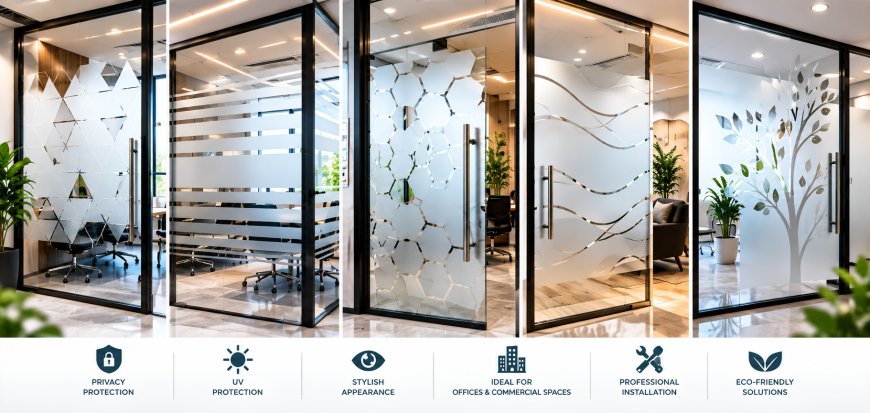
Glass can make an office feel open, bright and connected, but too much transparency can create problems of its own. Employees may need privacy during meetings, visitors may struggle to identify glass doors, and large empty partitions can sometimes make an interior look unfinished.
For businesses in Dubai, the answer does not always have to be replacing the glass or changing the entire office layout. In many cases, the existing glass can be adapted through carefully planned frosting.
The important part is choosing the treatment according to how the space is actually used.
Start With the Purpose of the Glass
Before choosing a pattern, identify the role of each glass panel.
A meeting-room partition may need privacy. Reception glass may need branding. A corridor panel might only need decoration, while an entrance door may need a visible marking.
This simple distinction can prevent one of the most common design mistakes — using the same treatment everywhere.
Ask what the glass needs to accomplish first. The visual style can be selected afterwards.
Privacy Can Be Controlled Without Closing the Space
Complete frosting is not always necessary.
A partial treatment can block direct views while allowing light to pass through other sections of the glass. This can be useful for meeting rooms and private offices where people want some separation without losing the open character of a glass interior.
For example, a frosted band around eye level can reduce direct visibility while leaving the upper portion clear.
The amount of coverage should depend on the activities taking place inside the room.
Meeting Rooms Need Visual Comfort
A glass meeting room can look impressive, but completely transparent walls may not feel comfortable when discussions are taking place.
Employees can become distracted when people outside are constantly visible, while visitors may feel exposed during private conversations.
A carefully positioned frosted section creates a visual boundary without making the room feel disconnected from the rest of the office.
The design can remain simple. A clean band, geometric detail or understated pattern may be enough.
Reception Glass Can Support the Identity of a Business
Reception areas are usually more visitor-focused than other parts of an office.
Glass around the entrance or reception desk can provide an opportunity to introduce a company name or logo without adding another large sign.
The key is keeping enough empty space around the branding.
A logo that is given room to breathe is generally easier to notice than several repeated graphics competing for attention.
The treatment should also work with the reception desk, lighting, wall finishes and other visual elements already present.
Choosing a Pattern Is About More Than Appearance
A design may look attractive in a small sample but feel completely different when applied to a large glass partition.
Scale matters.
Large panels can accommodate wider shapes, lines and more spacious patterns. Narrow doors usually work better with simpler details.
The viewing distance matters as well. A design intended to be seen from several metres away needs different proportions from one positioned beside a reception desk.
This is why a thoughtful Frosted Sticker Design should be considered in relation to the actual glass rather than selected in isolation.
Use Decorative Elements Where Privacy Is Not the Main Concern
Some glass panels simply need more character.
Decorative frosting can add structure to plain partitions and help them relate to the surrounding interior.
Geometric lines, curves, repeated shapes and subtle patterns can work well when they are kept proportional to the panel.
A decorative treatment should not make the office feel visually crowded. Glass is often surrounded by furniture, lighting, screens and signage, so leaving enough clear space can make the overall result feel more balanced.
Give Glass Doors a Clear Visual Marker
Transparent doors can sometimes disappear into surrounding partitions.
This can be confusing for visitors who are unfamiliar with the office layout.
A frosted strip, logo or simple graphic can make the door easier to recognise. The treatment does not need to cover the whole door to achieve this purpose.
In busy offices, clinics, showrooms and commercial interiors, a visible design can help people understand where an entrance or doorway is located.
Think About the Interior Before Choosing the Glass Treatment
The surrounding office should influence the decision.
Look at the furniture, flooring, wall colours, lighting and existing branding.
A simple office with clean furniture may suit a restrained geometric treatment. A creative workspace may have room for more distinctive patterns. A corporate reception area might work better with minimal branding and controlled frosting.
The glass should feel connected to the interior rather than appearing as an unrelated decoration.
Different Rooms Can Use Different Levels of Frosting
A good office does not need identical glass throughout.
For example, a business might use:
-
Light frosting in meeting rooms
-
Stronger privacy treatment for executive offices
-
Branding at reception
-
Decorative patterns along selected partitions
-
Simple visibility markings on glass doors
These differences can make the workplace more functional.
To maintain consistency, related shapes, spacing or design elements can be repeated in selected areas.
Natural Light Should Remain a Priority
One of the reasons businesses choose glass partitions is to make better use of available daylight.
Covering every panel completely can reduce that visual openness.
A more selective approach can provide privacy where it matters while leaving useful sections clear.
This balance is particularly relevant in modern Dubai offices, where bright interiors and open layouts are common design preferences.
Existing Glass Does Not Automatically Need Replacement
Office requirements change.
A company may add a new meeting room, convert an open area into private workspaces or update its reception without changing the entire building interior.
If the existing glass is still suitable, frosting can be considered as one way of changing its appearance or privacy level.
This allows businesses to focus on specific areas rather than treating the entire office as one large renovation project.
Avoid Overdesigning the Workspace
More design does not always mean a better result.
Too many patterns, large amounts of text or repeated logos can make an office look busy.
A simple treatment with good spacing can often have a stronger effect.
The design should allow people to focus on their work rather than constantly drawing attention to the glass.
This is especially important in offices where the glass is already surrounded by screens, furniture, signage and lighting.
Consider How the Glass Looks at Different Times
Lighting can change the appearance of frosted glass.
A panel may look different during bright daylight compared with the evening when interior lights are switched on.
For this reason, businesses should consider how the glass will be viewed from both sides and under different lighting conditions.
This is particularly useful for reception areas and meeting rooms that remain in use after normal daylight hours.
Plan the Office as a Connected Space
Instead of designing each panel independently, look at the office as a whole.
Reception, meeting rooms, private offices and corridors should not necessarily look identical, but they should feel as though they belong to the same workplace.
Repeating a subtle shape, spacing style or level of coverage can create that connection.
This gives businesses freedom to address different privacy requirements without creating a collection of unrelated designs.
A Practical Checklist Before Finalising a Design
Before moving ahead, review the following:
-
What is the main purpose of the glass?
-
Who needs privacy?
-
How much visibility should remain?
-
Where is branding actually necessary?
-
How large is the panel?
-
What is located around the glass?
-
How important is natural light?
-
Will people need to identify a door easily?
-
Does the treatment suit the rest of the interior?
Answering these questions can make the final selection much more straightforward.
Frequently Asked Questions
Can frosting be used on existing office glass?
Yes. Existing glass can be considered for frosting when a business wants to change its privacy level or appearance without replacing the complete partition or door.
Is full frosting better than partial frosting?
Neither is automatically better. Full coverage may suit areas requiring greater privacy, while partial frosting can work when businesses want to maintain visibility and natural light.
Can frosted glass designs include company branding?
Yes. Logos, names and other visual elements can be incorporated into suitable treatments, particularly on reception glass and selected entrance areas.
How can businesses avoid making glass look too busy?
Use appropriate scale, leave clear space around patterns and avoid unnecessary repetition of logos or text. The design should complement the interior rather than compete with it.
What should be considered before choosing a glass design?
Consider the purpose of the room, required privacy, natural light, panel size, viewing distance, branding needs and the surrounding interior before selecting the final treatment.
Conclusion
The glass in a Dubai office can influence much more than appearance. It affects privacy, daylight, movement, branding and the way employees and visitors experience the space.
That is why the most useful approach is to start with the function of each glass surface.
A meeting room may need a visual barrier. Reception glass may need subtle branding. A private office may require greater coverage, while a glass door may simply need a clear visual marker.
When these requirements are considered before the design is selected, businesses can make better use of existing glass without losing the open feeling that modern offices are designed to create.
For Dubai businesses planning an office update, thoughtful glass treatment can be a practical way to improve privacy and presentation while keeping the existing workplace layout largely intact.
What's Your Reaction?