

































How Construction Fleets Improve Uptime, Costs and Utilization

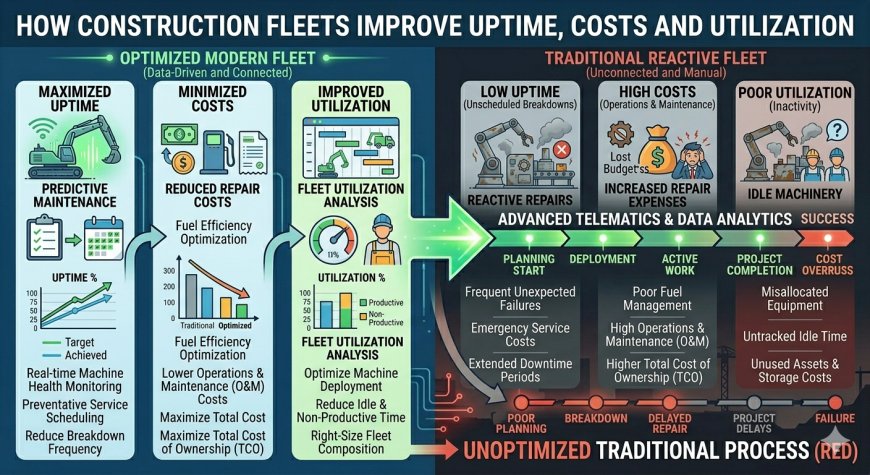
Construction fleets are expensive to operate and difficult to manage without accurate information. Trucks, trailers, heavy equipment, service vehicles, and support assets all affect production, scheduling, safety, and profitability. When fleet data is scattered, teams struggle to control downtime, fuel costs, maintenance, and utilization. This is why construction fleet management software has become essential for companies that want better visibility across fleet operations.
Fleet management in construction is different from managing standard road vehicles. Construction fleets operate in rough conditions, move between jobsites, carry heavy loads, idle for long periods, and support complex project schedules. Managing that fleet requires more than basic vehicle records. It requires live operational insight.
Why Construction Fleet Management Matters
Fleet Problems Slow Down Production
When a truck, excavator, trailer, or service vehicle is unavailable, work can stall. Material delivery may be delayed, crews may lose productive hours, and equipment may sit idle waiting for support.
Fleet problems are not isolated. One issue can create a chain reaction across the jobsite.
Costs Can Hide in Daily Operations
Fuel waste, idle time, emergency repairs, poor routing, underused assets, and unnecessary rentals can quietly increase costs. Without software, these issues are hard to measure.
Construction fleet management software helps teams see where money is being lost and where operations can improve.
Improving Fleet Visibility
Location and Movement Tracking
Fleet visibility starts with knowing where assets are. Location tracking helps teams understand where vehicles and equipment are operating, where they are idle, and whether they are assigned correctly.
This supports faster dispatching, better planning, and fewer unnecessary calls between office and field teams.
Centralized Fleet Records
A strong system keeps vehicle and equipment records in one place. This may include registration, ownership details, inspections, service history, fuel records, utilization data, and compliance documents.
Centralized records reduce confusion and help teams make decisions with accurate information.
Reducing Downtime With Better Maintenance
Preventive Maintenance Scheduling
Construction fleets need regular maintenance to stay reliable. Software can schedule service based on mileage, engine hours, dates, usage, or inspection results.
This helps teams plan maintenance before breakdowns happen. Planned service is usually easier to manage than emergency repairs.
Faster Repair Workflows
When operators or drivers report defects, maintenance teams need quick visibility. Software can connect inspections, defect reports, and work orders in one workflow.
This allows issues to move from field report to repair action faster, reducing downtime and improving accountability.
Controlling Fuel and Idle Costs
Identifying Fuel Waste
Fuel is one of the largest operating costs for construction fleets. Idle time, poor driving habits, inefficient routing, and unnecessary equipment movement can increase fuel spend.
Fleet software helps track fuel usage and identify patterns that need attention.
Reducing Idle Time
Idle time is common on construction sites, but excessive idling wastes fuel and increases wear. Tracking idle time helps teams coach operators, adjust workflows, and reduce unnecessary engine hours.
This improves both cost control and equipment longevity.
Improving Fleet Utilization
Knowing What Is Working and What Is Sitting
A fleet may look busy on paper, but actual utilization can tell a different story. Some assets may be overused while others sit idle.
Construction fleet management software gives teams clearer utilization data. This helps decide whether to move assets, reduce rentals, sell underused units, or adjust fleet size.
Matching Fleet Capacity to Project Needs
Projects change, and fleet needs change with them. Better utilization reporting helps teams understand whether they have the right assets for current and upcoming work.
This prevents overbuying, underusing, and last-minute rental pressure.
Strengthening Compliance and Documentation
Inspection and Safety Records
Fleet compliance depends on accurate records. Vehicle inspections, driver reports, maintenance documentation, registrations, permits, and repair records all need to be organized.
Digital systems make it easier to store and retrieve these records when needed.
Audit Readiness
Paper records can be incomplete, missing, or hard to search. Software creates a clearer audit trail by keeping inspection, maintenance, and compliance documents connected to each asset.
This helps teams respond faster during internal reviews, insurance requests, or regulatory checks.
Better Communication Between Teams
Connecting Field, Shop, and Office
Fleet management requires coordination between drivers, operators, mechanics, dispatchers, project managers, and leadership. When information sits in separate places, communication breaks down.
Software creates one shared system for updates, assignments, alerts, and reports.
Faster Operational Decisions
When fleet data is current, teams can make faster decisions. They can see what is available, what needs service, what is delayed, and what can be reassigned.
This helps keep projects moving and reduces unnecessary downtime.
Final Thoughts
Construction fleet performance affects uptime, costs, utilization, safety, and project delivery. Companies that manage fleets with scattered records and delayed updates often lose money without seeing where the waste begins.
Construction fleet management software gives teams the visibility needed to control maintenance, reduce idle time, improve utilization, organize records, and make faster decisions. For construction operations, better fleet control is not just a back-office improvement. It directly supports stronger jobsite performance.
What's Your Reaction?