


























How Embroidered Patches Are Made in the UK
Learn how embroidered patches in the UK are made, from artwork preparation to stitching, finishing and quality checks.

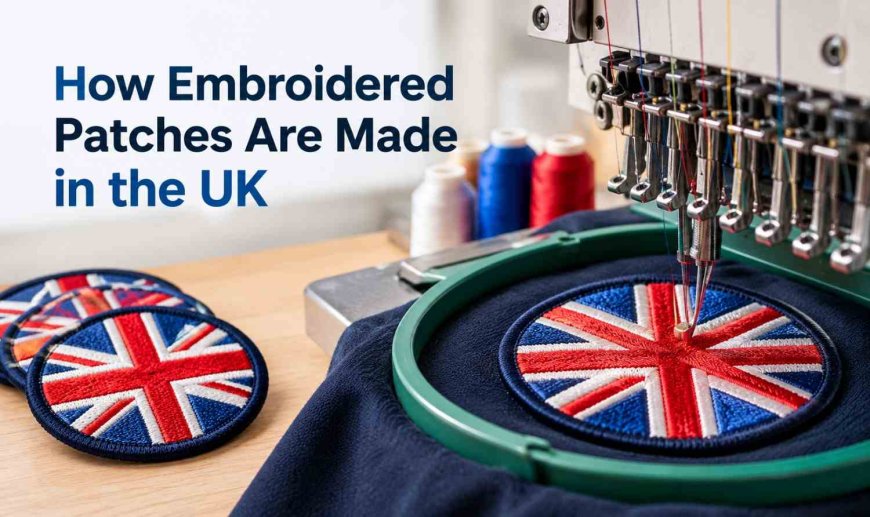
Have you ever studied an embroidered patch and wondered how an artwork gets transformed into a design that is embroidered? This may appear to be an easy process, but many things go on before the patch becomes ready for use. There is artwork preparation, colour selection, and conversion of the design into a form suitable for an embroidery machine.
The way a patch is stitched, trimmed and backed will determine its performance. If you have ever been interested in what goes on behind the scenes, then you’ll find it worthwhile to know the whole process of making patches. Let us see how these patches are made.
What Are Embroidered Patches?
Embroidered patches are those that have designs created through needlework. This means that the patches are stitched to create a design in them. These patches are then sewn onto garments and different fabrics.
The most outstanding feature of the patches is their elevated appearance and stitching. In contrast to logos printed on fabric, embroidery makes use of several layers of thread to create the design.
The production process for an embroidered patch begins well before the actual stitching takes place in the embroidery machine. The process involves several preparation steps.
How Is the Patch Design Prepared?
The first step is reviewing the artwork. Your design may be a company logo, club emblem, illustration, lettering, or a completely original idea. The artwork is checked for:
● Overall size and shape
● Small details and fine lines
● Text and lettering
● Colour combinations
● Areas that need different stitch types
It is important at this stage because embroidery cannot replicate each and every detail as can be done digitally. Text and images which are very tiny and complicated in shape have to be made simpler for the embroidery process.
How Are Thread Colours Chosen?
After the design is developed, colours that suit the design are selected. These colours need to be similar to those of the design but also must be distinguishable from the adjacent colours. For instance, blue text on a black background may not be seen despite being distinct from the background colour on the screen.
How Is the Design Converted for Embroidery?
At this point, the artwork needs to be transformed into the machine embroidery file. During this step, it is determined where the needle should work, how much thread will be used, and how different design elements will be constructed. It is one of the most significant steps in designing an embroidery, as a good digital file does not just replicate the artwork but transforms it into the embroidery technique.
For instance, a certain stitching order is required for the letters, and another technique is needed for a large filled element to avoid heaviness and an unbalanced appearance of the fabric.
What Makes Embroidered Patches UK Production Practical?
Opting for a local producer makes things easier in terms of communication and placing orders since the customer is from the UK, especially if there is a question regarding the design. Embroidered patches uk customers will also probably compare aspects such as time, customisation, size, backing, and the possibility of discussing their requirements regarding the design.
Overall, the UK apparel industry is not dead yet, but the way it manufactures its products has changed from how it was before. Based on ONS statistics, the UK wearing apparel manufacturing industry will amount to roughly £2.07 billion in 2025.
The figure relates to the overall wearing apparel manufacturing industry and not the patches manufacturing industry, and hence it cannot be used as an indicator for the patch market.
What Happens After the Patch Is Embroidered?
The sewing process does not complete everything, as the patch will have to go through more steps before use.
How Are Embroidered Patches Finished and Cut?
When the embroidery has been done, the surplus fabric surrounding the design is stripped off. Finishing the edges of the patch then follows, depending on the type of patch required. A neat finish is necessary since rough edges will give the patch a raw look despite the good stitching.
Quality checks may look for:
● Loose or missed stitches
● Uneven edges
● Incorrect colours
● Design alignment
● Unwanted loose threads
● Backing problems
These checks are especially useful for logos and branded designs where consistency matters across multiple patches.
When Are Custom Embroidered Patches Needed?
Customised embroidery patches may be considered whenever the standard patch cannot do justice to your design. This may be useful for:
● Business uniforms
● Sports teams and clubs
● School groups
● Fashion brands
● Events
● Your own custom designs
These may be especially helpful when the design itself is meaningful. The emblem of a club, logo of a business, or badge of a sports team can turn into a recognisable fabric design rather than a mere print.
How to Get Better Results From Your Patch Design?
You can improve the final result before production even begins. Keep these points in mind:
● Use clear artwork: High-quality artwork makes the production process easier.
● Avoid extremely small text: Tiny lettering may not remain readable after stitching.
● Choose strong colour contrast: The design should remain visible against its fabric base.
● Consider the final size: A detailed design may need more space than expected.
● Choose the backing based on use: Think about washing, removal, and how often the patch will be handled.
● Ask for design guidance when needed: Small changes before production can prevent bigger problems later.
Readers Usually Ask
How much time is needed to create embroidered patches?
Time needed to produce patches is contingent upon their design, quantity, artwork preparation, and finish. Larger orders usually imply that more time needs to be spent on artwork preparation.
Can any logo be transformed into embroidered patches?
Almost all logos can be transformed into embroidered patches. But if a logo is really small, or its details and lettering are too fine, it should be simplified to make the logo recognisable.
Can embroidered patches be washed?
Most embroidered patches can be washed if they are properly affixed to the garment.
Can you buy small batches of embroidered patches?
Certainly, although the minimum quantity is different for each manufacturer.
In Conclusion!
An embroidered patch is made up of a series of processes and not just a design being embroidered onto material. Preparing the artwork, choosing colours, converting to digital format, embroidery, trimming, backing and inspecting all affect the finished patch.
Knowing how the patch is made will help you create more effective artwork and order the appropriate patch for your needs. No matter whether it’s a patch for uniforms, clubs, businesses or personal use, these factors can be the determining factor in how good the final patch looks.
What's Your Reaction?