


























Do Online IQ Tests Follow Real Psychological Standards?
Online IQ tests have become increasingly popular among people who want to measure their intelligence, explore their cognitive strengths, and understand their problem-solving abilities. These tests are easy to access, often inexpensive, and capable of delivering instant results. However, their convenience raises an important question: do online IQ tests follow the same psychological standards as professionally administered intelligence assessments

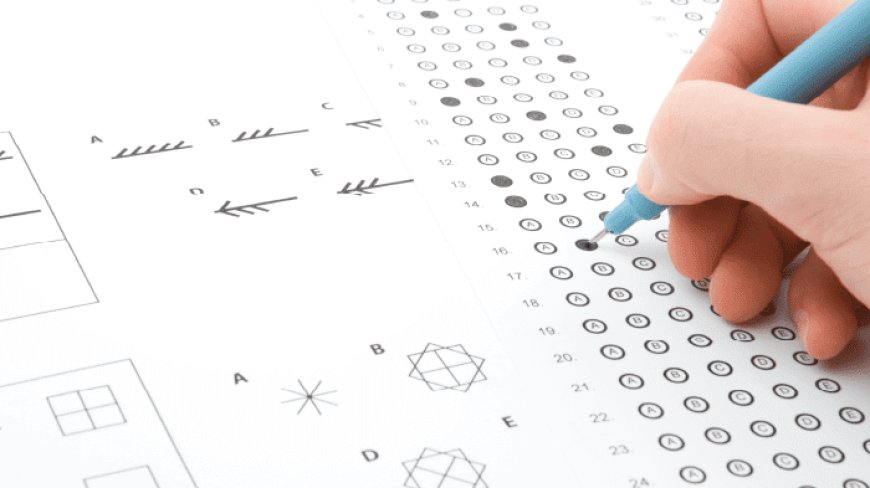
Online IQ tests have become increasingly popular among people who want to measure their intelligence, explore their cognitive strengths, and understand their problem-solving abilities. These tests are easy to access, often inexpensive, and capable of delivering instant results. However, their convenience raises an important question: do online IQ tests follow the same psychological standards as professionally administered intelligence assessments?
The answer depends on the test. Some online assessments may incorporate established psychological principles and provide useful information about selected cognitive abilities. Others are designed primarily for entertainment and lack the scientific evidence necessary to support their IQ scores.
Understanding psychological testing standards can help you distinguish credible assessments from questionable quizzes. This guide explains how professional intelligence tests are developed, how online tests compare with them, and what to consider before trusting an online IQ score.
What Are Psychological Standards in IQ Testing?
Psychological standards are established principles and procedures used to ensure that assessments measure cognitive abilities consistently and meaningfully. These standards help researchers and professionals determine whether a test is suitable for its intended purpose.
A credible intelligence test generally requires careful development, standardized administration, reliable scoring, and evidence supporting the interpretation of its results.
Several important concepts determine the scientific quality of an IQ assessment.
-
Validity: The test measures the abilities it claims to measure, and its results support the intended conclusions.
-
Reliability: The assessment produces reasonably consistent results under comparable conditions.
-
Standardization: Instructions, timing, administration, and scoring procedures follow consistent rules.
-
Normative data: Individual results can be compared with an appropriate reference population.
-
Measurement precision: The assessment acknowledges that scores contain some degree of uncertainty.
These principles are important because an IQ score is not meaningful simply because a website calculates it. The test must provide sufficient evidence that its scoring system measures the intended cognitive abilities.
How Accurate Are Online IQ Tests?
One of the most common questions users ask is, how accurate are online iq tests The answer depends on the assessment's design, scientific validation, scoring methodology, and intended use.
Some online tests may provide useful information about specific reasoning skills, particularly when their development and scoring are supported by research. However, many freely available quizzes do not publish enough evidence to establish that their scores accurately represent general intelligence.
For example, a website might ask users to solve 20 visual puzzles and then report an IQ of 125. Although the questions may assess pattern recognition and logical reasoning, the score cannot automatically be interpreted as equivalent to a score from a professionally standardized IQ test.
To make that conclusion, developers would need evidence that the assessment measures the intended abilities and that its scores can be interpreted meaningfully against an appropriate reference population.
When evaluating online IQ test accuracy, consider the following questions:
-
Does the provider explain how the test was developed?
-
Is there published evidence of reliability and validity?
-
Has the scoring system been compared with appropriate normative data?
-
Are the test's limitations clearly explained?
-
Is the assessment designed for entertainment, informal screening, or formal psychological evaluation?
If these questions cannot be answered, it is safer to treat the score as an informal estimate rather than a scientifically established IQ measurement.
Do Online IQ Tests Use Standardized Procedures?
Standardization ensures that people complete an assessment under comparable conditions. In professional testing, this typically includes consistent instructions, timing rules, scoring procedures, and guidelines for interpreting results.
Many online IQ tests do not fully control these conditions.
Users may complete an assessment while distracted, tired, or interrupted. Some may receive help from other people, use external resources, or take the test on devices that affect their ability to view questions comfortably.
These differences can influence performance and make scores less comparable across individuals.
Professionally developed intelligence assessments generally provide more structured administration procedures. Depending on the instrument, trained professionals may also identify circumstances that could affect interpretation, such as language difficulties or accessibility requirements.
Online delivery does not automatically prevent standardization. A carefully designed digital assessment can use consistent instructions, timing, and scoring. However, developers must demonstrate that their procedures are appropriate and that the resulting scores support the intended use.
The important distinction is not whether a test is online or offline. It is whether the assessment follows appropriate procedures and has evidence supporting its interpretation.
The Importance of Reliability and Validity
Reliability and validity are two essential foundations of psychological testing, but they describe different qualities.
Reliability: Does the Test Produce Consistent Results?
Reliability concerns the consistency of measurement. One way to evaluate it is through test-retest reliability, which examines whether people obtain reasonably similar scores when they complete an assessment on separate occasions under comparable conditions.
Other methods examine whether questions within a test work together appropriately to measure the intended abilities.
Online quizzes may produce different scores across attempts because they use different questions, have inconsistent difficulty levels, or lack a well-established scoring system.
However, score differences can also occur on professionally developed tests because of fatigue, practice effects, and ordinary measurement error.
Validity: Does the Test Measure What It Claims?
Validity concerns whether evidence supports the conclusions drawn from a test's scores.
For example, an online assessment might reliably measure performance on visual puzzles. That consistency does not prove that the assessment accurately measures overall intelligence.
A scientifically credible IQ test needs evidence supporting the interpretation of its scores for the purpose in which it is used.
Both reliability and validity matter. A consistent assessment is not necessarily a valid measure of intelligence, and a test with unsupported scoring cannot become scientifically credible simply by presenting results consistently.
How Professional IQ Tests Are Developed
Recognized intelligence assessments undergo more extensive development than ordinary online quizzes.
Examples include the Wechsler Adult Intelligence Scale (WAIS), the Wechsler Intelligence Scale for Children (WISC), and the Stanford-Binet Intelligence Scales.
These instruments are developed through formal psychological testing procedures. Depending on the assessment, development may involve constructing and evaluating questions, collecting data from appropriate samples, examining reliability and validity, and establishing scoring procedures.
Normative data are particularly important. They provide a reference for interpreting individual performance relative to a suitable population.
Many modern IQ scales use an average score of 100 and a standard deviation of 15. However, these conventions are meaningful only when the assessment's scoring and reference data support their use.
Professional assessments may also provide information about confidence intervals, which communicate uncertainty around a reported score.
Not every online IQ test includes these features. Some provide a single number without explaining the reference population, measurement precision, or scientific basis of the result.
A website that uses the same average IQ value as a professional assessment does not necessarily follow the same psychological standards.
Online IQ Tests vs. Standardized Intelligence Tests
The differences between online quizzes and professional assessments can be summarized across several important areas.
|
Feature |
Online IQ Tests |
Standardized IQ Tests |
|
Accessibility |
Usually available immediately |
Often requires an appointment |
|
Cost |
Frequently free or inexpensive |
Generally more expensive |
|
Development |
Varies by provider |
Follows formal development procedures |
|
Standardization |
Depends on the assessment |
Uses established administration guidelines |
|
Normative data |
May be limited or unavailable |
Supported by established reference data |
|
Interpretation |
Often automated |
Can include professional interpretation |
|
Scientific evidence |
Varies considerably |
Generally supported by psychometric research |
These differences do not mean every online test is inaccurate or every professional assessment is flawless.
A scientifically validated online assessment may be appropriate for certain purposes. Conversely, even a standardized test can produce misleading conclusions if administered incorrectly or interpreted outside its intended scope.
Nevertheless, professional assessments generally provide a stronger foundation for formal cognitive evaluation because their measurement properties and administration procedures are more thoroughly established.
Do Online IQ Tests Measure Intelligence Fairly?
Fairness is another important consideration in psychological testing.
People differ in language proficiency, educational background, cultural experiences, and familiarity with particular question formats. These differences can influence test performance independently of the specific cognitive ability being measured.
For example, a verbal reasoning test administered in an unfamiliar language may underestimate a person's abilities in that area. Similarly, a test that depends heavily on educational knowledge may disadvantage individuals who have had fewer learning opportunities.
Professionally developed assessments attempt to evaluate these issues through research, appropriate test design, and suitable normative data.
Online quizzes may not provide enough information to determine whether their questions work similarly across different populations.
This does not mean that every online test is inherently unfair. Rather, fairness should be supported by evidence instead of assumed because the test is available to everyone.
Users should also remember that an IQ score represents performance on selected cognitive tasks, not every aspect of intelligence, creativity, or personal potential.
How to Identify an Online IQ Test That Follows Scientific Standards
If you want to take an online IQ test, look for evidence that the provider takes psychological measurement seriously.
Check the scientific background. Look for research describing how the assessment was developed and evaluated.
Review the scoring methodology. The provider should explain how answers are converted into scores and what those scores represent.
Look for normative data. Find out whether the test has been compared with an appropriate reference population.
Examine the test's purpose. A recreational puzzle quiz should not be presented as equivalent to a comprehensive psychological assessment.
Consider measurement limitations. Credible providers should acknowledge uncertainty and explain what conclusions their tests cannot support.
Review privacy and payment terms. Understand how personal information is handled and whether detailed results require payment.
Be cautious of websites that promise to reveal your exact intelligence in a few minutes without providing evidence of validation. Attractive design, immediate feedback, and impressive-looking scores are not substitutes for scientific research.
When Should You Choose a Professional IQ Assessment?
An online test may be sufficient if your goal is simply to enjoy reasoning puzzles or explore different cognitive challenges.
However, if you need an IQ score for educational planning, clinical evaluation, or another important decision, consider consulting a qualified psychologist about an appropriate standardized assessment.
Professional testing can provide a more detailed picture of cognitive functioning, including relative strengths and weaknesses across different domains. A psychologist can also explain the limitations of the results and determine whether further evaluation is appropriate.
Even then, an IQ score should not be treated as a complete prediction of future success. Learning opportunities, motivation, experience, persistence, and other personal factors also influence how people develop and use their abilities.
Final Thoughts
Do online IQ tests follow real psychological standards? Some may incorporate recognized testing principles, but many online quizzes do not provide enough evidence to establish that their scores are scientifically valid.
The question of how accurate are online IQ tests depends on the specific assessment, its reliability and validity, its scoring procedures, and the purpose for which it is used.
Standardized intelligence tests generally offer a stronger scientific foundation because they use established procedures, appropriate normative data, and formal psychometric research. Online tests can still be useful for informal exploration, provided their limitations are understood.
Before trusting your score, investigate how the test was developed, what it measures, and whether its results support the conclusions being made. Ultimately, an IQ score is one source of information about cognitive performance, not a complete measure of your intelligence or future potential.
What's Your Reaction?