


































Cost Analysis for Silica Sand Processing Plant 2026: Setup Requirements

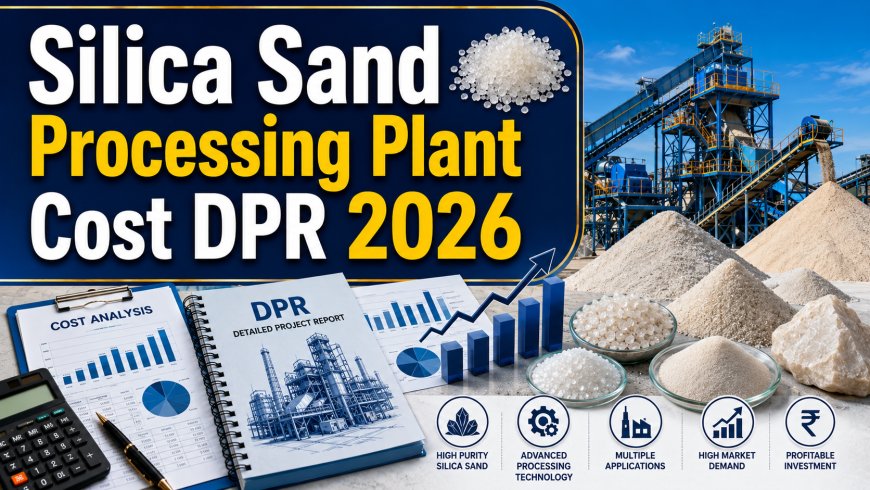
Setting up a silica sand processing plant involves a series of controlled operations such as raw material handling, washing, screening, attrition scrubbing, classification, magnetic separation, flotation, dewatering, and drying. Key equipment includes crushers, scrubbers, screens and classifiers, attrition cells, magnetic separators, flotation columns, dewatering filters, fluidized bed dryers, and pneumatic loading systems. Since this is an industrial-grade processing facility, maintaining consistent particle size distribution, high chemical purity, and compliance with end-user quality specifications is critical. Additionally, evaluating the silica sand plant project report is essential for understanding capital investment, machinery requirements, operational efficiency, and long-term profitability in this rapidly growing silica sand market.
The silica sand processing industry is expected to witness stable growth through 2026, driven by rising global demand across glass manufacturing, foundry casting, construction materials, hydraulic fracturing, water filtration, and specialty chemical applications. The global silica sand market size was valued at USD 25.4 Billion in 2025. According to IMARC Group estimates, the market is projected to reach USD 38.3 Billion by 2034, exhibiting a CAGR of 4.7% from 2026 to 2034. As infrastructure expansion accelerates and renewable energy deployment increases the need for high-purity glass substrates and silicon-based materials, silica sand remains a foundational industrial input.
IMARC Group's report, titled "Silica Sand Processing Plant Cost Analysis 2026: Industry Trends, Plant Setup, Machinery, Raw Materials, Investment Opportunities, Cost and Revenue," provides a complete roadmap for setting up a silica sand processing plant. It covers a comprehensive market overview to micro-level information such as unit operations involved, raw material requirements, utility requirements, infrastructure requirements, machinery and technology requirements, manpower requirements, packaging requirements, transportation requirements, etc.
Request for a Sample Report: https://www.imarcgroup.com/silica-sand-processing-plant-project-report/requestsample
Silica Sand Industry Outlook 2026
The silica sand market is primarily driven by expanding construction activities and increasing glass consumption in residential, automotive, and solar applications. Growth in foundry output for automotive and industrial components further supports demand. The U.S. Census Bureau reported that construction spending during August 2025 was estimated at a seasonally adjusted annual rate of USD 2,169.5 Billion, reflecting continued investment in infrastructure that sustains silica sand consumption. In the energy sector, silica sand consumption is linked to hydraulic fracturing activities, particularly in unconventional oil and gas extraction. Additionally, rising investments in water treatment infrastructure and environmental remediation projects are contributing to steady demand for high-purity filtration-grade silica sand.
Technological advancements in beneficiation and classification processes are enabling producers to meet stringent end-user specifications more efficiently, improving yield and reducing waste. However, challenges such as raw material availability and grade variability, high initial capital investment for processing machinery and land, energy consumption concerns in drying and beneficiation operations, and evolving environmental regulations on dust and effluent management may influence production costs and strategic investment decisions for new plant setups.
Key Insights for Setting Up a Silica Sand Processing Plant
Detailed Process Flow
• Product Overview
• Unit Operations Involved
• Mass Balance and Raw Material Requirements
• Quality Assurance Criteria
• Technical Tests
Project Details, Requirements and Costs Involved
• Land, Location and Site Development
• Plant Layout
• Machinery Requirements and Costs
• Raw Material Requirements and Costs
• Packaging Requirements and Costs
• Transportation Requirements and Costs
• Utility Requirements and Costs
• Human Resource Requirements and Costs
Capital Expenditure (CapEx) and Operational Expenditure (OpEx) Analysis
Project Economics
• Capital Investments
• Operating Costs
• Expenditure Projections
• Revenue Projections
• Taxation and Depreciation
• Profit Projections
• Financial Analysis
Profitability Analysis
• Total Income
• Total Expenditure
• Gross Profit
• Gross Margin
• Net Profit
• Net Margin
Key Cost Components
• Raw Materials: The primary cost driver, including raw silica sand as the core feedstock, along with chemicals used in flotation and beneficiation. Raw materials typically account for 40–50% of total operating expenditure.
• Energy Costs: Silica sand processing is energy-intensive, particularly in the drying and attrition scrubbing stages, requiring significant amounts of electricity, natural gas, and compressed air. Utilities typically represent 20–30% of OpEx.
• Machinery and Equipment: Capital investment in crushers, scrubbers, screens and classifiers, attrition cells, magnetic separators, flotation columns, dewatering filters and cyclones, fluidized bed dryers, and pneumatic loading systems, along with ongoing maintenance costs.
• Labor: Includes salaries, training, and benefits for skilled and unskilled workers involved in plant operation, maintenance, and quality control across processing, laboratory, and logistics functions.
• Utilities: Costs for water, compressed air, cooling systems, and other utilities essential for continuous and safe production operations throughout the processing plant.
• Packaging and Transportation: Expenses related to bagging, bulk loading, storing, and distributing finished silica sand to industrial customers, including logistics infrastructure and freight arrangements.
• Depreciation and Financing: Depreciation of fixed assets and interest or repayment obligations for loans or capital investment deployed during plant setup and commissioning.
• Compliance and Safety: Investment in dust suppression systems, effluent treatment, environmental compliance, safety measures, and waste management facilities, especially critical for silica sand operations subject to occupational silica dust regulations.
• Overheads: Administrative costs such as insurance, office operations, licensing, marketing, and general plant management, including regulatory reporting and quality certification maintenance.
Economic Trends Influencing Silica Sand Plant Setup Costs 2026
Raw Silica Sand & Input Material Price Variability
As raw silica sand, chemical reagents for flotation, and starch-based binders are primary inputs for silica sand processing, fluctuating availability and grade variability directly impact both capital and operating costs. Higher-purity feedstock requirements raise beneficiation costs, making raw material assessment, deposit quality testing, and supplier diversification more critical for new plant investors.
Carbon Pricing & Environmental Policies
Growing regulatory focus on silica dust exposure, effluent discharge, and land reclamation increases costs related to dust suppression systems, wastewater treatment, and environmental compliance. Stricter occupational health standards governing respirable crystalline silica (RCS) exposure necessitate additional investment in enclosed processing areas, filtration systems, and worker health monitoring programs.
Inflation & Interest Rates
Rising inflation inflates the cost of civil construction, processing equipment, steel structures, and conveying systems, while higher interest rates increase the cost of loans and financing needed for plant construction, equipment procurement, and operational ramp-up. These factors together elevate total project capital requirements compared to prior years.
Government Subsidies & Stimulus
Policies supporting domestic manufacturing, infrastructure development, and renewable energy deployment — especially in economies with strong solar glass or semiconductor production ambitions — can reduce silica sand plant setup costs through grants, low-interest loans, or tax incentives directed at strategic mineral processing investments.
Technological Advancements
Innovations in high-efficiency attrition scrubbers, column flotation cells, automated particle size analyzers, and real-time grade monitoring systems can increase upfront CapEx but offer significant productivity gains, improved product consistency, reduced reagent waste, and lower per-unit costs — enhancing long-term ROI and competitiveness in premium silica sand markets.
Supply Chain Localization
Efforts to develop domestic silica sand processing capabilities near glass manufacturing, foundry, or construction clusters are incentivizing in-country investment in processing infrastructure and raw deposit development. This can reduce logistics costs and improve delivery reliability, while simultaneously strengthening regional supply chains for critical industrial inputs.
Labor Market Considerations
Shortages in skilled operators for advanced beneficiation equipment, flotation circuits, and automated quality testing systems can drive up wages or require investment in technical training programs. Rising labor costs and the need for specialized expertise raise both initial setup and ongoing operational expenses, particularly in locations with limited industrial workforce infrastructure.
Speak to an Analyst for Customized Report: https://www.imarcgroup.com/request?type=report&id=7691&flag=C
Challenges and Considerations for Investors
• Feedstock Deposit Quality & Consistency: Silica sand processing is highly dependent on the quality and mineralogical consistency of the raw sand deposit. Variability in iron content, clay contamination, or particle size distribution can require more intensive beneficiation, increasing operating costs and affecting product yield.
• High Capital Intensity: Establishing a silica sand processing plant requires substantial investment in crushing, washing, classification, flotation, and drying infrastructure. Long payback periods and significant land and water requirements can deter risk-averse investors or complicate financing in regions with limited industrial credit.
• Environmental Compliance: Stringent environmental regulations on silica dust emissions, effluent discharge, and mining area reclamation require additional investment in pollution control technologies, water recycling systems, and sustainable land management practices — increasing both CapEx and OpEx.
• End-User Specification Requirements: Industrial buyers in glass manufacturing, foundry, semiconductor, and solar panel production require silica sand with highly specific purity levels, particle size distributions, and chemical compositions. Meeting these requirements demands precision processing and continuous quality testing, raising operational complexity.
• Market Competition: The global silica sand market is competitive, with established producers such as Sibelco, U.S. Silica Holdings, Covia Holdings, Quarzwerke Group, and Badger Mining Corporation holding significant market positions. New entrants must focus on niche markets, regional supply advantages, or superior product specifications to establish commercial viability.
• Logistics and Distribution: Transporting bulk silica sand to industrial customers requires reliable road, rail, or port infrastructure and appropriate storage facilities. Poor logistics can lead to distribution bottlenecks, increased freight costs, and difficulty meeting just-in-time delivery requirements of glass or foundry customers.
• Technological Barriers: Staying competitive in high-value silica sand markets requires adopting advanced, energy-efficient beneficiation and classification technologies. Outdated processing systems lead to higher reagent consumption, lower product quality, greater environmental impact, and reduced competitiveness in premium application segments.
• Policy and Regulatory Risks: Changes in government policies related to mining licenses, environmental clearances, water use permissions, or export restrictions on silica sand can alter market dynamics and significantly affect investment timelines and project economics.
Latest Industry Developments
• December 2025: Homerun Resources Inc. announced that the firm had received a Lab Scale Treatment Test Report from Minerali Industriali Engineering Srl confirming that high purity, low iron silica sand from Santa Maria Eterna, Belmonte, Bahia, Brazil is suitable for the manufacture of antimony-free solar glass.
• September 2025: VRX Silica Limited announced that it had received works approval from the Department of Water and Environmental Regulation for the proposed development of its 100%-owned Arrowsmith North Silica Sand Project.
About Us
IMARC Group is a global management consulting firm that helps the world's most ambitious changemakers to create a lasting impact. The company excels in understanding its clients' business priorities and delivering tailored solutions that drive meaningful outcomes. We provide a comprehensive suite of market entry and expansion services. Our offerings include thorough market assessment, feasibility studies, company incorporation assistance, factory setup support, regulatory approvals and licensing navigation, branding, marketing and sales strategies, competitive landscape and benchmarking analyses, pricing and cost research, and procurement research.
Contact Us
IMARC Group
134 N 4th St. Brooklyn, NY 11249, USA
Email: sales@imarcgroup.com
Tel No: (D) +91 120 433 0800
United States: +1-201-971-6302
What's Your Reaction?