































Construction Scheduling Software: Simplify Project Planning and Improve Construction Efficiency
Construction Scheduling Software, Construction Scheduling

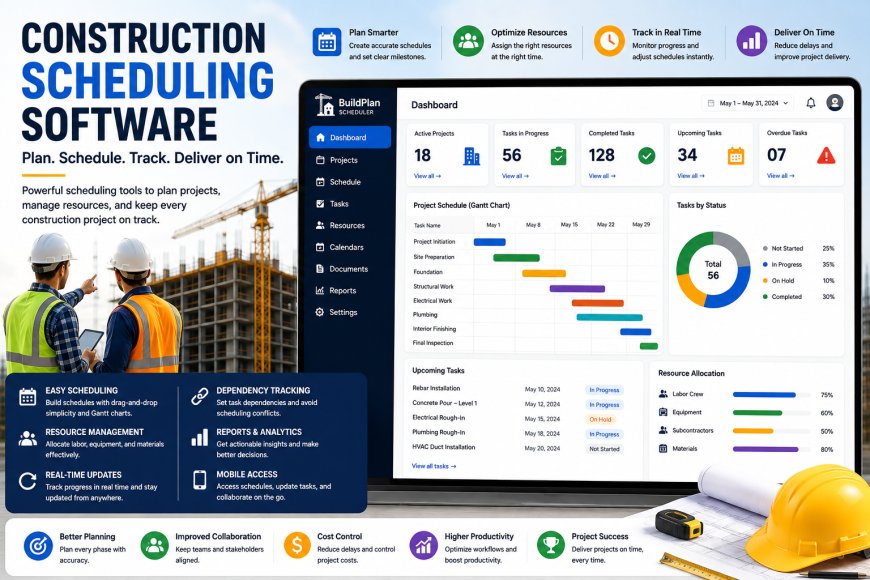
Construction projects involve many moving parts, including workers, subcontractors, equipment, materials, deadlines, and project milestones. Keeping everything organized can be challenging when schedules are managed manually. Construction Scheduling Software provides construction companies with digital tools to plan activities, assign tasks, manage timelines, and monitor project progress from one centralized platform.
By replacing spreadsheets, paper schedules, and disconnected communication methods, construction teams can gain better visibility into project timelines. Project managers can quickly identify upcoming tasks, scheduling conflicts, and potential delays, allowing them to make adjustments and keep work progressing.
What Is Construction Scheduling Software?
Construction Scheduling Software is a digital solution designed to help contractors, builders, and project managers create, manage, and track construction schedules. It allows teams to organize tasks, set deadlines, establish dependencies, assign resources, and monitor progress.
These tools can be useful for residential construction, commercial projects, infrastructure development, renovations, and other construction activities. A centralized schedule gives project stakeholders a shared view of important tasks and milestones.
Key Features of Construction Scheduling Software
Modern scheduling platforms typically provide features such as task management, calendar scheduling, Gantt charts, milestone tracking, resource allocation, deadline management, progress tracking, and reporting.
Gantt charts can provide a visual representation of project activities and task dependencies. Resource scheduling features can help managers determine when workers, equipment, and other resources are needed.
Many platforms also support mobile access, allowing field teams to view schedules, update task status, and communicate project changes while working on-site.
Benefits of Construction Scheduling Software
One of the main advantages of Construction Scheduling Software is improved project visibility. Managers can monitor schedules and identify activities that are falling behind before they create larger problems.
Better scheduling can also improve resource utilization. Teams can coordinate workers and equipment according to project requirements, helping reduce scheduling conflicts and idle time.
The software can also improve communication between project managers, contractors, subcontractors, and other stakeholders. Everyone can work from a shared and updated schedule, reducing confusion about responsibilities and deadlines.
How to Choose the Right Software
When selecting Construction Scheduling Software, companies should consider ease of use, scheduling features, Gantt charts, resource management, mobile accessibility, collaboration tools, reporting, integrations, scalability, and pricing.
The right solution should fit the company's project size and workflow while remaining simple enough for employees and field teams to use consistently.
Conclusion
Construction Scheduling Software helps construction businesses organize project timelines, coordinate resources, track progress, and improve communication. By moving from manual scheduling to a centralized digital solution, construction teams can gain better control over project activities and work toward completing projects efficiently and on schedule.
For more, visit: https://zingmatrix.com/
What's Your Reaction?