

































Butadiene Market: Global Trends, Growth Analysis, and Forecast Outlook
Butadiene Market

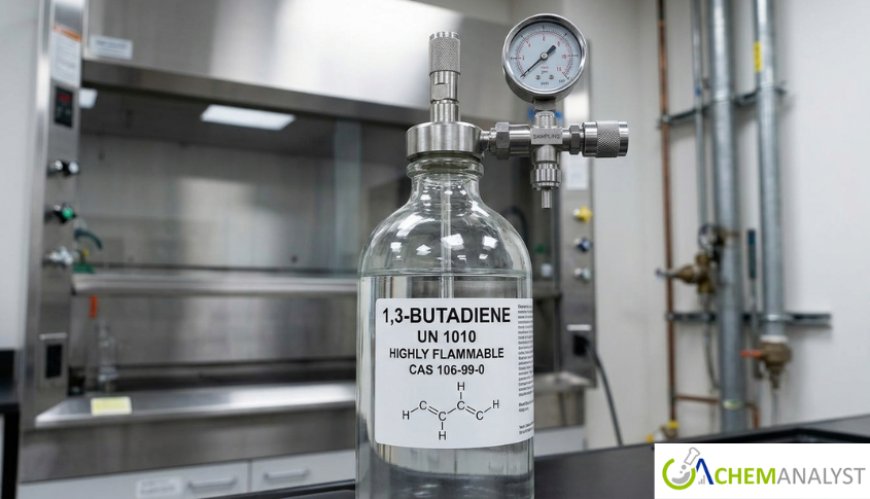
The Butadiene Market is witnessing strong and sustained global growth, driven by expanding demand from the automotive, synthetic rubber, packaging, and engineering plastics industries. As a highly reactive petrochemical intermediate, 1,3-butadiene serves as a foundational building block in the production of synthetic elastomers such as styrene-butadiene rubber (SBR), polybutadiene rubber (PBR), acrylonitrile butadiene styrene (ABS), and nitrile butadiene rubber (NBR). These downstream products are essential for modern tire manufacturing, automotive components, footwear, adhesives, and consumer electronics.
The Butadiene Market Trend is increasingly shaped by the rapid growth of the automotive sector, especially electric vehicles, rising demand for lightweight engineering plastics, and growing investments in bio-based production pathways. With Asia-Pacific leading both production and consumption, the market outlook remains highly positive through 2036.
Butadiene Market Size and Forecast Outlook
According to ChemAnalyst, the global Butadiene Market Size was valued at USD 12,660 million in 2025 and is projected to reach USD 23,140 million by 2036, registering a CAGR of 5.61% during 2026–2036.
This robust growth trajectory is supported by:
- rising synthetic rubber demand
- strong tire manufacturing growth
- increasing automotive production
- expansion in engineering plastics
- infrastructure and packaging applications
The market’s growth is particularly tied to rising vehicle ownership and replacement tire demand across developing economies.
Introduction to Butadiene
Butadiene, chemically known as 1,3-butadiene, is a colorless, highly flammable gas primarily produced during the steam cracking of hydrocarbon feedstocks such as naphtha. It is isolated from the C4 co-product stream through extractive distillation using specialized polar solvents.
Its molecular structure resembles isoprene, the primary monomer found in natural rubber, but with a simpler unsubstituted conjugated diene framework.
This chemical architecture gives butadiene outstanding polymerization properties, enabling the production of synthetic rubbers with:
- superior abrasion resistance
- enhanced low-temperature flexibility
- exceptional fatigue resistance
- high tensile strength
- excellent durability
These performance characteristics make it indispensable across multiple industrial sectors.
Key Butadiene Market Trends
1. Strong Growth in Synthetic Rubber Industry
One of the most important Butadiene Market Trends is the dominance of synthetic rubber applications.
Butadiene is widely used in the production of:
- styrene-butadiene rubber (SBR)
- polybutadiene rubber (PBR)
- nitrile butadiene rubber (NBR)
- styrene-butadiene latex (SBL)
Among these, styrene-butadiene rubber holds the dominant market share, primarily due to its extensive use in tire manufacturing.
Key benefits include:
- excellent wear resistance
- improved traction
- better tread durability
- reduced rolling resistance
These properties are essential for passenger and commercial vehicle tires.
2. Rising Automotive and EV Demand
Another major Butadiene Market Trend is rising demand from the automotive industry.
The automotive sector is the largest end-use industry for butadiene.
Applications include:
- tires
- seals and gaskets
- hoses
- interior ABS components
- battery casings for EVs
The transition toward electric vehicles (EVs) is further accelerating demand because EVs require:
- low rolling resistance tires
- durable elastomers
- lightweight engineering plastics
The higher torque and weight of EVs increase the need for advanced butadiene-derived materials.
Book A Demo
https://www.chemanalyst.com/ChemAnalyst/RequestForm?rn=Butadiene%20Market
3. Growth in ABS Engineering Plastics
The fastest-growing segment within the Butadiene Market is ABS resins.
ChemAnalyst highlights acrylonitrile butadiene styrene (ABS) as the fastest-growing application segment.
ABS is widely used in:
- automotive interiors
- consumer electronics housings
- appliance parts
- electrical components
- structural plastic assemblies
Its growth is driven by rising demand for impact-resistant, lightweight materials.
4. Shift Toward Sustainable and Bio-Based Butadiene
Sustainability is becoming a defining Butadiene Market Trend.
A major recent development is the advancement of bio-based butadiene production.
ChemAnalyst notes that Michelin, IFPEN, and Axens successfully used 100% bio-sourced butadiene in their BioButterfly project to produce commercial-grade rubber.
This shift supports:
- carbon footprint reduction
- circular economy initiatives
- reduced petrochemical dependency
Bio-butadiene is expected to play a growing role in future market development.
Market Segmentation Analysis
According to ChemAnalyst, the Butadiene Market is segmented by application and end-use industry.
By Application
- Styrene-Butadiene Rubber (SBR)
- Polybutadiene Rubber (PBR)
- ABS Resins
- Styrene-Butadiene Latex
- Nitrile Butadiene Rubber
- Adiponitrile
Among these, SBR remains the largest segment.
By End-Use Industry
- Automotive
- Packaging
- Construction
- Consumer Electronics
- Industrial Manufacturing
The automotive segment dominates due to tire production demand.
Regional Market Insights
Asia-Pacific: Market Leader
Asia-Pacific holds the largest share in the Butadiene Market Size and remains the most influential regional market globally.
Key drivers include:
- rapid industrialization
- automotive production growth
- infrastructure development
- increasing middle-class population
- strong petrochemical investments
Countries such as China and India are the main growth engines.
Government initiatives such as Make in India are also supporting localized manufacturing expansion.
North America
North America continues to show steady demand due to:
- replacement tire market
- advanced engineering plastics
- automotive production
- specialty rubber applications
Europe
Europe’s market is driven by:
- EV manufacturing growth
- fuel-efficient tire regulations
- low rolling resistance standards
- sustainability mandates
Recent Industry Developments
The Butadiene Market has seen strong capacity expansion from late 2024 through early 2026.
Important developments include:
- PT Lotte Chemical Indonesia launched a 140,000 TPA plant
- ExxonMobil commissioned a 270,000 TPA unit in Huizhou, China
- new units by Yulong Petrochemical
- expansion by PetroChina Jilin Petrochemical
These investments highlight strong long-term confidence in demand growth.
Competitive Landscape
The global Butadiene Market is moderately consolidated.
Key Players
- BASF SE
- LyondellBasell
- Shell Chemicals
- TPC Group
- Synthos S.A.
These companies are focused on:
- capacity expansion
- process innovation
- sustainable feedstocks
- global distribution strengthening
Market Drivers
Major factors driving the Butadiene Market include:
1. Tire Manufacturing Growth
The largest growth engine globally.
2. EV Expansion
Demand for advanced elastomers and ABS parts.
3. Synthetic Rubber Demand
Wide industrial use across multiple sectors.
4. Engineering Plastics
Rapid growth in ABS applications.
Market Challenges
Despite strong growth, the market faces several challenges:
- feedstock price volatility
- dependence on naphtha cracking output
- environmental regulations
- competition from bio-based alternatives
However, ongoing investments in on-purpose and sustainable production are helping mitigate these risks.
Future Outlook
The future of the Butadiene Market remains highly promising.
Key opportunities include:
- EV tire innovation
- advanced engineering plastics
- bio-butadiene commercialization
- sustainable rubber production
- Asia-Pacific capacity expansion
The Butadiene Market Size is expected to nearly double by 2036.
Conclusion.
The Butadiene Market is on a strong long-term growth path, driven by rising synthetic rubber demand, automotive expansion, engineering plastics growth, and sustainable innovation.
With the market projected to grow from USD 12.66 billion in 2025 to USD 23.14 billion by 2036, the outlook remains highly positive.
Key Butadiene Market Trends, including EV demand, Asia-Pacific dominance, and bio-based production innovation, are expected to define the next phase of global industry expansion.
What's Your Reaction?