






























Building Secure Investment Networks with White Label Real Estate Tokenization
Discover how White Label Real Estate Tokenization helps businesses build secure investment networks with compliant, efficient, and digital property platforms.

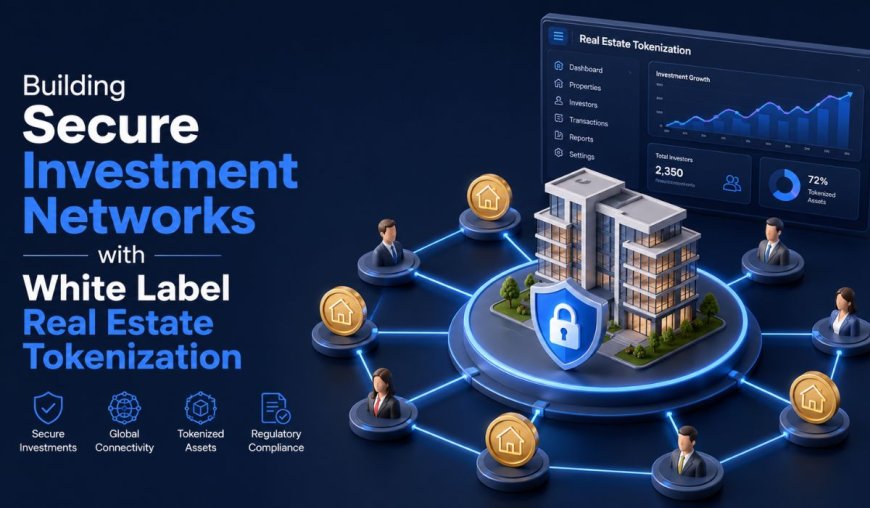
Real estate investment has changed significantly over the last few years as blockchain technology has introduced new ways to manage, distribute, and monitor property ownership. Investors are no longer limited to local opportunities or complicated ownership structures. Businesses are also looking for digital platforms that make property investment easier while maintaining compliance and protecting investor interests. As participation grows, security has become one of the biggest priorities for companies entering this market.
White Label Real Estate Tokenization offers businesses a practical way to launch secure property investment platforms without developing every feature from the beginning. It combines blockchain infrastructure, investor management, digital asset issuance, compliance functions, and ownership records within a single ecosystem. Companies can enter the market faster while maintaining consistent operational standards and offering investors a reliable experience.
This article explains how businesses can establish secure investment networks through tokenized real estate platforms, the technologies involved, security practices, compliance considerations, and why choosing the right development approach matters for long-term success.
Why Security Matters in Digital Real Estate Investment
Every investment platform deals with valuable financial information, ownership records, investor identities, and transaction histories. Real estate platforms have an even greater responsibility because they represent ownership of physical assets with substantial financial value.
Without proper security measures, businesses may encounter problems such as:
-
Unauthorized wallet access
-
Identity fraud
-
Smart contract vulnerabilities
-
Asset manipulation
-
Data leaks
-
Regulatory complications
-
Loss of investor confidence
A secure investment ecosystem protects both the business and its investors throughout the investment lifecycle.
Understanding White Label Real Estate Tokenization
White Label Real Estate Tokenization is a ready-to-deploy blockchain solution that allows businesses to launch branded property investment platforms using pre-developed technology.
Instead of spending years creating every component independently, organizations receive an operational platform that includes property token creation, investor onboarding, compliance modules, transaction management, and administrative controls.
This model allows companies to focus on business expansion, investor acquisition, and property listings while relying on a tested blockchain infrastructure.
Building a Trusted Investment Network
An investment network involves much more than simply issuing digital property tokens. Every participant should have confidence in the platform's operations.
A secure network usually includes:
Verified Investors
Every investor should complete identity verification before participating. Know Your Customer (KYC) procedures help reduce fraudulent activities while maintaining regulatory compliance.
Investor verification also creates a healthier investment environment where participants know they are interacting with verified individuals.
Verified Property Listings
Every listed property should undergo legal and financial verification before token issuance.
This process commonly includes:
-
Ownership validation
-
Property valuation
-
Legal documentation
-
Due diligence
-
Financial assessment
-
Asset registration
Only verified properties should enter the investment marketplace.
Controlled Access
Different users require different permissions.
Administrative teams, investors, auditors, compliance officers, and property managers should only access functions relevant to their responsibilities.
Permission-based access reduces operational risks while improving internal management.
Smart Contracts for Secure Transactions
Smart contracts automate various investment activities without requiring manual intervention.
Common functions include:
Property Token Distribution
Once investors complete payment, ownership tokens are automatically distributed according to the investment amount.
This reduces manual processing errors.
Dividend Distribution
Rental income can be distributed automatically based on each investor's ownership percentage.
Every transaction remains permanently recorded on the blockchain.
Ownership Transfers
When regulations permit secondary market transactions, smart contracts process ownership transfers according to predefined conditions.
This minimizes administrative work while maintaining accurate ownership records.
Compliance Verification
Smart contracts can verify investor eligibility before approving transactions, preventing unauthorized participation.
Blockchain Security Practices
Every White Label Real Estate Tokenization Platform should include several security layers instead of relying on a single protection method.
Multi Signature Wallets
High-value transactions can require approval from multiple authorized parties.
This reduces risks associated with a single compromised wallet.
Encryption
Sensitive business information and investor records should remain encrypted during storage and transmission.
Encryption helps reduce the possibility of unauthorized data exposure.
Immutable Transaction Records
Blockchain permanently records completed transactions.
Since records cannot be modified later, ownership history remains reliable for audits and regulatory reviews.
Continuous Monitoring
Security monitoring identifies suspicious behaviour such as unusual wallet activity, repeated login attempts, or unexpected transaction patterns.
Early detection allows businesses to respond before issues become more serious.
Compliance as Part of Platform Security
Security is not limited to technology.
Regulatory compliance also protects businesses and investors.
A White Label Real Estate Tokenization Platform normally includes compliance features such as:
-
KYC verification
-
AML monitoring
-
Investor eligibility checks
-
Jurisdiction controls
-
Tax reporting support
-
Audit records
-
Document management
Meeting legal requirements reduces operational uncertainty while supporting sustainable platform growth.
Protecting Investor Information
Investor confidence depends on responsible handling of personal and financial information.
Businesses should implement practices including:
Identity Protection
Personal information should remain encrypted and accessible only to authorized personnel.
Secure Document Storage
Documents such as passports, company registrations, tax records, and compliance certificates require protected storage systems.
Controlled Data Access
Employees should only access information required for their specific responsibilities.
This minimizes internal security risks.
Regular Security Reviews
Periodic reviews help identify outdated software, configuration issues, and potential vulnerabilities before they affect platform operations.
White Label Real Estate Tokenization Services for Investment Platforms
Many businesses prefer working with experienced providers rather than developing blockchain systems independently.
White Label Real Estate Tokenization Services generally include:
Platform Configuration
Businesses receive branded dashboards matching their business identity.
Token Issuance
Property-backed digital tokens are generated according to business requirements.
Wallet Integration
Secure cryptocurrency wallets allow investors to manage digital assets safely.
Investor Dashboard
Investors can monitor portfolios, ownership percentages, distributions, and transaction history through a user-friendly interface.
Compliance Modules
Integrated KYC and AML verification reduce administrative workloads while supporting regulatory requirements.
Administrative Dashboard
Businesses receive complete management tools for investors, assets, reports, and transactions.
The Role of White Label Tokenization Platform Technology
A White Label Tokenization Platform connects several important components into one investment ecosystem.
These commonly include:
-
Property management
-
Token issuance
-
Investor onboarding
-
Wallet management
-
Smart contracts
-
Compliance tools
-
Reporting dashboards
-
Payment gateways
-
Asset monitoring
-
Administrative controls
Combining these functions simplifies day-to-day platform management while offering investors a consistent experience.
White Label Real Estate Tokenization Development for Long-Term Operations
Launching a platform is only one part of the process.
White Label Real Estate Tokenization Development also involves continuous improvements that keep the platform secure and competitive.
Examples include:
Security Updates
Blockchain software should receive regular updates to address newly identified vulnerabilities.
Smart Contract Reviews
Contracts should undergo periodic audits whenever new features are introduced.
Regulatory Updates
Laws surrounding digital assets continue to change.
Platform policies and compliance modules should remain aligned with current regulations.
Performance Improvements
Growing investor communities require efficient platform performance without compromising security.
Risk Management Strategies
Every investment platform should prepare for potential operational risks.
Effective strategies include:
Backup Systems
Critical business information should remain available through secure backup infrastructure.
Disaster Recovery Planning
Businesses should maintain recovery procedures for unexpected technical incidents.
Independent Security Audits
Third-party audits provide additional confidence regarding smart contracts and platform security.
Incident Response Planning
Organizations should prepare documented procedures for handling cybersecurity incidents quickly and efficiently.
Benefits for Property Businesses
Property firms adopting White Label Real Estate Tokenization often experience several business advantages.
Wider Investment Participation
Fractional ownership lowers investment barriers, allowing more participants to invest in premium properties.
Better Liquidity
Tokenized ownership creates opportunities for secondary trading where regulations permit.
Reduced Administrative Work
Automation handles many repetitive operational processes.
Improved Investor Management
Digital dashboards simplify communication, reporting, and ownership tracking.
Better Record Keeping
Blockchain records provide reliable transaction histories for businesses, auditors, and regulators.
Future Direction of Secure Property Investment
Digital property ownership continues gaining attention across commercial, residential, hospitality, industrial, and mixed-use real estate sectors.
Businesses entering this market are placing greater emphasis on:
-
Stronger investor verification
-
Improved smart contract auditing
-
Better compliance automation
-
Cross-border investment support
-
Digital identity integration
-
Institutional participation
-
Secure asset management
As technology and regulations continue developing, investment platforms that prioritize security and compliance are more likely to attract long-term investor participation.
Conclusion
Building secure investment networks requires much more than blockchain integration. Businesses must combine verified property listings, investor authentication, smart contract security, compliance procedures, encrypted data management, and continuous platform monitoring to create a dependable investment environment. White Label Real Estate Tokenization gives companies a practical path to launch secure digital property investment platforms while reducing development time and operational complexity. For organizations planning to enter this growing sector, Blockchain App Factory provides White Label Real Estate Tokenization Development with comprehensive platform solutions that support secure real estate token issuance, investor management, compliance integration, and business-ready deployment.
FAQs
1. What is White Label Real Estate Tokenization?
White Label Real Estate Tokenization is a ready-to-launch blockchain solution that allows businesses to offer branded property investment platforms where real estate assets are divided into digital tokens representing fractional ownership.
2. Why is security important in a real estate tokenization platform?
Security protects investor information, ownership records, digital wallets, smart contracts, and financial transactions while helping businesses comply with legal and regulatory requirements.
3. What features are included in a White Label Real Estate Tokenization Platform?
Most platforms include investor onboarding, KYC and AML verification, token issuance, wallet integration, smart contracts, property management, administrative dashboards, reporting tools, and compliance modules.
4. How do White Label Real Estate Tokenization Services help businesses?
These services provide ready-to-deploy blockchain infrastructure, reducing development time while allowing businesses to launch branded investment platforms with property tokenization, investor management, and compliance features.
5. What is the purpose of smart contracts in property tokenization?
Smart contracts automate token issuance, ownership transfers, dividend distribution, and compliance verification while recording transactions permanently on the blockchain.
6. Why should businesses choose White Label Real Estate Tokenization Development?
White Label Real Estate Tokenization Development provides a practical way to launch secure, compliant, and business-ready investment platforms with ongoing technical support, security updates, and feature enhancements.
What's Your Reaction?