































Tertiary Butyl Alcohol Price Trends: Global Supply, Demand, and Market Outlook
The Tertiary Butyl Alcohol Price landscape has been experiencing notable fluctuations over recent years due to shifting petrochemical economics, feedstock volatility, and evolving demand patterns across industries.

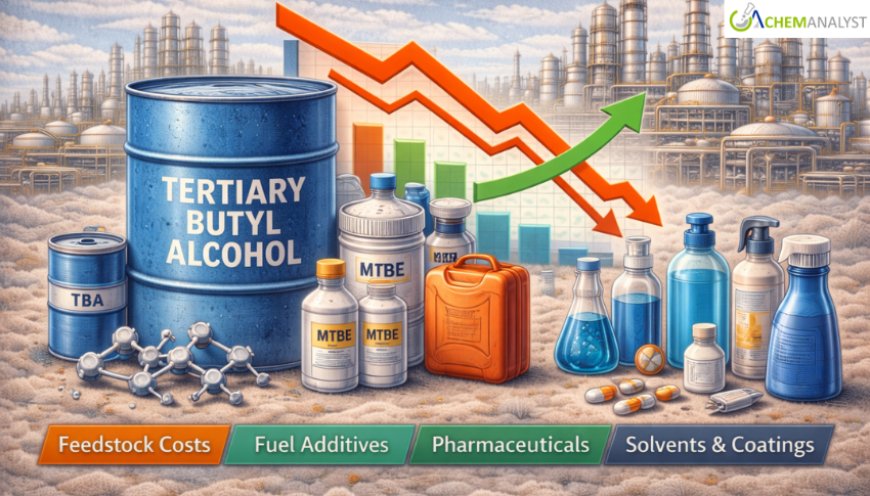
The Tertiary Butyl Alcohol Price landscape has been experiencing notable fluctuations over recent years due to shifting petrochemical economics, feedstock volatility, and evolving demand patterns across industries. Tertiary Butyl Alcohol (TBA), also known as tert-butanol, is an important industrial solvent and chemical intermediate used extensively in fuel additives, pharmaceuticals, coatings, cosmetics, and petrochemical synthesis.
In the latest market scenario heading into 2026, global pricing patterns reflect a balanced yet cautious environment, influenced by soft demand from downstream sectors such as MTBE blending and coatings, along with changing energy dynamics and feedstock costs.
Latest Global Tertiary Butyl Alcohol Price Trends
Asia-Pacific Market Trends
In the APAC region, especially China, the Tertiary Butyl Alcohol Price remained relatively subdued toward the end of 2025. The average price during Q4 2025 was around USD 920 per metric ton. Prices declined slightly quarter-on-quarter due to soft demand from solvent manufacturers and MTBE blenders.
Balanced supply conditions also contributed to price stability. New plant ramp-ups and steady production levels ensured sufficient availability, preventing upward price pressure. Meanwhile, weak gasoline blending economics limited demand recovery.
Another major factor was easing feedstock costs. Declining isobutylene prices reduced production costs and capped price increases. Export inquiries from Southeast Asia provided limited support but were insufficient to significantly change market sentiment.
Looking toward 2026, analysts expect moderate fluctuations in the Asia-Pacific market, with price direction largely dependent on refinery output and gasoline consumption patterns.
European Market Trends
Europe showed a stable pricing environment with limited volatility in the latest period. In Germany, TBA prices averaged around USD 1,700 per metric ton in Q4 2025. Prices remained range-bound due to balanced supply and cautious purchasing behavior.
Weak MTBE blending demand was a major factor restraining growth. The coatings and automotive sectors also exhibited sluggish activity, further reducing consumption. Although electricity costs remained elevated, softened feedstock prices helped offset production expenses.
Seasonal refinery turnarounds influenced short-term supply conditions, but inventories remained comfortable. Consequently, price movement remained minimal.
For 2026, European markets are expected to continue experiencing steady but soft demand, with price fluctuations tied closely to feedstock costs and industrial output trends.
North American Market Trends
In the United States, the Tertiary Butyl Alcohol Price remained largely stable through late 2025. Prices traded within a narrow range due to balanced supply-demand fundamentals and steady refinery operations.
Domestic inventories were comfortable, reducing urgency for spot purchases. Lower isobutylene feedstock costs also supported stable production economics. Demand from MTBE blending remained subdued due to declining gasoline consumption and increasing electric vehicle adoption.
The solvent and pharmaceutical sectors provided modest demand support, but overall market activity remained cautious.
Looking ahead into 2026, the North American market is expected to maintain a steady pricing outlook, influenced by seasonal fuel blending requirements and refinery operating rates.
Track Real Time Price Of Tertiary Butyl Alcohol
https://www.chemanalyst.com/ChemAnalyst/PricingForm?Product=Tertiary%20Butyl%20Alcohol
Key Factors Influencing Tertiary Butyl Alcohol Price
1. Feedstock Cost Dynamics
Feedstock pricing is the most significant driver of TBA price trends. Isobutylene, derived from refinery streams, represents a major input cost. When feedstock prices decline, TBA production costs fall, leading to softer pricing. Conversely, feedstock shortages or crude oil price increases push prices upward.
2. Demand from Fuel Additives Sector
The MTBE industry accounts for a large share of global TBA consumption. Demand from gasoline blending directly influences pricing. In recent years, rising electric vehicle adoption and improved fuel efficiency have reduced gasoline consumption, leading to weaker MTBE demand and downward pressure on prices.
3. Industrial Demand Trends
Other downstream industries such as solvents, coatings, pharmaceuticals, and cosmetics also affect price trends. Economic slowdowns in construction and manufacturing sectors can significantly reduce consumption.
4. Supply and Inventory Levels
Balanced supply conditions and comfortable inventory levels often lead to price stability. In contrast, production outages or logistical disruptions can cause temporary price spikes.
5. Energy and Crude Oil Prices
As a petrochemical derivative, TBA prices correlate strongly with crude oil and energy costs. Changes in refining margins and petrochemical feedstock availability directly impact production costs.
Historical Pricing Patterns and Market Behavior
Throughout 2025, global Tertiary Butyl Alcohol Price Trends showed limited volatility. The first half of the year saw slight upward movement due to feedstock fluctuations and seasonal demand. However, the second half witnessed softer prices as demand weakened and inventories increased.
In Asia, prices experienced declines due to oversupply conditions and subdued export demand. Europe remained stable with minimal fluctuations, while North America showed balanced pricing due to steady production and moderate consumption.
Regional Supply Dynamics
Asia-Pacific
The region remains the largest producer and consumer of TBA, led by China. Production rates typically operate around moderate capacity levels, ensuring adequate supply. Export activity to Southeast Asia and the Middle East also influences regional price movements.
Europe
European production relies on both domestic manufacturing and imports. Supply tightness occasionally arises due to refinery maintenance schedules and feedstock constraints.
North America
The U.S. Gulf Coast is a major production hub. Stable refinery operations and consistent feedstock availability ensure balanced supply conditions.
Demand Outlook for 2026
The global demand outlook remains moderately weak but stable. Several factors are shaping future consumption patterns:
-
Rising electric vehicle adoption reducing fuel additive demand
-
Sluggish construction and coatings sectors
-
Steady demand from pharmaceuticals and industrial solvents
-
Increasing use in specialty chemicals and personal care products
While traditional demand segments face challenges, emerging applications may provide growth opportunities.
Production Cost Trends
Production cost trends have shown moderate softening recently due to declining feedstock prices and stable energy costs. However, long-term cost structures remain dependent on crude oil price movements and refining economics.
Global Trade and Logistics Impact
Logistics stability plays a key role in price movements. Normal port operations and steady supply chains prevent major price disruptions. However, geopolitical tensions or shipping bottlenecks can temporarily affect global supply dynamics.
Market Forecast: Tertiary Butyl Alcohol Price Outlook for 2026
The latest 2026 market outlook suggests a steady-to-soft pricing environment globally. Prices are expected to remain range-bound due to:
-
Balanced supply conditions
-
Weak demand from MTBE blending
-
Moderate industrial consumption
-
Stable feedstock availability
Short-term fluctuations may occur due to seasonal fuel demand, refinery maintenance schedules, and crude oil price volatility.
Conclusion
The global Tertiary Butyl Alcohol Price environment remains characterized by stability, balanced supply, and cautious demand conditions. The latest market data heading into 2026 indicates limited volatility, with prices expected to remain within a moderate range.
Regional trends show subdued demand across Asia, Europe, and North America, primarily due to weak MTBE blending activity and slower industrial consumption. However, steady demand from pharmaceuticals, solvents, and specialty chemical applications continues to provide market support.
Overall, Tertiary Butyl Alcohol Price Trends are expected to remain stable in the near term, with future price movements largely dependent on feedstock costs, energy markets, and evolving downstream demand patterns.
About Us:
Welcome to ChemAnalyst, a next–generation platform for chemical and petrochemical intelligence where innovation meets practical insight. Recognized as “Product Innovator of the Year 2023” and ranked among the “Top 100 Digital Procurement Solutions Companies,” we lead the digital transformation of the global chemical sector. Our online platform helps companies handle price volatility with structured analysis, real-time pricing, and reliable news and deal updates from across the world. Tracking over 500 chemical prices in more than 40 countries becomes simple and efficient with us.
Contact Us:
ChemAnalyst
Email: sales@chemanalyst.com
Website: https://www.chemanalyst.com/
LinkedIn: https://www.linkedin.com/company/chemanalyst/
Facebook: https://www.facebook.com/ChemAnalysts/
Twitter: https://x.com/chemanalysts
YouTube: https://www.youtube.com/@chemanalyst
Instagram: https://www.instagram.com/chemanalyst_
What's Your Reaction?