





























India Pest Control Market Size, Share, Industry Insights and Outlook Report 2026-2034
India pest control market size reached USD 1.92 Billion in 2025. Looking forward, IMARC Group expects the market to reach USD 3.3 Billion by 2034, exhibiting a growth rate (CAGR) of 5.82% during 2026-2034.

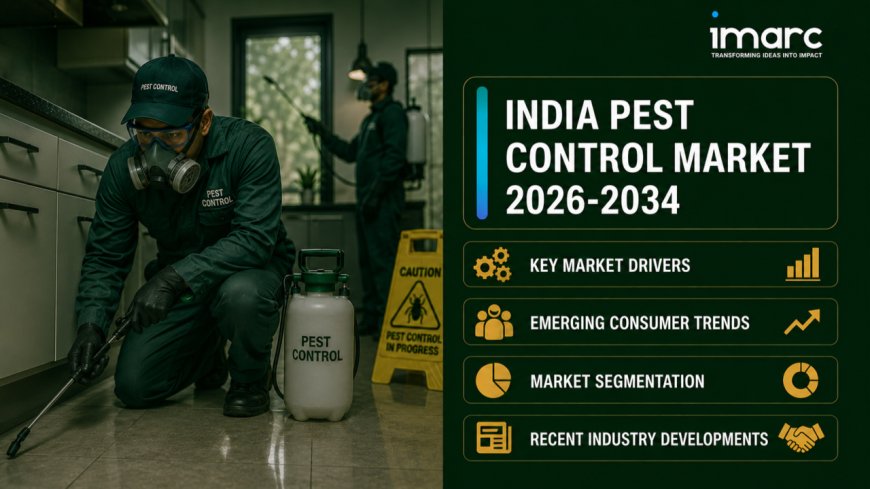
According to IMARC Group’s report titled “India Pest Control Market Size, Share, Trends and Forecast by Type, Pest Type, Application, and Region, 2026-2034“, the report offers a comprehensive analysis of the industry, including market share, forecast, growth and regional insights.
Market Overview & Summary
India pest control market size reached USD 1.92 Billion in 2025. Looking forward, IMARC Group expects the market to reach USD 3.3 Billion by 2034, exhibiting a growth rate (CAGR) of 5.82% during 2026-2034. the market is experiencing sustained expansion propelled by rapid urbanization, increased awareness of health and hygiene, and the critical need to preserve agricultural productivity. The industry is witnessing a structural shift from traditional chemical applications toward sustainable Integrated Pest Management (IPM) strategies, incorporating biological, mechanical, and eco-friendly solutions to minimize environmental impact while maximizing efficacy.
High-Intent Baseline Data
-
Market Value (2025): USD 1.92 Billion
-
Forecast Market Value (2034): USD 3.3 Billion
-
CAGR (2026-2034): 5.82%
-
Base Year: 2025
-
Forecast Years: 2026-2034
-
Historical Years: 2020-2025
What are the Key Developments and Emerging Shifts in the India Pest Control Market?
Shift Toward Integrated Pest Management (IPM)
The industry is experiencing a decisive transition toward Integrated Pest Management (IPM). This holistic approach combines biological, cultural, mechanical, and chemical methods to deliver effective pest control while significantly reducing environmental footprint and chemical toxicity. This aligns strongly with growing environmental consciousness across residential and commercial sectors.
Digital Pest Control and IoT Integration
Service providers are rapidly adopting digital solutions to optimize pest management operations. The integration of IoT-enabled devices and smart traps enables real-time monitoring of pest activity, particularly in large commercial and industrial facilities. This data-driven approach enhances the precision of treatments and enables proactive interventions before infestations peak.
Transition to Organized Professional Services
The market landscape is evolving from fragmented, unorganized local players toward branded, professional service providers. These organized entities offer standardized, certified treatments, leveraging advanced technologies and trained personnel to ensure compliance with strict health and safety regulations.
What Factors are Driving Growth in the India Pest Control Market?
Public Health and Vector-Borne Disease Prevention
The escalating necessity to protect public health from vector-borne diseases such as dengue, malaria, and chikungunya is a primary catalyst for market demand. Rapid urbanization has inadvertently created environments conducive to pests like cockroaches, rodents, and termites, necessitating professional intervention in both residential and commercial complexes.
Agricultural Productivity and Food Security
In the agricultural sector, robust pest management is indispensable for safeguarding crops against severe damage and minimizing yield loss. As India focuses on national food security, farmers are increasingly adopting advanced pest control methodologies to enhance agricultural productivity and protect harvests from pervasive infestations.
How will the India Pest Control Market Evolve in the Coming Years?
The India pest control market is positioned for steady, volume-driven expansion through 2034. As climate change continues to influence pest proliferation patterns, the demand for adaptive, year-round pest management will intensify. Driven by rising disposable incomes and hygiene campaigns, consumers will increasingly opt for Annual Maintenance Contracts (AMCs) over one-time services. Stakeholders prioritizing IoT-based monitoring, eco-friendly biological controls, and organized corporate service models will remain best positioned to capture dominant market share across both urban and rural demographics.
➤ Request Sample Report (TOC & Charts): https://www.imarcgroup.com/india-pest-control-market/requestsample
How Is the Market Segmented?
Type Insights:
- Chemical
- Mechanical
- Biological
- Others
Pest Type Insights:
- Insects
- Termites
- Rodents
- Others
Application Insights:
- Residential
- Commercial
- Agriculture
- Industrial
- Others
Regional Insights:
- North India
- West and Central India
- South India
- East and Northeast India
Recent Market Developments:
- Growth in Annual Maintenance Contracts (AMCs): There is a distinct shift in consumer behavior toward subscribing to Annual Maintenance Contracts (AMCs), providing service providers with recurring revenue and ensuring consistent hygienic environments for end-users.
- Launch of Low-Toxicity Formulations: Manufacturers are actively introducing low-toxicity and herbal formulations to cater to the rising demand for safe, chemical-free home pest control solutions.
- Government Cleanliness Campaigns: Nationwide initiatives like Swachh Bharat Abhiyan are heavily promoting cleanliness and hygiene, indirectly but significantly boosting the adoption of professional pest control services.
Competitive Landscape
The market features intensely competitive activity focused heavily on technological upgrades, clean-label formulation, and aggressive B2B supply chain consolidation. Corporate entities and specialized food ingredient processors are actively prioritizing immediate capital deployments into modernized drying capacities to secure lucrative contracts with major FMCG and nutraceutical brands. Key players driving the market include specialized domestic processors and global food-tech conglomerates operating within the region.
➤ Shape the Data to Answer Your Specific Questions - Request Customization: https://www.imarcgroup.com/request?type=report&id=21781&flag=E
Frequently Asked Questions (FAQs):
Q1. How big is the India pest control market?
Ans. The India pest control market reached a valuation of USD 1.92 Billion in 2025.
Q2. What is the future outlook for the India pest control market?
Ans. The market is projected to reach USD 3.3 Billion by 2034, registering a steady CAGR of 5.82% during the 2026-2034 forecast period.
Q3. What are the key pest types addressed in the market?
Ans. The market primarily targets insects, termites, and rodents across various environments.
Q4. What is driving the demand for pest control in India?
Ans. Market expansion is fueled by rapid urbanization, rising awareness regarding public health, the need to prevent vector-borne diseases, and critical agricultural protection requirements.
Q5. How is technology impacting pest control services?
Ans. The industry is rapidly adopting digital pest control technologies, including IoT-enabled devices and smart traps, to enable real-time monitoring and proactive management in commercial facilities.
Strategic Insight & Verdict
The India pest control sector presents a highly resilient, volume-driven expansion opportunity, advancing toward USD 3.3 Billion by 2034. The industry is structurally evolving from fragmented, reactive chemical spraying toward organized, data-driven Integrated Pest Management (IPM) models. Propelled by rapid metropolitan urbanization, strict commercial hygiene compliance, and the critical need to secure agricultural yields, the operating environment remains exceptionally lucrative. Stakeholders who strategically invest in IoT monitoring systems, eco-friendly biological formulations, and standardized AMC service models will remain uniquely positioned to capture dominant market share across both residential and corporate verticals over the forecast period.
What's Your Reaction?