



























Australia Cosmetics Market 2026–2034: Industry Trends and Growth Report
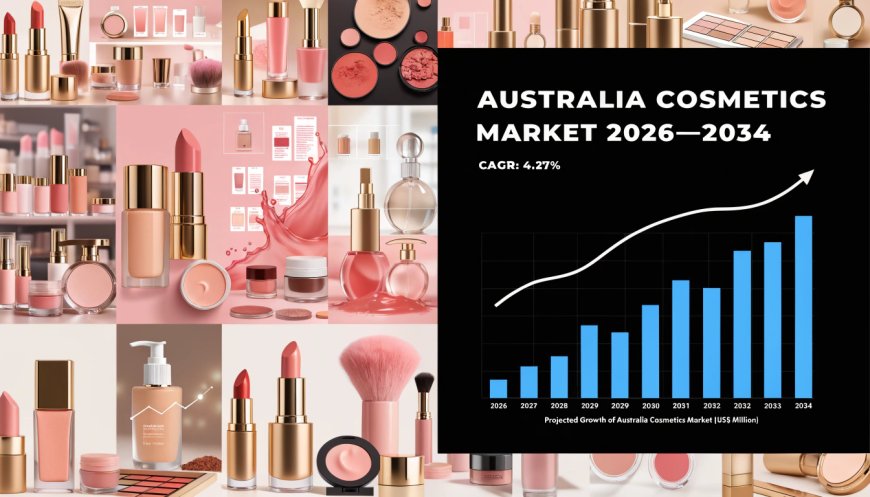
The Australia cosmetics market size reached USD 8.8 Billion in 2025 and is projected to reach USD 12.9 Billion by 2034, exhibiting a growth rate (CAGR) of 4.27% during 2026-2034.

Market Overview
The Australia cosmetics market size reached USD 8.8 Billion in 2025 and is projected to reach USD 12.9 Billion by 2034, exhibiting a growth rate (CAGR) of 4.27% during 2026-2034. The market is being driven by the escalating demand for sustainable and ethically sourced products, increasing digital engagement through influencer marketing and e-commerce, rising awareness about the importance of skincare and personal grooming, innovations in clean beauty formulations, and expanding retail presence of global brands offering tailored solutions for diverse skin types and preferences. The convergence of clean beauty trends, digital transformation, and reef-safe product focus positions the sector for sustained, robust expansion throughout the forecast period.
Request for a sample report PDF: https://www.imarcgroup.com/australia-cosmetics-market/requestsample
Australia Cosmetics Market Summary
- Strong growth is being driven by rising influence of sustainability and clean beauty trends, with consumers looking for products reflecting values on ethical sourcing, eco-friendly packaging, and transparency of ingredients
- Impact of digital transformation and influencer marketing is reshaping the beauty sector, with Instagram, TikTok, and YouTube emerging as critical domains where beauty trends are created and products are reviewed
- Focus on reef-safe and sun-protective products is a defining trend, with companies reformulating products to remove toxic chemicals like oxybenzone and octinoxate and marketing mineral-based sunscreens
- Clean and sustainable beauty brands such as Sukin, Jurlique, and MooGoo have taken advantage of this trend by supplying eco-friendly skincare and personal care ranges
- Expansion of personalization and clinical skincare is driving demand for products specifically formulated for particular skin issues including pigmentation, sensitivity, or acne
- Market segmentation includes product type (skin and sun care, hair care, deodorants/fragrances, makeup), category (conventional, organic), gender (men, women, unisex), and distribution channel (supermarkets, specialty stores, pharmacies, online)
- Consumers are shifting toward clean beauty, reef-safe sunscreens, personalized skincare, and digitally-driven purchasing
- Competitive landscape includes global beauty conglomerates, local indie brands, and specialty retailers
- Local indie and organic beauty brands like Go-To, Sukin, and Biologi have been instrumental in driving the clean beauty story
How AI is Reshaping the Australia Cosmetics Market
Artificial intelligence is increasingly central to the Australia cosmetics market, enabling brands, retailers, and consumers to optimize product development, personalize skincare recommendations, enhance virtual try-on experiences, forecast trends, and streamline supply chains across skin care, hair care, makeup, and fragrance segments.
- AI-Powered Skin Analysis & Personalized Skincare: Machine learning algorithms analyze user-uploaded selfies, skin concerns, and environmental factors to recommend personalized skincare regimens and product formulations tailored to individual skin types and conditions (pigmentation, sensitivity, acne).
- Virtual Try-On & Augmented Reality: AI-powered AR enables customers to virtually test makeup products (foundation, lipstick, eyeshadow) and hair colors using smartphone cameras, reducing return rates and improving online conversion for e-commerce beauty platforms.
- Trend Forecasting & Product Development: AI analyzes social media conversations, influencer content, and search trends to predict emerging beauty trends (clean ingredients, reef-safe formulations), guiding product development and inventory planning.
- Personalized Product Recommendations: AI analyzes purchase history, skin concerns, and beauty preferences to recommend complementary products and routine-building sets, increasing cross-selling and customer lifetime value.
- Shade Matching for Foundation & Concealer: AI algorithms match customer skin tones to foundation and concealer shades across multiple brands, solving a historically challenging aspect of online cosmetics shopping.
- Ingredient Analysis & Clean Beauty Verification: AI analyzes ingredient lists against clean beauty standards, toxicity databases, and sustainability criteria, helping consumers identify products aligned with their values.
- Demand Forecasting & Inventory Optimization: AI predicts seasonal demand fluctuations for different product categories (sunscreen in summer, moisturizers in winter) and trending ingredients, optimizing stock levels across retail channels.
Key Trends Shaping the Australia Cosmetics Market
- Rising influence of sustainability and clean beauty trends is the foundational driver for product innovation, with green consciousness deepening among consumers as Australians look for products that reflect their values on ethical sourcing, eco-friendly packaging, and transparency of ingredients. Brands showing high levels of commitment to sustainable practices, including biodegradable or recyclable packaging, water conservation, and non-toxic, cruelty-free ingredients, are achieving strong competitive advantage. Local indie and organic beauty brands like Go-To, Sukin, and Biologi have been instrumental in driving the clean beauty story, focusing on natural ingredients, minimalist formulations, and complete transparency.
- Impact of digital transformation and influencer marketing is materially accelerating consumer engagement, with Instagram, TikTok, and YouTube emerging as critical domains where beauty trends are created, products are instantly reviewed, and brands connect directly with customers. Australian shoppers, particularly Gen Z and Millennials, widely use these platforms to discover products, watch tutorials, and take advice from peers. Beauty influencers and content creators have built massive, engaged followings, and endorsements from them power consumer purchasing behavior. When mainstream Australian influencers post about a product, it results in immediate peaks in demand.
- Focus on reef-safe and sun-protective products is a defining trend in the Australian cosmeceuticals industry, with consumers looking beyond the bare minimum in SPF products and increasingly opting for formulations that are effective yet environmentally friendly. Growing concern over the harm that some sunscreen chemicals can do to the Great Barrier Reef has led companies to reformulate products to remove toxic chemicals like oxybenzone and octinoxate and market mineral-based sunscreens derived from zinc oxide and titanium dioxide. Australian skincare brands are also adding broad-spectrum protection to daily products such as moisturizers and foundations.
- Clean and sustainable beauty transformation is driving retail shelf space allocation, with brands such as Sukin, Jurlique, and MooGoo supplying eco-friendly skincare and personal care ranges that attract sustainability-conscious consumers. This aligns with Australia's wider cultural tendency towards wellness and a natural way of life, with retailers increasing shelf space given to organic brands and emphasizing environmental credentials on packaging.
- Expansion of personalization and clinical skincare is reshaping product development, with consumers looking for products specifically formulated for their particular skin issues, including pigmentation, sensitivity, or acne. This trend has given rise to niche brands that provide personalized skincare regimens according to individual lifestyles and needs, such as Medipledge dealing in post-treatment skincare with an emphasis on repairing the skin barrier. The combination of cutting-edge ingredients and clinical testing ensures safety and performance.
- Digital transformation through AR try-ons and AI-based skin analysis makes online shopping more convenient and tailored, with sophisticated technology such as AI-based skin analysis, virtual try-on features, and personalized skincare questionnaires heightening the online shopping experience by narrowing the gap between offline stores and online convenience.
- New market entries and retail expansions are intensifying competition, with US-based skincare brand Hydrinity announcing expansion into the Australian market in March 2025 through a partnership with Device Consulting, introducing advanced skincare solutions through medical aesthetics clinics. Sephora announced expansion of its Australian presence in October 2024 with three new stores in Adelaide, Melbourne, and Brisbane featuring immersive experiences including beauty tech and live events. Medipledge entered the Australian market in March 2024 with specialized focus on restoring the skin barrier after cosmetic procedures, especially for Asian type IV skin.
Market Growth Drivers
Clean Beauty, Digital Transformation, and Reef-Safe Innovation
The Australia cosmetics market growth is anchored in the rising influence of sustainability and clean beauty trends, with consumers looking for products reflecting values on ethical sourcing, eco-friendly packaging, and ingredient transparency — brands showing high commitment to sustainable practices achieve strong competitive advantage, while local indie brands like Go-To, Sukin, and Biologi drive the clean beauty story. The digital transformation through influencer marketing has made Instagram, TikTok, and YouTube critical domains where beauty trends are created and products are reviewed, with Australian Gen Z and Millennials using these platforms to discover products and take advice from peers. The focus on reef-safe and sun-protective products is a defining trend, with growing concern over sunscreen chemical harm to the Great Barrier Reef leading companies to reformulate products removing oxybenzone and octinoxate and marketing mineral-based sunscreens derived from zinc oxide and titanium dioxide throughout the 2026–2034 forecast period.
Personalized Skincare, Clinical Formulations, and Retail Expansion
The expansion of personalization and clinical skincare is driving demand for products specifically formulated for particular skin issues (pigmentation, sensitivity, acne), giving rise to niche brands providing personalized skincare regimens according to individual lifestyles and needs. The combination of cutting-edge ingredients and clinical testing ensures safety and performance, with brands like Medipledge focusing on post-treatment skincare and skin barrier repair. Digital transformation through AR try-ons and AI-based skin analysis makes online shopping more convenient, narrowing the gap between offline stores and online convenience. New market entries including Hydrinity (US-based skincare), retail expansion by Sephora (three new stores in Adelaide, Melbourne, Brisbane), and Medipledge's entry focusing on Asian type IV skin are intensifying competition and stimulating the prestige cosmetics market.
Market Segmentation
IMARC Group's research categorizes the Australia cosmetics market as follows:
By Product Type:
- Skin and Sun Care Products
- Hair Care Products
- Deodorants and Fragrances
- Makeup and Color Cosmetics
- Others
By Category:
- Conventional
- Organic
By Gender:
- Men
- Women
- Unisex
By Distribution Channel:
- Supermarkets and Hypermarkets
- Specialty Stores
- Pharmacies
- Online Stores
- Others
By Region:
- Australia Capital Territory & New South Wales
- Victoria & Tasmania
- Queensland
- Northern Territory & Southern Australia
- Western Australia
Key Players
The Australia cosmetics market features competition among global beauty conglomerates, local indie brands, and specialty retailers. Major companies include Amway Corp., Beiersdorf AG, Bioderma Laboratories (NAOS Group), Clarins Group, Dermalume Pty Ltd, Jurlique International Pty Ltd (Pola Orbis Holdings Inc), Kora Organics, L'Oreal Paris (L'Oréal SA), Procter & Gamble Australia Pty. Ltd., Revlon Australia Pty, and The Estée Lauder Companies Inc. The market research report provides a comprehensive analysis of the competitive landscape including key player positioning, market structure, top winning strategies, competitive dashboards, and detailed company profiles.
Key Aspects Required for Australia Cosmetics Market
- Demand is driven primarily by health-conscious consumers, Gen Z and Millennials, skincare enthusiasts, and individuals seeking clean/sustainable beauty products
- Strong linkage between social media influence, clean beauty awareness, and cosmetics purchasing decisions
- Product type segmentation includes skin and sun care products, hair care products, deodorants and fragrances, makeup and color cosmetics, and others
- Category segmentation includes conventional and organic
- Gender segmentation includes men, women, and unisex
- Distribution channel segmentation includes supermarkets/hypermarkets, specialty stores, pharmacies, online stores, and others
- Consumers prioritize clean ingredients, ethical sourcing, eco-friendly packaging, reef-safe formulations, and cruelty-free certification
- Growing demand for reef-safe sunscreens, personalized skincare, clinical-strength formulations, organic/natural products, and digitally-enabled shopping experiences
- Competitive landscape includes global conglomerates (L'Oreal, Estée Lauder, P&G), local indie brands (Sukin, Go-To, Biologi, Kora Organics, Jurlique), and specialty retailers (Sephora, Mecca)
- Distribution channels include physical stores (specialty beauty retailers, pharmacies, supermarkets), e-commerce platforms, brand direct-to-consumer websites, and social commerce
- Expansion of AI-based skin analysis tools, virtual try-on technology, and personalized skincare questionnaires
- Rising investment in clean beauty formulations, sustainable packaging innovations, and reef-safe sunscreen technology
- Supply chain includes raw material suppliers (natural ingredients, minerals, botanicals), contract manufacturers, brand owners, distributors, and retailers
- Increasing role of influencer marketing, user-generated content campaigns, and social media beauty communities in driving brand awareness
- Growing adoption across all states and territories, with major urban centers (Sydney, Melbourne, Brisbane) leading demand
- Integration with medical aesthetics clinics, dermatology practices, and cosmetic treatment centers
- Rising demand for post-procedure skincare (e.g., Medipledge) and clinical-strength formulations
- Expansion of men's grooming products and unisex beauty lines
- Increasing focus on water conservation in manufacturing, plastic-free packaging, and carbon-neutral commitments
Recent News and Developments
April 2026: Consumer spending patterns in Australia are shifting toward beauty products despite economic pressure, with cosmetics spending reaching 220% of baseline levels in December 2025, while personal care spending hit 131%, highlighting strong resilience of the cosmetics segment.
April 2026: The launch of Glamour Australia as a digital-first beauty platform reflects growing demand for trusted beauty content and e-commerce integration, targeting Gen Z consumers and strengthening digital engagement in the cosmetics industry.
March 2026: The Australia cosmetics market remains strong, with total market size reaching approximately USD 4.43 billion in 2025, supported by rising demand for premium and sustainable beauty products.
February 2026: The broader beauty and personal care market in Australia reached around AUD 17.25 billion in 2025, reflecting strong consumer spending on skincare, cosmetics, and grooming products.
January 2026: The cosmetic and toiletry retailing sector in Australia was valued at approximately $6.0 billion in 2025, with 4,688 businesses operating in the industry, indicating a highly competitive and mature retail landscape.
December 2025: Australia’s beauty products market reached USD 15.5 billion in 2025, driven by increasing demand for sustainable, eco-friendly, and refillable cosmetic products.
November 2025: The skincare segment continues to dominate, with the Australian skincare market valued at approximately AUD 3.25 billion in 2025, supported by growing awareness of sun protection and long-term skin health.
October 2025: The cosmetics and beauty industry in Australia continues to evolve with strong global integration, with exports expected to approach $1 billion by 2026, reflecting growing international demand for Australian beauty products.
Note: If you require any specific information that is not covered currently within the scope of the report, we will provide the same as a part of the customization.
Speak to an analyst for a customized sample report PDF: https://www.imarcgroup.com/request?type=report&id=33919&flag=C
About Us
IMARC Group is a global management consulting firm that helps the world's most ambitious changemakers to create a lasting impact. The company provides a comprehensive suite of market entry and expansion services. IMARC offerings include thorough market assessment, feasibility studies, company incorporation assistance, factory setup support, regulatory approvals and licensing navigation, branding, marketing and sales strategies, competitive landscape and benchmarking analyses, pricing and cost research, and procurement research.
Contact Us
IMARC Group
134 N 4th St., Brooklyn, NY 11249, USA
Email: sales@imarcgroup.com
Tel. No.: (D) +91 120 433 0800
United States: +1-201-971-6302
What's Your Reaction?