

































Vietnam Imports Data 2025: Trends, Partners & Key Insights
According to recent Vietnam import data and global trade statistics, Vietnam’s total imports reached approximately $379 billion in 2024, marking a 7.2% year-on-year growth.
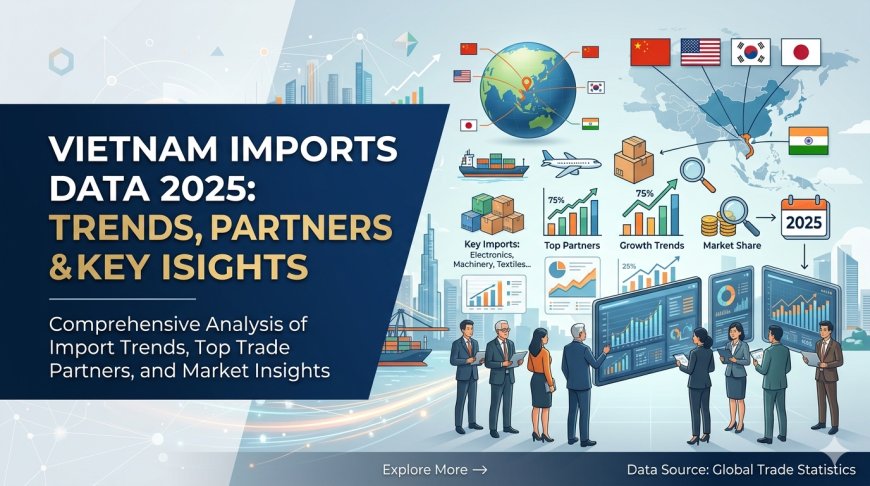
In today’s interconnected global economy, Vietnam has emerged as a powerful player in international trade. With rapid industrialization, a growing population, and expanding manufacturing capabilities, the country relies heavily on imports to sustain its economic momentum. Understanding Vietnam imports is essential for businesses aiming to enter or expand within this dynamic Southeast Asian market.
According to recent Vietnam import data and global trade statistics, Vietnam’s total imports reached approximately $379 billion in 2024, marking a 7.2% year-on-year growth. This steady rise highlights the country’s increasing demand for raw materials, machinery, and consumer goods. Additionally, Vietnam ranked as the 20th largest importer globally, reflecting its critical role in global supply chains.
Overview of Vietnam Imports Growth
Vietnam’s import trajectory has shown remarkable growth over the past decade. From $147.8 billion in 2014 to $379 billion in 2024, the country’s imports have more than doubled. This surge is largely driven by foreign direct investment (FDI), export-oriented manufacturing, and infrastructure development.
In the first five months of 2025 alone, imports reached $175.56 billion, reflecting a 17.4% increase compared to the same period in the previous year. A significant portion—over 93%—consisted of production materials, underlining Vietnam’s role as a global manufacturing hub.
Insights from Vietnam import customs data show that most imports are intermediate goods used in production, especially in electronics, textiles, and machinery sectors. This trend reinforces Vietnam’s position as a key assembly and export center in Asia.
Vietnam’s Major Imports: Top Product Categories
Vietnam imports a wide range of goods to support its industries and consumer markets. The structure of Vietnam imports reflects the country’s industrial priorities and export-driven strategy.
Key Import Categories:
- Electronics and Components
Electronics dominate Vietnam’s import portfolio, including smartphones, semiconductors, and computer parts. These are crucial for manufacturing and exports. - Machinery and Equipment
Industrial growth drives demand for heavy machinery, construction equipment, and production tools. - Chemicals and Plastics
Essential for manufacturing, packaging, and agriculture, these imports play a vital role in multiple industries. - Textiles and Raw Materials
Vietnam imports fabrics and yarns to fuel its booming garment export industry. - Food and Agricultural Products
Rising consumer demand has increased imports of cereals, processed foods, and beverages.
According to Vietnam trade data, the top import category is Electrical Machinery (HS Code 85), valued at over $116 billion, accounting for nearly 35% of total imports.
Vietnam Imports by Country: Key Trade Partners
Understanding Vietnam imports by country is crucial for identifying global trade relationships and supply chain dependencies. Vietnam sources goods from a diverse range of countries, with Asia dominating its import landscape.
Top 5 Import Partners:
- China ($144.3 billion)
China remains Vietnam’s largest supplier, contributing nearly 38% of total imports. Its proximity and manufacturing strength make it a dominant partner. - South Korea ($79.7 billion)
A major supplier of electronics and technology, South Korea plays a vital role in Vietnam’s industrial ecosystem. - Japan ($35.8 billion)
Known for high-quality machinery and automotive components, Japan is a key strategic partner. - Taiwan ($32 billion)
Taiwan supplies advanced technology and machinery, supporting Vietnam’s manufacturing sector. - United States ($14.3 billion)
The U.S. contributes significantly to agriculture, machinery, and high-tech imports.
Other notable partners include Thailand, Malaysia, India, Indonesia, and Australia. The diversification seen in Vietnam imports by country reflects the country’s efforts to reduce dependency on a single market and strengthen global trade resilience.
Role of Import Companies in Vietnam
Vietnam’s import ecosystem is driven by large multinational corporations and domestic enterprises. These companies ensure a steady inflow of goods necessary for production and consumption.
Top importers such as Intel Vietnam, Samsung, and Compal dominate the market, primarily focusing on semiconductors, integrated circuits, and electronic components. These firms rely heavily on suppliers from China, South Korea, and Taiwan.
According to Vietnam customs data, the electronics sector alone accounted for over $107 billion in imports in 2024, highlighting the dominance of high-tech industries.
Access to a reliable Vietnam import data database can help businesses identify key players, analyze competitor strategies, and build strategic partnerships.
Vietnam Import Trends (2024–2025)
Recent trends in Vietnam imports reveal significant shifts in the country’s trade dynamics:
1. Surge in Electronics Imports
Driven by global tech giants like Samsung and Apple expanding operations in Vietnam, demand for semiconductors and components has skyrocketed.
2. Growth in Industrial and Infrastructure Imports
Vietnam continues investing in infrastructure projects, increasing imports of machinery, steel, and construction materials.
3. Diversification of Supply Chains
Vietnam is gradually reducing reliance on China by increasing imports from ASEAN countries, India, and Europe.
4. Rise in Intermediate Goods Imports
The country imports large volumes of raw materials for re-export after processing, reinforcing its role in global value chains.
5. Renewable Energy and EV Components
Green energy policies are driving imports of solar panels, batteries, and electric vehicle components.
Data from Vietnam import customs data highlights that production-related imports dominate, accounting for over 93% of total imports.
Impact of U.S. Tariffs on Vietnam Imports
In 2025, new U.S. tariff measures impacted global trade, including Vietnam. A 10% baseline tariff was imposed on imports, along with higher tariffs on specific sectors like steel and solar panels.
These developments influenced Vietnam imports by country, prompting businesses to diversify sourcing strategies and explore alternative markets.
Despite these challenges, Vietnam’s import growth remains strong, supported by robust domestic demand and export-oriented industries.
Sectoral Outlook for Vietnam Imports
Looking ahead, several sectors are expected to drive Vietnam imports in 2025 and beyond:
- High-Tech Manufacturing: Continued growth in electronics and semiconductor imports
- Automotive Sector: Rising imports of EVs and auto components
- Renewable Energy: Increased demand for solar and wind energy equipment
- Agriculture: Higher imports due to climate-related challenges
- Textiles: Sustained demand for raw materials supporting exports
Insights from Vietnam trade data suggest that the country will continue to focus on high-value imports that support industrial growth and global competitiveness.
Opportunities for Global Businesses
Vietnam’s growing import market presents numerous opportunities for international businesses:
- Exporters can tap into rising demand for machinery, electronics, and raw materials
- Investors can explore partnerships with leading importers and manufacturers
- Suppliers can benefit from diversified sourcing strategies in Vietnam
Using reliable Vietnam import data and Vietnam customs data, businesses can gain actionable insights into market trends, pricing, and demand patterns.
Key Highlights of Vietnam Imports (2024–25)
- Total imports reached $379 billion in 2024, up 7.2% YoY
- Electronics and machinery dominate import categories
- China remains the largest trade partner
- Production materials account for over 93% of imports
- Strong growth in high-tech and industrial imports
Conclusion
Vietnam’s import landscape in 2025 reflects a rapidly evolving economy driven by industrial growth, global trade integration, and technological advancement. The steady rise in Vietnam imports, combined with diversified sourcing and strong manufacturing demand, positions the country as a key player in global supply chains.
Understanding Vietnam imports by country, product categories, and emerging trends is essential for businesses seeking to enter this lucrative market. Leveraging insights from Vietnam import customs data, Vietnam trade data, and Vietnam customs data can help companies make informed decisions and gain a competitive edge.
As Vietnam continues its growth trajectory, the opportunities within its import sector are vast and promising. Businesses that act strategically today can secure long-term success in one of Asia’s fastest-growing economies.
What's Your Reaction?