






























Setting up a Solar Panel Manufacturing Plant 2026: Detail Project Report, Cost and Revenue

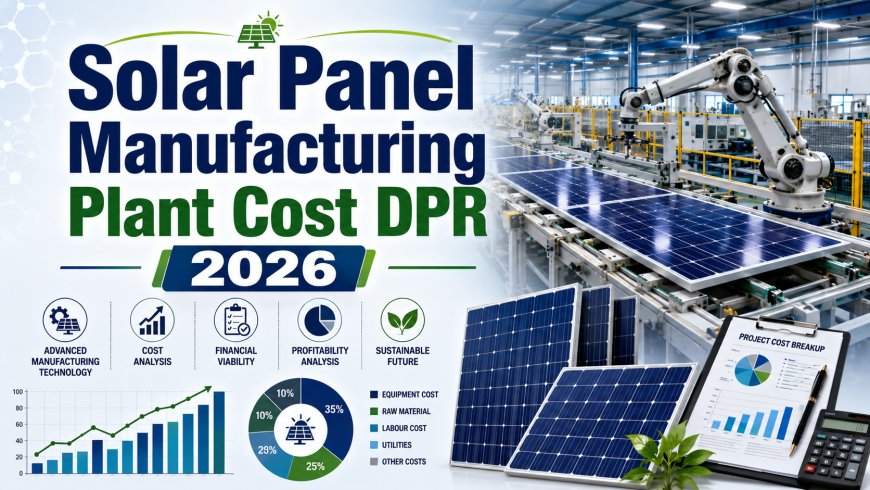
Setting up a solar panel manufacturing plant involves a series of controlled processes such as silicon ingot and wafer production, cell texturing and doping, anti-reflective coating application, cell interconnection and stringing, EVA encapsulation, lamination, framing, junction box attachment, and final quality testing. Key equipment includes diamond wire saws, diffusion furnaces, PECVD coating systems, tabber-stringers, laminators, framing machines, and automated EL/IV testing stations. Since this is a high-precision photovoltaic manufacturing facility, maintaining process control standards, clean room environments, and compliance with international quality and certification requirements (IEC, UL, BIS) is critical. Additionally, evaluating the solar panel plant project report is essential for understanding capital investment, machinery requirements, operational efficiency, and long-term profitability in this rapidly growing solar panel market.
The solar panel manufacturing industry is expected to witness exceptional growth through 2026 and beyond, driven by rising global demand for clean energy, accelerating utility-scale and rooftop solar installations, supportive government policies including PLI schemes, and the rapidly falling levelized cost of solar power making it the most competitive new electricity generation source in most markets. As nations worldwide set aggressive renewable energy targets and industries seek to decarbonize, solar panels remain the cornerstone technology driving the global energy transition.
IMARC Group’s report, titled “Solar Panel Manufacturing Plant Cost Analysis 2026: Industry Trends, Plant Setup, Machinery, Raw Materials, Investment Opportunities, Cost and Revenue,” provides a complete roadmap for setting up a solar panel manufacturing plant. It covers a comprehensive market overview to micro-level information such as unit operations involved, raw material requirements, utility requirements, infrastructure requirements, machinery and technology requirements, manpower requirements, packaging requirements, transportation requirements, etc.
Request for a Sample Report: https://www.imarcgroup.com/solar-panel-manufacturing-plant-project-report/requestsample
Solar Panel Industry Outlook 2026
The India solar panel market size was 12.36 GW in 2025, and according to IMARC Group estimates, the market is expected to reach 91.39 GW by 2034, exhibiting a remarkable CAGR of 24.89% from 2026 to 2034. Globally, the solar power market was valued at USD 170.23 Billion in 2025, projected to reach USD 468.28 Billion by 2034 at a CAGR of 11.9%. This exceptional growth reflects the structural imperative for global decarbonization, falling photovoltaic technology costs, net-zero emissions commitments, and solar energy becoming the cheapest source of new electricity generation in most markets worldwide.
Government initiatives such as India’s Production Linked Incentive (PLI) scheme for solar modules, Make in India mandates, the SATAT and ALMM frameworks, renewable energy blending requirements, and capital subsidies from MNRE are directly incentivizing domestic solar panel manufacturing investment. The Asia-Pacific region, led by China and India, is expected to remain the dominant player, while North America and Europe continue expanding large-scale installations and grid integration projects.
However, challenges such as polysilicon and solar cell price volatility, high initial capital investment for automated production lines, dependence on imported wafers and upstream materials, evolving efficiency standards, and intensifying competition from Chinese manufacturers may influence production costs and strategic investment decisions for new plant setups.
Key Insights for Setting up a Solar Panel Manufacturing Plant
Detailed Process Flow
• Product Overview
• Unit Operations Involved
• Mass Balance and Raw Material Requirements
• Quality Assurance Criteria
• Technical Tests
Project Details, Requirements and Costs Involved:
• Land, Location and Site Development
• Plant Layout
• Machinery Requirements and Costs
• Raw Material Requirements and Costs
• Packaging Requirements and Costs
• Transportation Requirements and Costs
• Utility Requirements and Costs
• Human Resource Requirements and Costs
Capital Expenditure (CapEx) and Operational Expenditure (OpEx) Analysis:
Project Economics:
• Capital Investments
• Operating Costs
• Expenditure Projections
• Revenue Projections
• Taxation and Depreciation
• Profit Projections
• Financial Analysis
Key Cost Components
Raw Materials: The primary cost driver, accounting for approximately 70–80% of total operating expenses (OpEx). Key inputs include solar cells (the single largest cost item), tempered glass (front protection layer), EVA/POE encapsulant films, backsheet materials, aluminum frames, junction boxes with bypass diodes, and interconnection ribbon. For a 100 MW line producing around 20 modules per hour, continuous supply chain reliability and volume procurement commitments are essential to cost competitiveness.
Energy Costs: Solar panel manufacturing is moderately energy-intensive, particularly for lamination, diffusion furnaces, PECVD deposition systems, and clean room HVAC operations. Utilities represent 10–15% of operating expenses, covering electricity, compressed air, process gases, cooling water, and nitrogen supply for inert atmosphere processes.
Machinery and Equipment: Capital investment in diamond wire saws, diffusion furnaces, PECVD anti-reflective coating systems, tabber-stringers, EL (electroluminescence) inspection cameras, IV curve testers, laminators, framing machines, and automated packaging lines. Semi-automatic lines require 6–8 workers per shift, while fully automated GW-scale lines demand significant upfront CapEx but deliver superior throughput and quality consistency.
Labor: Includes salaries, training, and benefits for process engineers, PLC-qualified technicians, quality control personnel, and skilled assembly operators. Semi-automatic lines need workers with electro-mechanical backgrounds capable of troubleshooting servo motors and maintaining process parameters. Workforce training represents a significant but often underestimated setup expense.
Utilities: Costs for process water for wafer cleaning and cooling, specialized gases (silane, ammonia, nitrogen), clean room pressurization, compressed air, and continuous power supply for automated production lines essential for achieving target module efficiencies and yield rates.
Packaging and Transportation: Expenses related to module packaging (corrugated cartons, corner protectors, stretch wrap), warehousing, and logistics infrastructure for distributing finished solar panels to project developers, EPC contractors, distributors, or export markets.
Depreciation and Financing: Depreciation of fixed assets including production lines, clean room infrastructure, testing equipment, and civil works, along with interest or repayment obligations for project loans. Annual CapEx for upgrades, engineering support, and preventive maintenance typically runs 2–5% of initial CapEx.
Compliance and Safety: Investment in international certification testing (IEC 61215, IEC 61730, BIS, UL), environmental compliance for chemical waste management, water recycling systems, and end-of-life panel recycling obligations in line with extended producer responsibility (EPR) regulations.
Overheads: Administrative costs such as insurance, office operations, licensing, marketing, R&D for efficiency improvement, intellectual property management, and general plant management expenses.
Economic Trends Influencing Solar Panel Plant Setup Costs 2026
Polysilicon & Solar Cell Price Volatility: As solar cells constitute the single largest cost item in panel assembly (70–80% of OpEx), fluctuations in global polysilicon prices, wafer supply-demand dynamics, and cell pricing cycles directly and significantly impact both capital requirements and operational margins. Higher upstream material costs compress manufacturer profitability, making supply chain integration and long-term cell procurement contracts increasingly strategic.
Carbon Pricing & Environmental Policies: Growing regulatory focus on solar panel manufacturing’s carbon footprint, chemical waste disposal (silver, lead, solvents), and end-of-life recycling obligations is increasing compliance costs. Extended Producer Responsibility (EPR) frameworks for panel disposal in Europe and India require manufacturers to contribute to recycling funds, adding to long-term cost structures.
Inflation & Interest Rates: Rising inflation increases the cost of civil construction, clean room infrastructure, specialized HVAC systems, and automated production line procurement, while higher global interest rates elevate financing costs for greenfield plant establishment. Clean room air handling units alone often run 30% higher than standard commercial HVAC costs.
Government Subsidies & Stimulus: India’s PLI (Production Linked Incentive) scheme for solar modules, MNRE capital subsidies, the ALMM (Approved List of Models and Manufacturers) mandatory registry, accelerated depreciation benefits, and Basic Customs Duty (BCD) on imported panels effectively protect domestic manufacturers and can substantially reduce effective setup costs and improve project economics for new investors.
Technological Advancements: Innovations in PERC, TOPCon, and heterojunction (HJT) cell architectures, emerging perovskite-silicon tandem cells achieving efficiencies above 34%, AI-assisted automated quality control, and diamond wire slicing precision improvements can increase upfront CapEx but deliver superior module efficiencies, lower per-watt production costs, and premium market positioning.
Supply Chain Localization: Efforts to build integrated domestic supply chains – from polysilicon to wafer, cell, and module manufacturing – are incentivized through PLI schemes and import duties. However, India still depends heavily on imported wafers and polysilicon, meaning full supply chain localization requires coordinated upstream investment that impacts overall project economics.
Labor Market Considerations: Shortages in skilled personnel capable of operating high-speed automated production lines, PLC-controlled tabber-stringers, and PECVD deposition systems can drive up wages or require investment in specialized training programs, increasing both initial setup timelines and ongoing operational costs.
Speak to an Analyst for Customized Report: https://www.imarcgroup.com/request?type=report&id=29280&flag=C
Challenges and Considerations for Investors
Polysilicon & Cell Price Volatility: Solar panel manufacturing is heavily dependent on global polysilicon and solar cell pricing cycles driven by Chinese supply dynamics. Periodic oversupply from Chinese manufacturers can compress margins significantly, while supply tightening or trade restrictions can rapidly inflate input costs and disrupt production continuity.
High Capital Intensity: Establishing a competitive solar panel plant requires substantial investment in precision manufacturing equipment. A 100–150 MW/year semi-automatic line requires USD 60–75 million in CapEx, while a 250–350 MW/year integrated line demands USD 200–300 million. From groundbreaking to full production typically takes 12–18 months, requiring patient capital and careful financing.
Environmental Compliance: Solar panel manufacturing uses hazardous chemicals (solvents, acids for cell processing), requires significant process water management, and generates chemical waste. Compliance with environmental standards for effluent discharge, chemical handling, and growing EPR obligations for end-of-life panel recycling adds to both capital and operational cost structures.
Technology Obsolescence Risk: The rapid pace of cell efficiency improvement – from standard mono PERC to TOPCon, HJT, and emerging tandem technologies – creates risk of manufacturing line obsolescence. Investment in equipment that cannot be upgraded to produce next-generation cell architectures may result in competitive disadvantage and reduced product premiums within 3–5 years.
Market Competition: The global solar panel market faces intense competition from Chinese manufacturers with massive scale advantages, vertically integrated supply chains, and government-backed financing. New entrants must differentiate on quality certifications, local content compliance, delivery reliability, or niche market positioning (bifacial, building-integrated, high-efficiency) to remain viable.
Logistics and Distribution: Transporting large-format solar modules (weighing 20–25 kg each) requires specialized packaging, careful logistics management, and reliable infrastructure to prevent breakage. Poor logistics can lead to significant product damage losses, insurance claims, and customer dissatisfaction, particularly for export-oriented manufacturing.
Skilled Workforce Availability: Operating high-speed automated production lines, maintaining PECVD and diffusion furnace systems, and performing PLC troubleshooting requires specialized technical skills. In many emerging markets, finding qualified personnel who understand both the process chemistry and automation systems represents a persistent operational challenge.
Policy and Regulatory Risks: Changes in government policies, such as modifications to PLI scheme disbursement conditions, revisions to BCD rates on imported cells or panels, alterations in net metering regulations for rooftop solar, or changes to renewable energy purchase obligations (RPOs), can significantly alter market demand dynamics and affect investment returns.
About Us:
IMARC Group is a global management consulting firm that helps the world’s most ambitious changemakers to create a lasting impact. The company excels in understanding its client’s business priorities and delivering tailored solutions that drive meaningful outcomes. We provide a comprehensive suite of market entry and expansion services. Our offerings include thorough market assessment, feasibility studies, company incorporation assistance, factory setup support, regulatory approvals and licensing navigation, branding, marketing and sales strategies, competitive landscape, and benchmarking analyses, pricing and cost research, and procurement research.
Contact Us:
IMARC Group
134 N 4th St. Brooklyn, NY 11249, USA
Email: sales@imarcgroup.com
Tel No:(D) +91 120 433 0800
United States: +1–631–791–1145
What's Your Reaction?