



































How a Digital Vault Helps Protect Sensitive Business Information

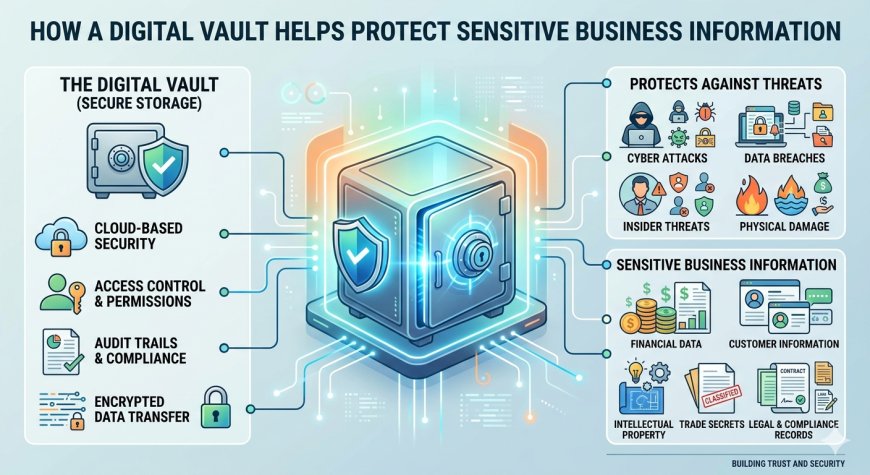
Businesses handle sensitive information every day, from contracts and financial records to employee files, client data, legal documents, and intellectual property. A Digital Vault gives companies a secure place to store, manage, and protect these important records from unauthorized access, accidental loss, and poor document control. As cyber risks continue to grow, relying on basic folders or scattered cloud storage is no longer enough for serious business protection.
1. It Creates a Secure Place for Critical Records
A digital vault keeps sensitive business information in a controlled environment instead of leaving it spread across inboxes, desktops, shared drives, and personal devices. This makes it easier to protect files that should not be accessed by everyone.
Important records may include contracts, tax files, payroll records, board documents, customer information, legal evidence, and confidential business plans. When these files are stored without structure, risk increases fast.
2. It Helps Prevent Unauthorized Access
One of the biggest advantages of a Digital Vault is access control. Businesses can decide who can view, edit, download, share, or delete specific records.
This helps protect sensitive information from internal mistakes and external threats. For example, HR records can be restricted to HR teams, while financial reports can be limited to finance leaders and approved executives.
3. It Supports Better Compliance
Many industries must follow strict rules for protecting business and customer information. Finance, healthcare, legal, insurance, real estate, and professional services companies often need secure systems for document retention, privacy, and audit readiness.
A digital vault can support compliance through:
-
Role-based permissions
-
Activity logs
-
Secure retention policies
-
Encryption
-
Controlled document sharing
-
Audit trails
These features help businesses prove that sensitive records were protected properly.
4. It Reduces the Risk of Data Loss
Files stored in regular folders can be deleted, misplaced, renamed, or overwritten. A digital vault helps reduce this risk by preserving important records in a more reliable system.
This is useful when employees leave, systems change, or departments reorganize. The business can still access its important documents without depending on one person’s laptop, inbox, or memory.
5. It Makes Sensitive Information Easier to Find
Security matters, but access also matters. A secure file is only useful if the right people can find it when needed.
A Digital Vault can make records searchable by name, date, category, customer, department, file type, or metadata. This saves time during audits, legal reviews, financial reporting, and internal investigations.
6. It Protects Confidential Business Knowledge
Sensitive information is not limited to legal or financial records. It can also include product plans, strategy documents, supplier agreements, pricing models, research files and intellectual property.
A digital vault helps preserve this knowledge and protects it from being copied, exposed, or lost. This gives businesses stronger control over the information that supports their competitive position.
7. It Improves Document Sharing
Many business risks happen when files are shared carelessly through email attachments or open links. A digital vault allows companies to share documents with stronger controls.
Teams can limit access, set expiration dates, track downloads, and remove permissions when access is no longer needed. This is far safer than sending sensitive files through unsecured channels.
8. It Strengthens Audit Readiness
During an audit, businesses may need to show when a document was created, who accessed it, and whether it was changed. A digital vault helps maintain this visibility.
Audit trails make it easier to prove document integrity and respond to review requests quickly. This reduces stress when regulators, auditors, clients, or legal teams ask for proof.
9. It Supports Business Continuity
Cyber incidents, employee turnover, software changes, and system failures can disrupt access to important information. A secure vault helps preserve critical records so the business can keep operating even when problems occur.
This is especially important for contracts, insurance documents, recovery plans, banking records, vendor agreements, and emergency procedures.
10. It Builds Trust With Clients and Partners
Clients and partners want to know their information is handled responsibly. A digital vault shows that a business takes security, confidentiality, and record protection seriously.
This can be especially valuable for companies that handle sensitive client files, regulated documents, or confidential business records.
Conclusion
Sensitive business information needs more than casual storage. It needs structure, security, access control, and reliable preservation. A Digital Vault gives businesses a safer way to store and manage critical documents while reducing the risks of loss, exposure, and unauthorized access.
As digital threats increase and compliance expectations grow, businesses that use secure vault systems can protect their records more effectively, improve audit readiness, and build stronger confidence in how their information is managed.
What's Your Reaction?