


































Delhi Chokes: AQI Hits 500 as GRAP-4 Kicks In; Schools Online and Flights Grounded
Delhi gasps as AQI hits 500 in areas like Wazirpur. GRAP-4 restrictions enforced: schools online, truck entry banned, and 40+ flights cancelled due to toxic smog.
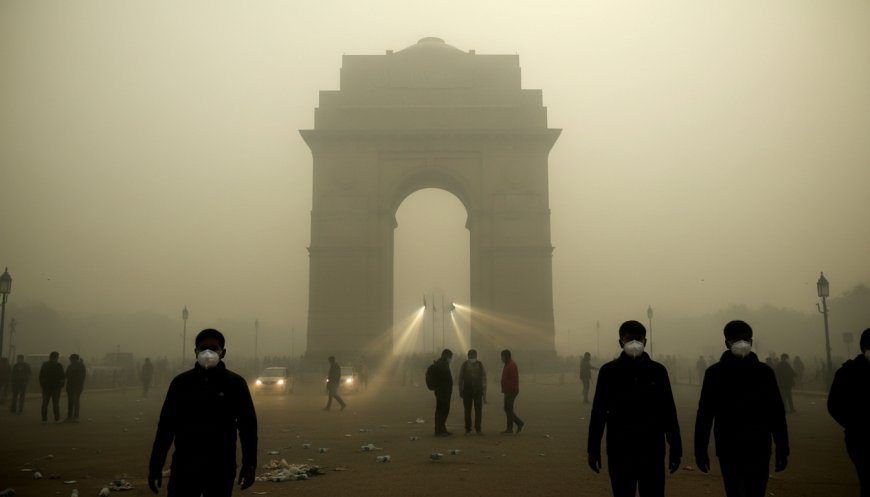
NEW DELHI — The national capital has once again plunged into a public health emergency as toxic smog enveloped the city on Monday, December 15, pushing the Air Quality Index (AQI) to the terrified 'Severe Plus' category. Residents woke up to a grey, choking apocalypse as pollution levels breached the 450-mark across the city, with specific hotspots like Wazirpur, Rohini, and Ashok Vihar recording a maxed-out AQI of 500. **'Gas Chamber' Reality: AQI Off the Charts** According to real-time data from the Central Pollution Control Board (CPCB), Delhi's 24-hour average AQI spiraled to 485 by Monday morning, marking the season's worst pollution spell. The dystopian haze reduced visibility to near-zero in several pockets, turning the city into what health experts are calling a "veritable gas chamber." Monitoring stations in Anand Vihar (480), Jahangirpuri (481), and Dwarka (469) reported hazardous levels of PM2.5—ultra-fine particles that can penetrate deep into the lungs and enter the bloodstream. The PM2.5 concentration in many areas was recorded at 40 to 50 times the safe limit prescribed by the World Health Organization (WHO). **GRAP Stage IV Invoked: Total Clampdown** In response to the deepening crisis, the Commission for Air Quality Management (CAQM) has urgently invoked Stage IV of the Graded Response Action Plan (GRAP)—the strictest level of anti-pollution protocols. Effective immediately, the following measures are in place: * **Truck Ban:** Entry of trucks into Delhi is prohibited, except for those carrying essential commodities or providing essential services. LNG, CNG, and Electric trucks remain exempt. * **Vehicle Restrictions:** A strict ban has been imposed on Delhi-registered diesel-operated Medium Goods Vehicles (MGV) and Heavy Goods Vehicles (HGV). Furthermore, BS-IV diesel and BS-III petrol vehicles are strictly off the roads. * **Construction Halt:** A blanket ban on all construction and demolition activities, including public projects like highways, flyovers, and power transmission lines, which were previously exempted under Stage III. * **Schools & Offices:** Authorities have directed schools to shift classes online for students up to Grade 5, while recommending hybrid models for higher standards. Public and private offices have been advised to operate at 50% capacity, encouraging work-from-home to reduce vehicular emissions. **Travel Chaos: Flights and Trains Hit** The toxic cocktail of fog and pollutants has wreaked havoc on transport infrastructure. Operations at the Indira Gandhi International (IGI) Airport were severely disrupted, with over 40 flights cancelled and dozens delayed due to poor visibility, leaving thousands of passengers stranded. Railway services were equally battered, with Northern Railways reporting that more than 50 trains arriving in and departing from New Delhi were running hours behind schedule. **A Medical Emergency** Hospitals across the National Capital Region (NCR) have reported a sharp 30-40% spike in patients complaining of respiratory distress, burning eyes, and chest constriction. "We are seeing healthy individuals with no history of asthma coming in with severe breathlessness," said Dr. Naresh Dang, a senior pulmonologist. "This is not just weather; this is a medical disaster. We are advising people, especially the elderly and children, to stay indoors and use air purifiers if possible." **Weather Outlook** The India Meteorological Department (IMD) offers little hope for immediate relief. A combination of low wind speeds, dipping temperatures (hovering around 8°C to 10°C), and high moisture levels has created a 'lock-in' effect, trapping pollutants close to the ground. Meteorologists predict that these "severe" conditions are likely to persist for the next 48 to 72 hours unless wind speeds pick up significantly. As Delhi coughs and wheezes through another December, the recurrence of this annual environmental catastrophe raises urgent questions about the effectiveness of long-term policy interventions versus emergency knee-jerk reactions.
What's Your Reaction?