






























Toluene Diisocyanate Market: Global Trends, Growth Analysis, and Forecast Outlook
Toluene Diisocyanate Market

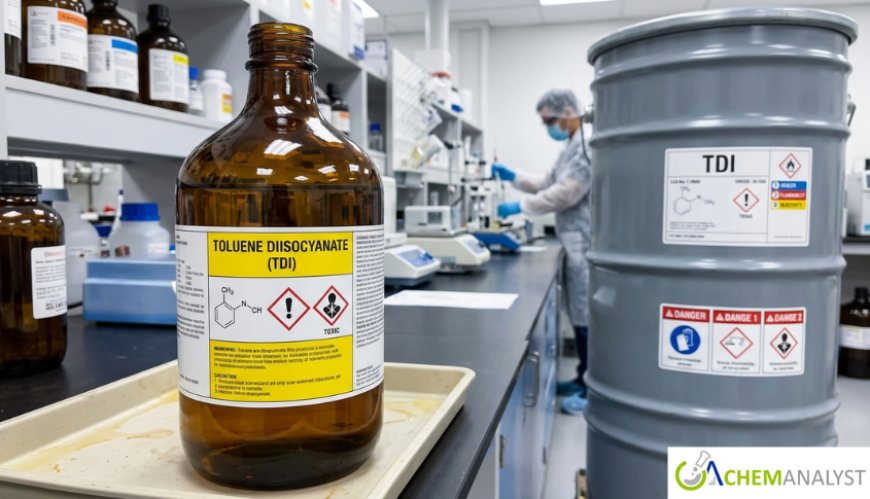
The Toluene Diisocyanate Market is experiencing steady global growth, driven primarily by rising demand for polyurethane foams in furniture, automotive, construction, and bedding applications. Toluene diisocyanate (TDI) is a highly reactive chemical compound widely used as a key raw material in the production of flexible polyurethane foams, coatings, adhesives, sealants, and elastomers (CASE). Its excellent flexibility, resilience, and durability make it indispensable across multiple industrial sectors.
As industries continue to focus on lightweight materials, comfort-driven products, and energy-efficient insulation systems, the Toluene Diisocyanate Market Trend is evolving toward higher consumption in emerging economies and increasing innovation in sustainable polyurethane systems. According to ChemAnalyst, the market is expected to witness steady expansion through 2036, supported by strong demand fundamentals.
Toluene Diisocyanate Market Size and Forecast Outlook
According to ChemAnalyst, the global Toluene Diisocyanate Market Size was valued at approximately USD 5.21 billion in 2025 and is projected to reach USD 8.92 billion by 2036, growing at a CAGR of around 5.1% during the forecast period.
This growth is being driven by:
- increasing demand for flexible polyurethane foam
- expansion of furniture and bedding industries
- rising automotive production
- growing construction and insulation applications
- urbanization and rising disposable incomes
The consistent demand across multiple end-use sectors ensures a stable growth trajectory for the Toluene Diisocyanate Market.
Introduction to Toluene Diisocyanate
Toluene diisocyanate (TDI) is an aromatic diisocyanate produced through the phosgenation of toluene diamine (TDA). It exists primarily in two isomeric forms:
- TDI 80/20 (80% 2,4-TDI and 20% 2,6-TDI)
- TDI 65/35 (65% 2,4-TDI and 35% 2,6-TDI)
These variants are widely used in polyurethane manufacturing due to their high reactivity and compatibility with polyols.
Key properties of TDI include:
- excellent flexibility and elasticity
- superior load-bearing capacity
- high resilience and durability
- strong bonding capability
These properties make TDI particularly suitable for producing soft and flexible polyurethane foams used in everyday products.
Key Toluene Diisocyanate Market Trends
1. Dominance of Flexible Polyurethane Foams
One of the most significant Toluene Diisocyanate Market Trends is the dominance of flexible polyurethane foams.
TDI is primarily used in:
- mattresses and bedding
- upholstered furniture
- automotive seating
- packaging foams
- carpet underlays
Flexible foams account for the largest share of TDI consumption due to their widespread use in comfort-based applications.
The rising global demand for high-quality furniture and bedding products continues to drive this trend.
2. Growth in Automotive Sector
The automotive industry is a key contributor to the Toluene Diisocyanate Market.
TDI-based polyurethane foams are used in:
- car seats
- headrests
- armrests
- interior insulation
- soundproofing materials
With increasing vehicle production, especially in Asia-Pacific, demand for lightweight and comfortable interior materials is growing rapidly.
The shift toward electric vehicles (EVs) is also boosting demand for advanced lightweight materials.
3. Expansion of Construction and Insulation Applications
Another important Toluene Diisocyanate Market Trend is increasing use in construction.
Applications include:
- insulation panels
- sealants and adhesives
- protective coatings
- flooring materials
As global infrastructure development accelerates, especially in emerging economies, the demand for polyurethane-based construction materials continues to rise.
4. Sustainability and Regulatory Pressure
Environmental concerns are shaping the Toluene Diisocyanate Market Trend.
Key developments include:
- shift toward low-VOC polyurethane systems
- development of bio-based polyols for TDI systems
- stricter regulations on isocyanate exposure
- improved safety and handling standards
Manufacturers are investing in safer production technologies and eco-friendly formulations to meet regulatory requirements.
Book A Demo
https://www.chemanalyst.com/ChemAnalyst/RequestForm?rn=Toluene%20DiIsocyanate%20Market
Market Segmentation Analysis
According to ChemAnalyst, the Toluene Diisocyanate Market is segmented based on type, application, and end-use industry.
By Type
- TDI 80/20
- TDI 65/35
Among these, TDI 80/20 dominates the market due to its widespread use in flexible foam production.
By Application
- Flexible Polyurethane Foam
- Coatings, Adhesives, Sealants, and Elastomers (CASE)
- Others
Flexible foam remains the largest application segment, accounting for the majority of market demand.
By End-Use Industry
- Furniture and Bedding
- Automotive
- Construction
- Packaging
- Others
The furniture and bedding segment holds the largest share, driven by rising consumer demand for comfort products.
Regional Market Insights
Asia-Pacific: Market Leader
Asia-Pacific dominates the global Toluene Diisocyanate Market Size, accounting for the largest share of production and consumption.
Key growth drivers include:
- strong manufacturing base in China and India
- rapid urbanization
- growing middle-class population
- rising furniture and automotive demand
China is the largest producer and consumer of TDI globally, while India is emerging as a key growth market.
North America
North America is experiencing steady growth due to:
- high demand for furniture and bedding
- automotive industry expansion
- advanced construction materials
- focus on sustainable polyurethane systems
Europe
Europe’s market is driven by:
- strict environmental regulations
- demand for eco-friendly materials
- advanced automotive manufacturing
- innovation in polyurethane technology
Middle East and Africa
This region is witnessing gradual growth due to:
- increasing construction activities
- expanding infrastructure projects
- rising industrialization
Recent Industry Developments
The Toluene Diisocyanate Market has seen several key developments:
- capacity expansions in Asia-Pacific
- technological advancements in polyurethane production
- increasing investment in sustainable materials
- strategic partnerships among major players
These developments indicate strong confidence in future market growth.
Competitive Landscape
The global Toluene Diisocyanate Market is moderately consolidated, with several key players dominating the industry.
Major Companies
- Covestro AG
- BASF SE
- Wanhua Chemical Group Co., Ltd.
- Huntsman Corporation
- Tosoh Corporation
These companies focus on:
- expanding production capacity
- developing sustainable products
- strengthening global distribution networks
- investing in R&D
Market Drivers
The major factors driving the Toluene Diisocyanate Market include:
1. Rising Demand for Polyurethane Foams
Flexible foam applications remain the primary growth driver.
2. Growth in Furniture Industry
Increasing demand for mattresses and upholstered furniture supports market expansion.
3. Automotive Industry Expansion
Lightweight and comfortable materials are boosting demand.
4. Urbanization and Infrastructure Development
Construction activities in emerging economies are driving growth.
Market Challenges
Despite strong growth, the market faces several challenges:
- health and safety concerns related to isocyanates
- stringent environmental regulations
- volatility in raw material prices
- competition from alternative materials
However, ongoing innovation and regulatory compliance efforts are helping mitigate these challenges.
Future Outlook
The future of the Toluene Diisocyanate Market remains promising, with steady growth expected across all major regions.
Key opportunities include:
- expansion in emerging markets
- development of bio-based polyurethane systems
- growth in EV interior applications
- increasing demand for sustainable materials
- technological advancements in foam production
The Toluene Diisocyanate Market Size is expected to continue expanding steadily through 2036, supported by strong industrial demand and innovation.
Conclusion
The Toluene Diisocyanate Market is on a stable growth trajectory, driven by increasing demand for polyurethane foams in furniture, automotive, and construction industries. With a projected CAGR of around 5.1%, the market is expected to reach nearly USD 8.92 billion by 2036.
Key Toluene Diisocyanate Market Trends, including rising flexible foam demand, sustainability initiatives, and Asia-Pacific dominance, are shaping the future of the industry.
As global industries continue to prioritize comfort, durability, and energy efficiency, TDI will remain a critical component in polyurethane manufacturing, ensuring its long-term relevance in the global chemicals market.
What's Your Reaction?