




























Australia Organic Farming Market 2025 | Projected to Reach USD 5.42 Billion by 2033
The Australia organic farming market size reached USD 2.81 billion in 2024 and is projected to grow to USD 5.42 billion by 2033, exhibiting a robust growth rate of 7.6% during the forecast period.

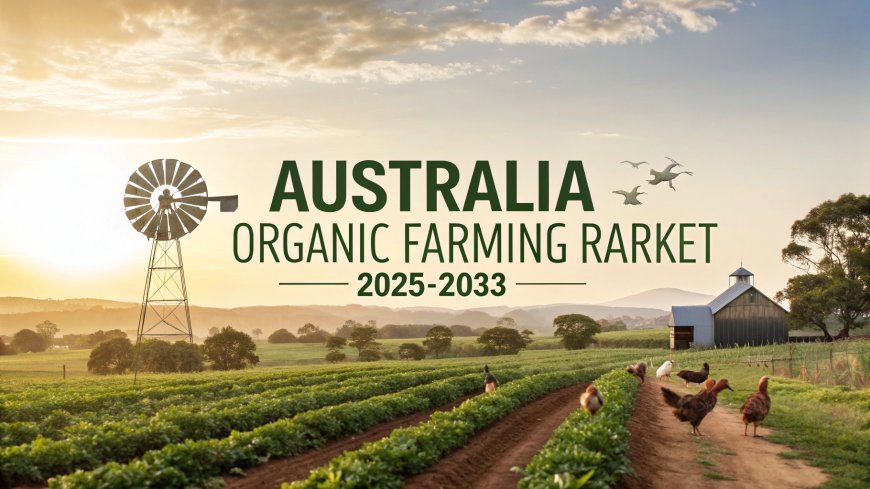
The latest report by IMARC Group, "Australia Organic Farming Market Size, Share, Trends and Forecast by Type, Product, Method, End User, and Region, 2025-2033," provides an in-depth analysis of the Australia organic farming market. The report also includes competitor and regional analysis, along with a breakdown of segments within the industry. The Australia organic farming market size reached USD 2.81 billion in 2024 and is projected to grow to USD 5.42 billion by 2033, exhibiting a robust growth rate of 7.6% during the forecast period.
Report Attributes and Key Statistics:
- Base Year: 2024
- Forecast Years: 2025-2033
- Historical Years: 2019-2024
- Market Size in 2024: USD 2.81 Billion
- Market Forecast in 2033: USD 5.42 Billion
- Growth Rate (2025-2033): 7.6%
Australia Organic Farming Market Overview:
The Australia organic farming market share is experiencing robust growth driven by innovations in organic fertilizers and biopesticides made from compost, seaweed extracts, and beneficial microbes offering safer alternatives to synthetic chemicals while maintaining productivity, stronger labeling regulations and organic certification ensuring genuine products and reducing misleading claims building consumer confidence, and USD 302.1 million Climate-Smart Agriculture Program launched through Natural Heritage Trust including USD 45 million Partnerships and Innovation grant promoting climate-resilient farming practices like cover cropping improving soil health and water retention. The market demonstrates momentum through rising consumer demand for chemical-free food with cardiovascular disease representing 12% of disease burden increasing health awareness, expanding retail channels with supermarkets and online platforms broadening organic sections, and export opportunities with international markets particularly Asia valuing Australia's clean and high-quality organic products positioning organic farming as sustainable agricultural solution.
Request For Sample Report: https://www.imarcgroup.com/australia-organic-farming-market/requestsample
Australia Organic Farming Market Trends:
• Bio-Input Innovation advancing through organic fertilizers and biopesticides from natural sources enhancing efficiency
• Certification Standards strengthening with clearer labeling helping consumers identify genuine organic products
• Climate-Smart Practices expanding via cover cropping, no-till farming, and composting improving resilience
• Premium Pricing enabling farmers to achieve higher margins meeting demand for quality organic produce
• Export Growth accelerating with Asian markets particularly China, Japan, and Singapore importing Australian organics
• Value-Added Products emerging in ready-to-eat organic snacks, beverages, and frozen meals
• Regenerative Farming gaining traction through practices restoring soil fertility and increasing biodiversity
Australia Organic Farming Market Drivers:
• Health Consciousness increasing with consumers avoiding synthetic pesticides and seeking nutritious options
• Government Support providing USD 302.1 million Climate-Smart Agriculture funding with USD 45 million for innovation
• Disease Burden driving awareness as cardiovascular disease represents 12% of total disease burden
• Retail Expansion broadening access through supermarkets, specialty stores, and online platforms
• Climate Resilience necessitating adaptive practices addressing droughts and unpredictable weather patterns
• Export Demand growing from international markets valuing Australia's food safety and organic standards
• Sustainability Focus promoting eco-friendly methods reducing environmental impact and supporting biodiversity
Market Challenges:
• High Production Costs constraining profitability with manual labor and expensive organic inputs
• Limited Input Access restricting availability of certified organic seeds and fertilizers in remote areas
• Certification Complexity burdening small farmers with paperwork, inspections, and transition periods
• Yield Variations causing temporary production reductions during conventional to organic transition
• Price Sensitivity affecting consumer purchasing decisions despite premium quality offerings
• Supply Chain Gaps limiting distribution particularly in rural and regional markets
• Knowledge Barriers requiring farmer education on organic methods and best practices
Market Opportunities:
• Regional Expansion targeting untapped rural communities with growing organic demand
• Value-Added Processing developing organic snacks, beverages, cereals, and convenience products
• Organic Livestock capitalizing on demand for hormone-free meat, dairy, and eggs
• Export Markets expanding presence in Asia, North America, and Europe
• Technology Integration implementing precision agriculture and digital monitoring systems
• Waste Conversion transforming organic waste into renewable energy and fertilizers
• Direct Sales establishing farmers' markets and D2C channels building brand loyalty
Australia Organic Farming Market Segmentation:
By Type:
- Pure Organic Farming
- Integrated Organic Farming
By Product:
- Fruits
- Vegetables
- Cereals and Grains
- Others
By Method:
- Crop Rotation
- Polyculture
- Mulching
- Soil Management
- Weed Management
- Composting
- Others
By End User:
- Agriculture Companies
- Organic Farms
By Regional Distribution:
- Western Australia
- New South Wales
- Queensland
- Victoria
- Rest of Australia
Australia Organic Farming Market News:
October 2025: Australia organic farming market witnessed increased adoption of regenerative practices with farmers implementing no-till methods, crop rotation, and composting restoring soil fertility and reducing synthetic input dependency.
September 2025: Queensland maintained position as leading agricultural region with Toowoomba Region achieving USD 1.27 billion Gross Value of Production for 2023-24 covering eggs, livestock, cotton, and horticulture.
2024: Queensland Government invested USD 291 million in Scenic Rim Agricultural Industrial Precinct transforming organic waste into renewable energy and fertilizers generating 641 construction jobs and 475 operational jobs annually.
Key Highlights of the Report:
- Market analysis projecting growth from USD 2.81 billion (2024) to USD 5.42 billion (2033) with 7.6% CAGR
- Climate-Smart Agriculture Program providing USD 302.1 million funding including USD 45 million for innovation
- Cardiovascular disease representing 12% of disease burden driving health-conscious food choices
- Queensland leading with Toowoomba Region achieving USD 1.27 billion agricultural production
- Pure organic farming dominating market avoiding synthetic chemicals meeting consumer demand
- Export opportunities expanding particularly in Asian markets valuing Australian organic standards
- Method analysis covering crop rotation, polyculture, mulching, soil management, and composting
Frequently Asked Questions (FAQs):
Q1: What are the primary factors driving Australia organic farming market growth to USD 5.42 billion by 2033?
A1: The market is driven by innovations in organic fertilizers and biopesticides offering safer alternatives, stronger certification standards building consumer confidence, and USD 302.1 million Climate-Smart Agriculture Program including USD 45 million for innovation promoting climate-resilient practices. Health consciousness with cardiovascular disease representing 12% of disease burden, retail expansion, and export demand from Asian markets contribute to the 7.6% growth rate.
Q2: How are government initiatives transforming the Australia organic farming landscape?
A2: Government provides USD 302.1 million Climate-Smart Agriculture funding through Natural Heritage Trust including USD 45 million Partnerships and Innovation grant supporting development and testing of climate-smart tools and practices. Queensland invested USD 291 million in Scenic Rim Agricultural Industrial Precinct transforming organic waste into renewable energy and fertilizers. These initiatives streamline certification processes, provide financial support, and promote sustainable farming methods encouraging organic adoption.
Q3: What opportunities exist for organic farming stakeholders in emerging Australia market segments?
A3: Stakeholders can capitalize on regional expansion targeting untapped rural communities, value-added processing developing organic convenience products, and organic livestock meeting demand for hormone-free animal products. Export market expansion in Asia and North America, technology integration with precision agriculture systems, and waste conversion into renewable energy represent significant opportunities alongside direct sales channels through farmers' markets building consumer relationships.
Note: If you require specific information not currently within the scope of the report, we can provide it as part of the customization.
Ask an analyst for your customized sample: https://www.imarcgroup.com/request?type=report&id=3799&flag=C
About Us:
IMARC Group is a global management consulting firm that helps the world's most ambitious changemakers to create a lasting impact. The company provides a comprehensive suite of market entry and expansion services. IMARC offerings include market assessment, feasibility studies, company incorporation assistance, factory setup support, regulatory approvals and licensing navigation, branding, marketing and sales strategies, competitive landscape and benchmarking analyses, pricing and cost research, and procurement research.
Contact Us:
IMARC Group
134 N 4th St. Brooklyn, NY 11249, USA
Email: Sales@imarcgroup.com
Tel. No.: (D) +91 120 433 0800
Americas: +1 201-971-6302
What's Your Reaction?